




Studded Leather Frame
These studded leather frame pieces combine sturdy timber structures with durable hides, offering practical seating and bedroom furniture for traditional interiors.
Studded Leather Frame
A studded leather frame search brings up a diverse selection of seating and bedroom furniture, most frequently featuring armchairs, desk chairs, stools, and beds. The listings on this page span from the nineteenth century through the Edwardian period and the 1930s, showing how craftsmen applied leather upholstery across various domestic forms.
The timber frames underpinning these pieces appear in oak, mahogany, walnut, and general hardwood, often displaying distinct regional styles like Edwardian Dutch Revival or Georgian. Alongside standard armchairs and side chairs, buyers encounter specialised items such as footstools, long benches, library chairs, and bedsteads.
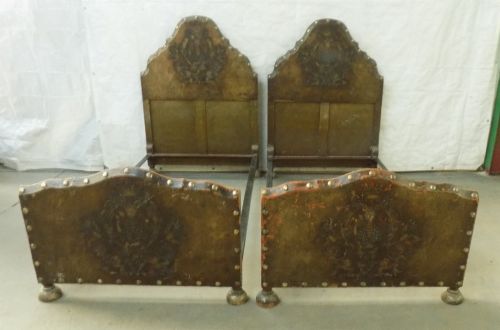
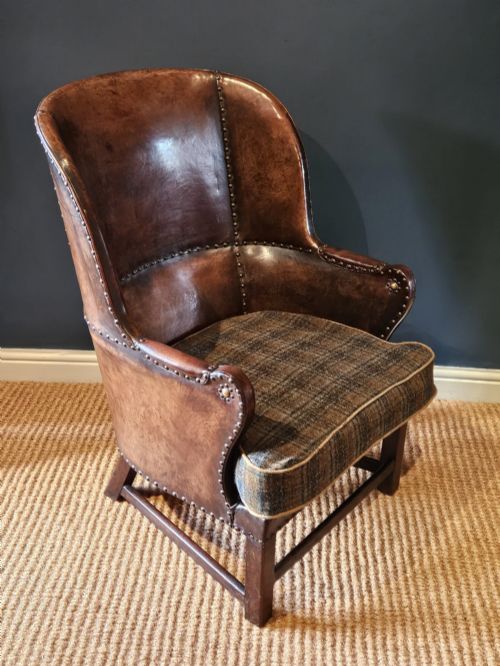
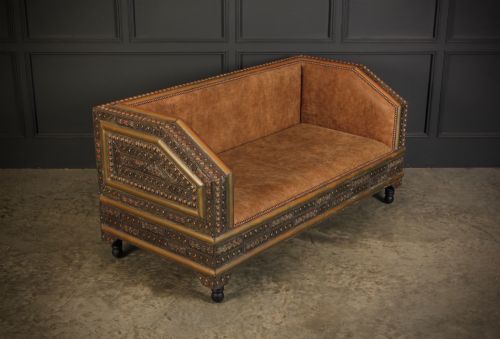
Seating dominates the selection, ranging from low armchairs and wingbacks to rocking chairs and Chesterfield tub armchairs. Larger items like settees, hall seats, and double or single bedsteads also appear, providing substantial examples of timber and leather construction.
Materials and construction
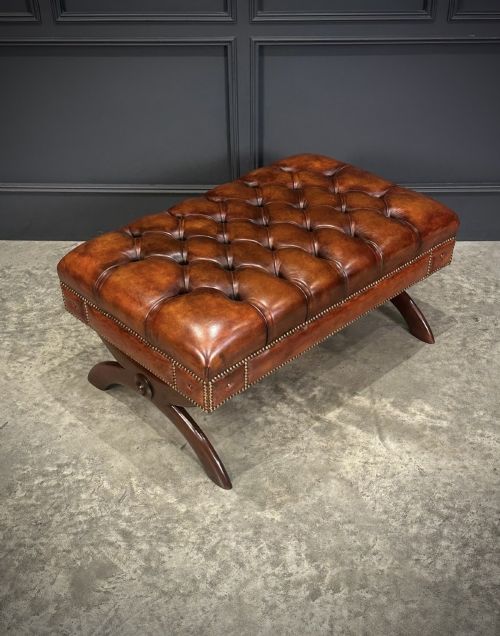
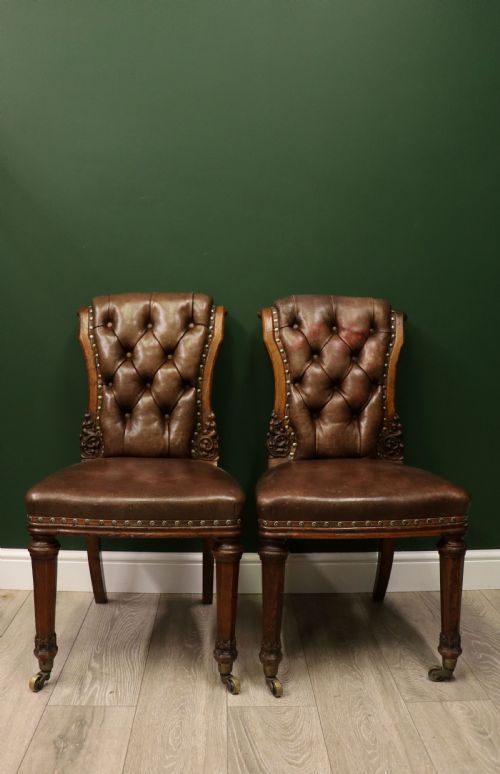
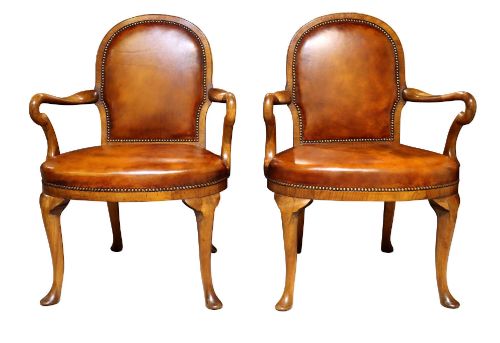
Makers built the structural frames using hardwoods like mahogany, oak, and walnut, employing timber supports that often featured carved or fluted legs and X-frame configurations. Metal elements, specifically brass studs, were driven along the edges of the leather to secure the upholstery directly to the wooden framework.
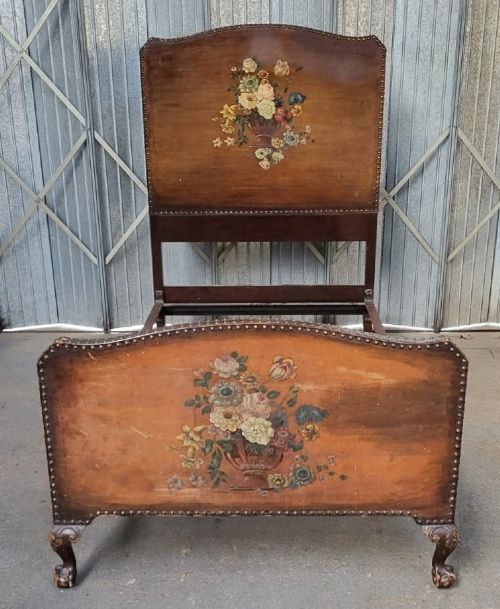
Upholstery techniques combined durable leather hides with supportive padding, creating buttoned or smooth surfaces on armchairs, sofas, and stools. Hand-painted details and carved woodwork occasionally enhanced the aesthetic of specific pieces, particularly on Edwardian bedsteads and Victorian seating.
Studded Leather Frame Retail Price Guide 2026
Typical asking prices for studded leather frame among the pieces listed under this phrase on Sellingantiques today, from the lower quarter to the upper quarter. They describe what is for sale here now, not the wider market.
Object forms range from compact footstools and dressing stools to large library armchairs, settees, and single or double bedsteads.
Gradations of quality
Quality differences emerge in the selection of the timber frame and the precision of the joinery, with dense woods like mahogany and walnut offering greater durability than basic timber. The refinement of hand-carved details on legs, arms, and frames separates standard production items from finer workshop pieces.
The treatment of the leather upholstery dictates the overall finish, where hand-dyed hides and careful placement of brass studs demonstrate superior craftsmanship. The integrity of the original frame structure and the harmony between the timber and the leather determine the distinction across the range.
Harrods·George Henry Walton
The Studded Leather Frame Glossary
- Chesterfield
- A form of upholstered furniture characterised by deep buttoning and rolled arms. These pieces typically feature leather upholstery secured with brass studs.
- Wingback
- An armchair featuring protective side panels attached to the arms and back. This design originally shielded sitters from drafts in older rooms.
- Gainsborough
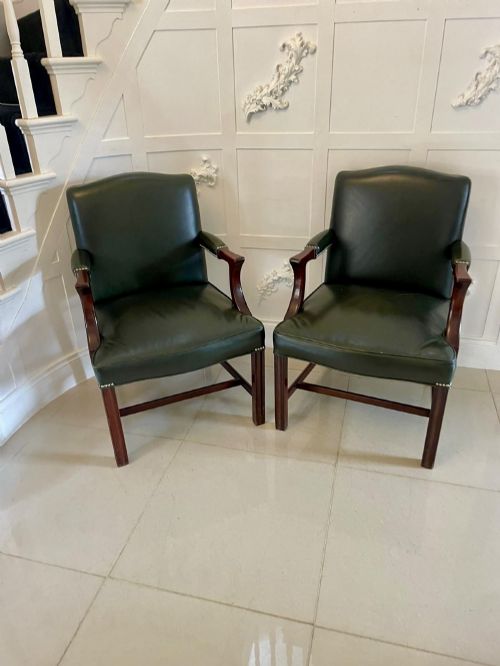
- A wide, upholstered armchair with an open frame and short armrests. These chairs traditionally stood in libraries and studies during the Georgian period.
- Bedstead
- The structural framework of a bed that supports the mattress. Examples in this category incorporate timber construction with leather panels.
- X-frame
- A furniture base formed by intersecting diagonal timber supports. This structural arrangement appears on chairs, benches, and stools across various nineteenth-century periods.
Studded Leather Frame: Frequently Asked Questions
How do I clean a studded leather frame?
Maintenance involves dusting the timber frame with a dry cloth and wiping the leather surface with a damp cloth.
Harsh chemical cleaners should be avoided to protect both the hide and the brass studs from tarnishing or drying out.
What periods do these pieces represent?
The selection spans from the nineteenth century through the Edwardian era and into the 1930s. Victorian and Edwardian examples appear most frequently among the seating and bedsteads.
Earlier influences like Georgian style and later Art Deco designs also shape the aesthetic of the listed items.
Where were these pieces used originally?
These items served functional roles in studies, libraries, bedrooms, and grand reception rooms. Desk chairs and library armchairs belonged in working spaces, while settees and stools furnished living areas.
Bedsteads provided sleeping accommodation in domestic chambers.
Are these pieces suitable for daily use?
Solid hardwood frames and durable leather upholstery make these items robust enough for regular seating and domestic living. Their construction is designed to withstand normal weight and handling.
Proper placement away from direct heat sources helps preserve the timber and leather over time.