

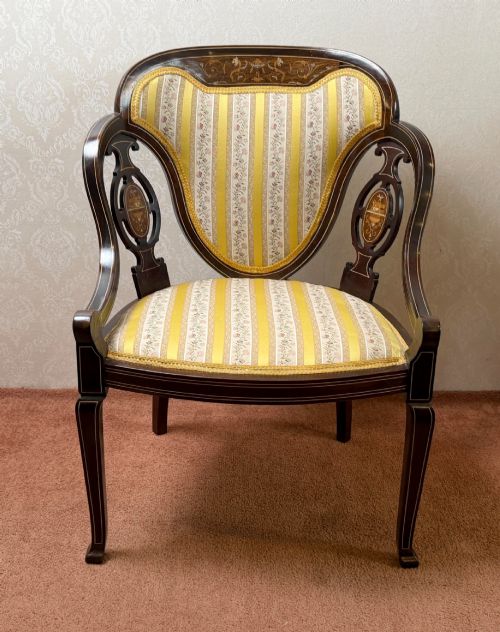
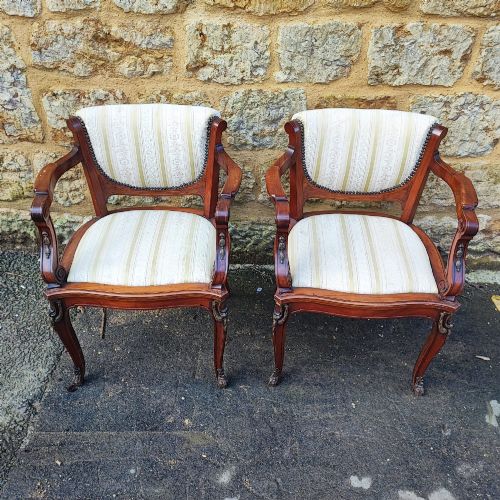

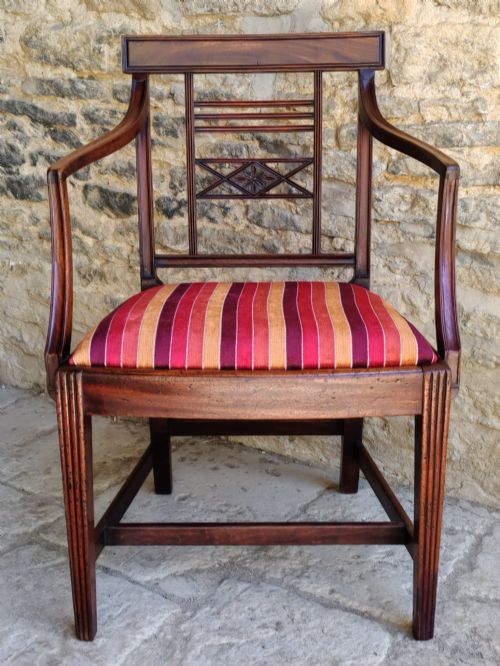


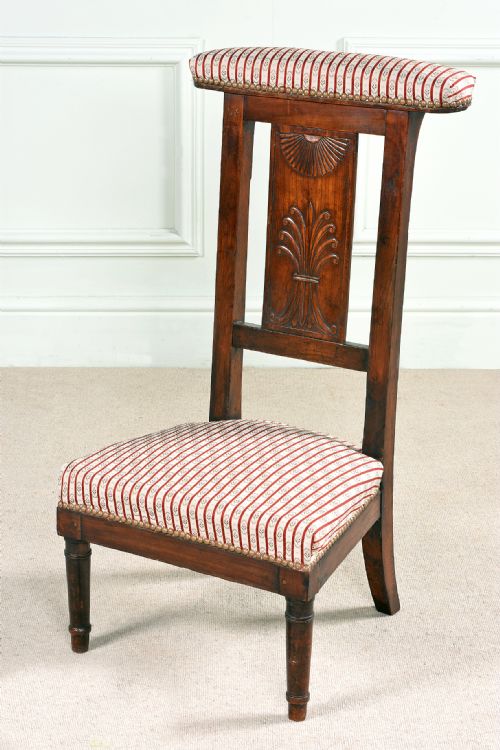


Striped Mahogany Accent Chair
A striped mahogany accent chair brings rich wood grain and tailored textile together, offering both character and a practical seat for a study or bedroom.
Striped Mahogany Accent Chair
When you search for a striped mahogany accent chair, you encounter a selection of seating forms spanning the Georgian, Victorian, and Edwardian periods. These pieces range from carved bedroom chairs to library armchairs and side chairs constructed from mahogany and finished with various fabric upholsteries.
The assortment on this page includes open armchairs, elbow chairs, and balloon-back designs alongside revival pieces. Edwardian examples often feature coastal stripe fabric upholstery and inlaid woodwork.
Origins stretch across English, French, Northern Italian, and Portuguese workshops, demonstrating diverse regional interpretations of classic seating styles.
Materials and construction
Frames are built primarily from mahogany, frequently complemented by brass hardware and detailed wood carving. Upholstery utilises traditional textiles, fabrics, and velvet to provide padded support.
Cabinetmakers shaped the dense timber into curved members, balloon backs, and acanthus-carved details. Many chairs have undergone reupholstery to incorporate contemporary striped fabrics while preserving the antique wooden framework.
Striped Mahogany Accent Chair Retail Price Guide 2026
Typical asking prices for striped mahogany accent chair among the pieces listed under this phrase on Sellingantiques today, from the lower quarter to the upper quarter. They describe what is for sale here now, not the wider market.
A stamp reading CVS hides beneath one small armchair, whispering a secret maker's mark into the timber.
Assessing quality and craftsmanship
Quality rests upon the crispness of the timber carving, the structural integrity of the mahogany frame, and the precision of any inlay work. Stronger examples exhibit well-balanced proportions and fluent joinery.
The refinement of the silhouette, from George III side chairs to Regency library armchairs, dictates the distinction between standard utilitarian seating and high-status conversation pieces.
Henry Thomas Peters
The Striped Mahogany Accent Chair Glossary
- Mahogany
- A durable tropical hardwood prized for its deep reddish-brown colour and fine grain. It forms the structural foundation for the majority of these chairs.
- Carver
- An armchair, typically designed with elbows, intended for the head of a dining table or as a standalone piece. These chairs offer wider proportions than standard side chairs.
- Balloon-back
- A chair style characterised by an oval or rounded backrest resembling a balloon. This form gained popularity during the Victorian era.
- Inlay
- A decorative technique where contrasting materials such as lighter woods are inserted into depressions within the mahogany surface. This creates flat ornamental patterns.
Striped Mahogany Accent Chair: Frequently Asked Questions
What periods do these chairs cover?
The pieces span multiple eras, beginning in the late eighteenth century with Georgian and George III designs. Victorian and Edwardian examples provide later nineteenth and early twentieth-century interpretations.
Revival styles and continental workshops also contribute to the chronological range available on this page.
How do I care for antique mahogany?
Maintain the wood by keeping it away from direct heat sources and strong sunlight to prevent the timber from drying out or fading. Regular dusting with a soft, dry cloth preserves the finish.
Avoid using silicone-based polishes, opting instead for traditional natural waxes when nourishment is required.
Are these chairs comfortable for daily use?
Many examples function well as occasional seating in studies, bedrooms, or hallways. Models with upholstered backs and padded armrests offer supportive seating for reading or relaxation.
Chairs upholstered in modern striped fabrics combine historic frames with updated padding for contemporary comfort.
What is a library armchair?
A library armchair is a substantial seating form designed for reading rooms and studies, often featuring generous proportions and upholstered armrests. These pieces prioritise comfort during extended periods of sitting.
Examples from the Regency period demonstrate particularly robust construction and architectural presence.