

Stretcher Centre Table
A stretcher centre table anchors a room with four-sided presence, bringing timber warmth and historic form to the middle of your floor.
Stretcher Centre Table
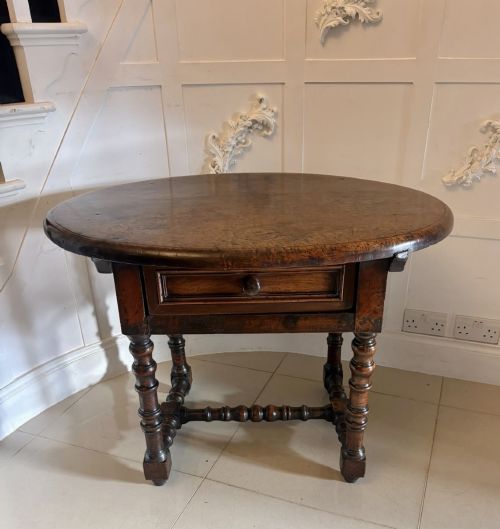
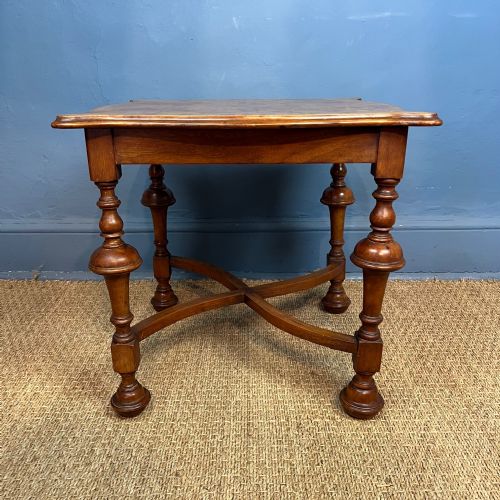
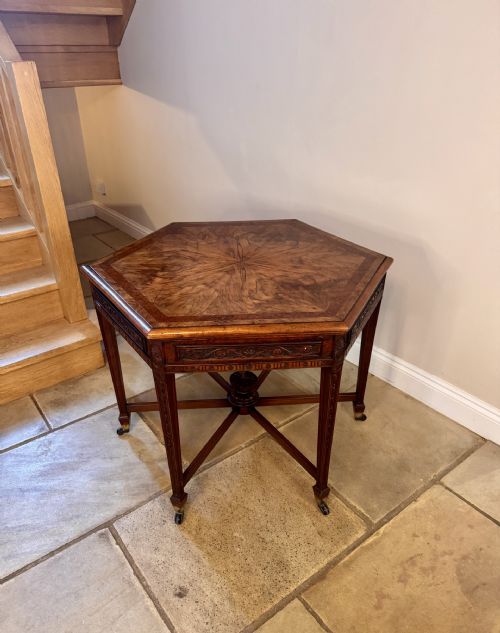
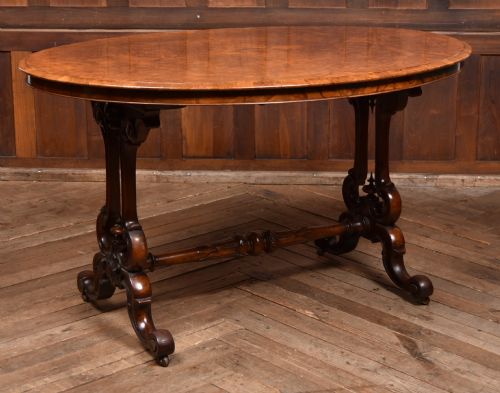
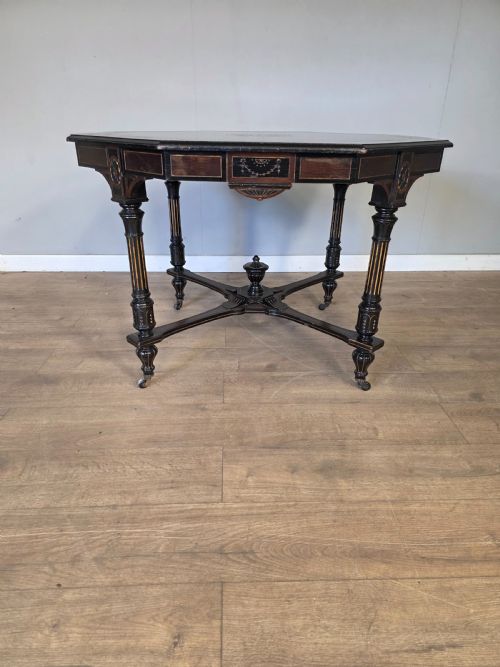
A stretcher centre table stands free in a room rather than against a wall, designed to be viewed from all sides. When you search for this phrase, you encounter freestanding tables united by lower cross-bracing known as stretchers, which add rigidity to the legs.
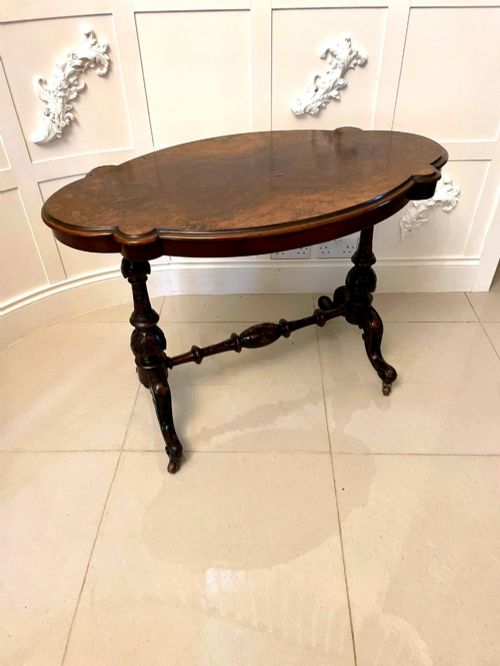
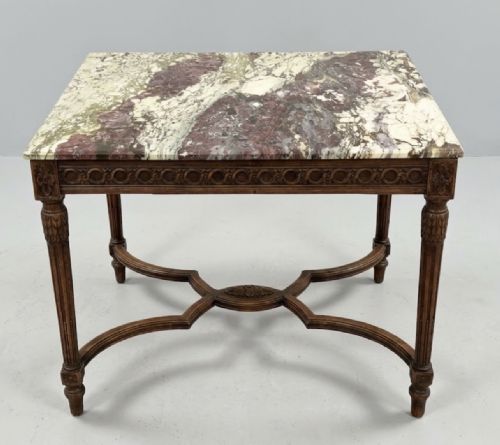
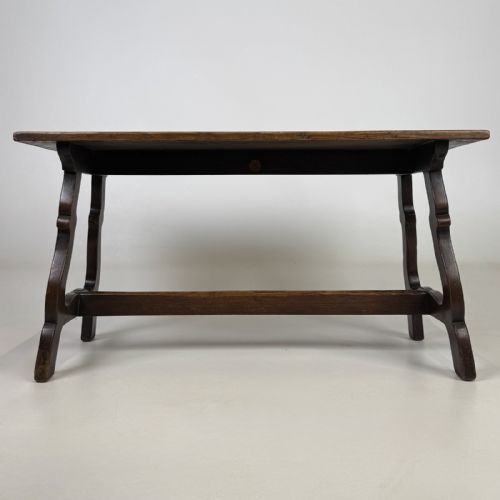
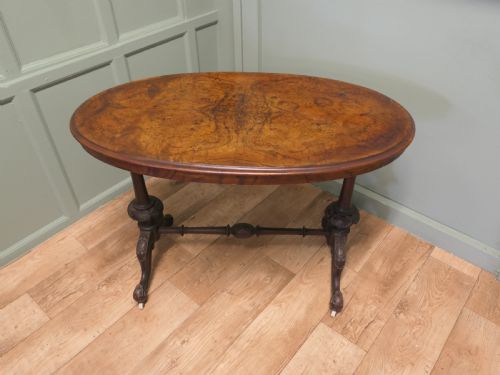
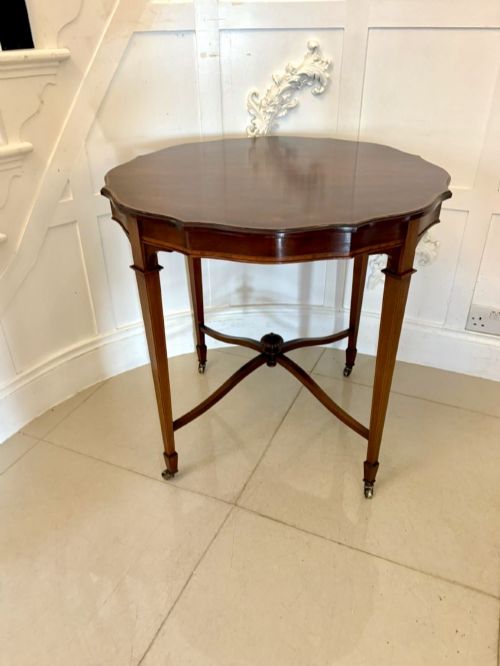
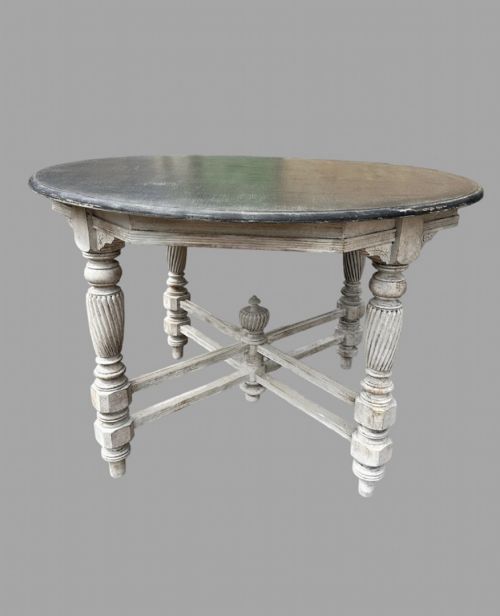
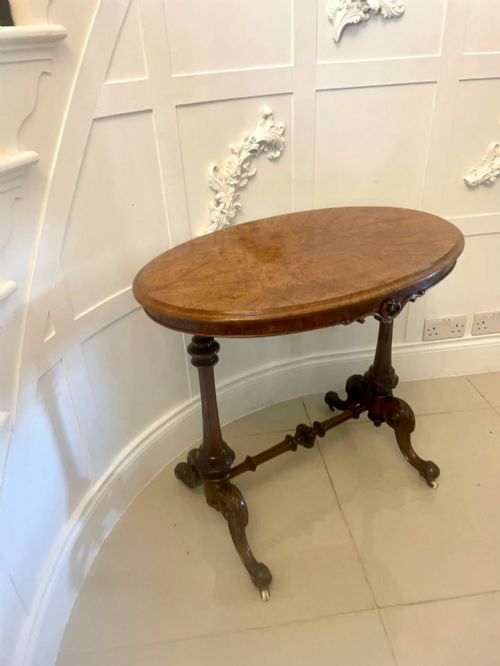
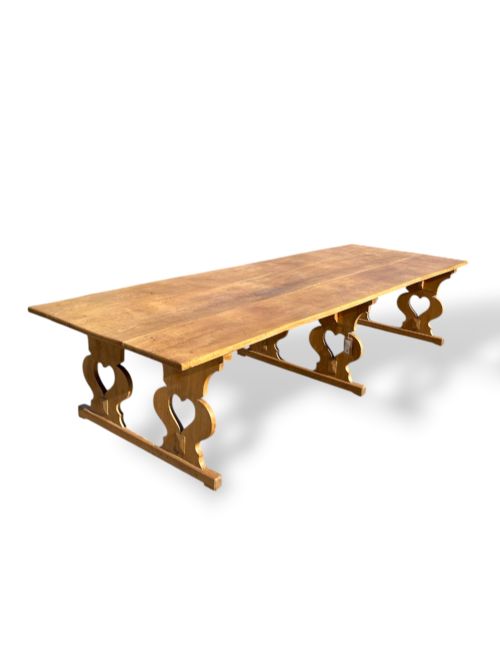
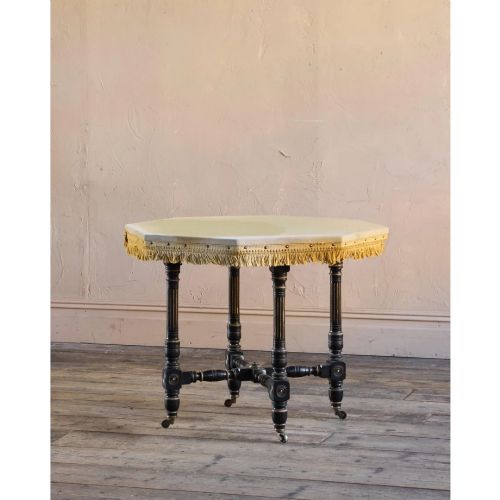
The pieces on this page span the nineteenth century and the Edwardian era, taking forms such as octagonal, oval, and rectangular occasional or hall tables. Walnut, burr walnut, rosewood, and oak dominate the selection, often finished with marquetry inlay or marble tops.
Victorian examples in burr walnut or rosewood appear frequently, alongside oak tables drawing on Jacobean or Spanish Baroque revivals. These tables function as centrepieces, lamp tables, or coffee tables depending on their height and top dimensions.
Materials and construction
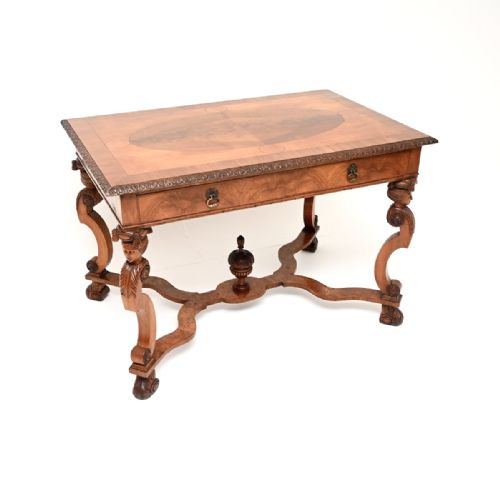
Cabinetmakers built these tables using dense hardwoods like walnut, mahogany, rosewood, and oak, frequently applying decorative burr walnut veneers to tabletops to create striking grain patterns. Inlays of satinwood, bone, and marquetry enrich the surfaces of Victorian and nineteenth-century pieces.
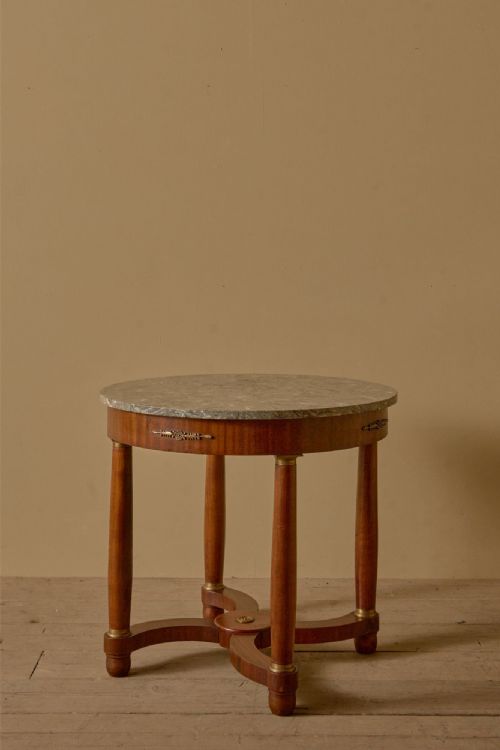
Structural stability relied upon under-tiers and stretchers joining the legs together, preventing lateral movement in tables meant to stand away from walls. Marble tops in grey and violetta varieties also appear, bedded directly onto wooden carcases for weight and durability.
Stretcher Centre Table Retail Price Guide 2026
Typical asking prices for stretcher centre table among the pieces listed under this phrase on Sellingantiques today, from the lower quarter to the upper quarter. They describe what is for sale here now, not the wider market.
Table forms include octagonal, oval, and rectangular shapes fitted with stretchers, pedestals, or carved cabriole legs.
What separates the fine from the ordinary
Quality rests in the selection of timbers and the precision of the joinery where legs meet stretchers and aprons. Highly figured burr walnut and intricate marquetry indicate workshops that expended greater labour on visual impact.
The crispness of carved details, the retention of original patination on solid oak and walnut, and the integration of secondary woods all distinguish superior examples from standard production pieces.
G.T. Rackstraw·Hindley & Sons
The Stretcher Centre Table Glossary
- Stretcher
- A horizontal timber rail connecting the legs of a table near the base to provide structural rigidity. It often forms an 'X' or 'H' shape.
- Burr walnut
- Timber sliced from walnut tree growths or burls, yielding complex, swirling grain patterns highly prized for tabletops.
- Marquetry
- Decorative veneer work arranged in geometric or pictorial patterns using various woods, bone, and other materials.
- Gueridon
- A small decorative French table, often round, supported by a central pillar or columns resting on a platform base.
- Ebonised
- Wood treated with chemical stains or black finishes to imitate costly ebony, popular during the Victorian and Aesthetic periods.
Stretcher Centre Table: Frequently Asked Questions
Where should a centre table go?
A centre table belongs in the middle of a room where it can be approached from all sides, functioning as a surface for lamps, books, or floral arrangements.
Because these pieces are finished on every side, they work particularly well in large hallways, libraries, or spacious reception rooms.
How do I care for a walnut table?
Protect antique walnut surfaces by avoiding direct sunlight and excessive heat, which can dry out timber and crack delicate veneers.
Dust regularly with a soft, dry cloth and apply a quality beeswax sparingly to nourish the grain without building up heavy residues.
What is the difference between a centre table and a coffee table?
Traditional centre tables stand at standard table height, intended to hold lighting or decorative objects rather than refreshments.
Many nineteenth-century centre tables have been adapted to coffee table height over time, while others retain their original proportions for standing use.
How do I identify a Victorian table?
Victorian tables frequently feature rich burr walnut veneers, rosewood, or ebonised wood, often decorated with marquetry inlay or turned columns.
Construction details such as hand-cut dovetails, mahogany secondary framing, and substantial stretcher bases point firmly to nineteenth-century British workshops.