

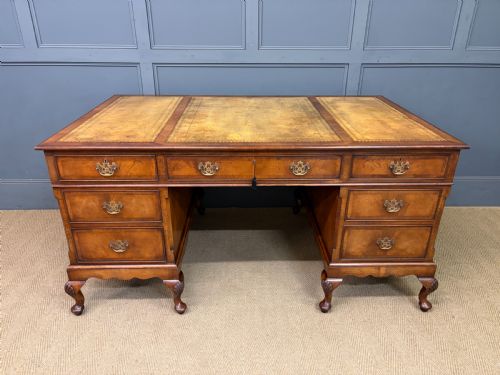
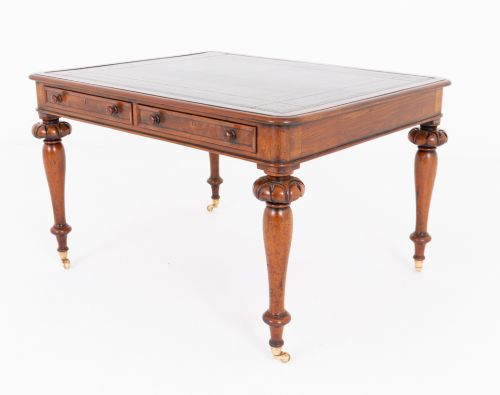
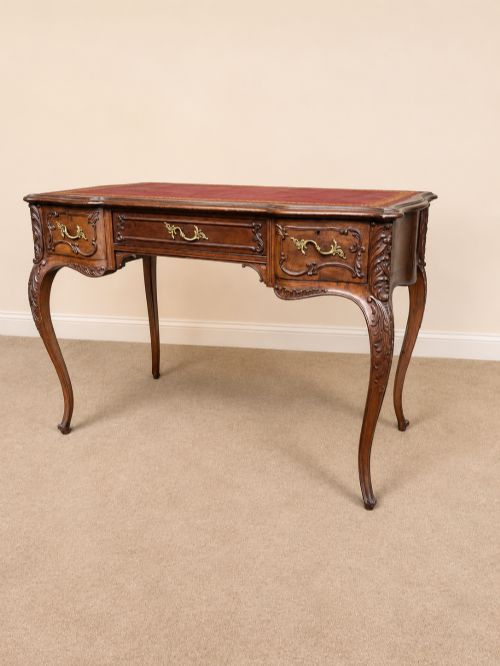
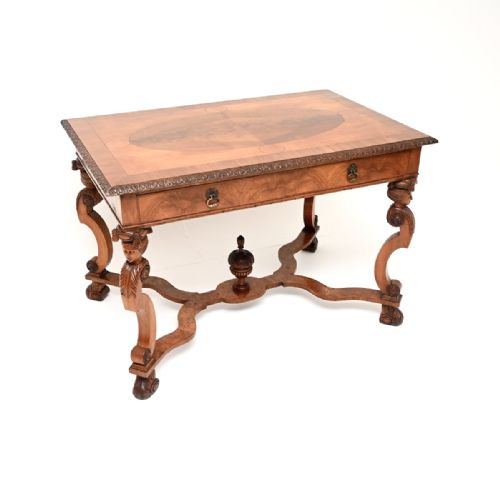
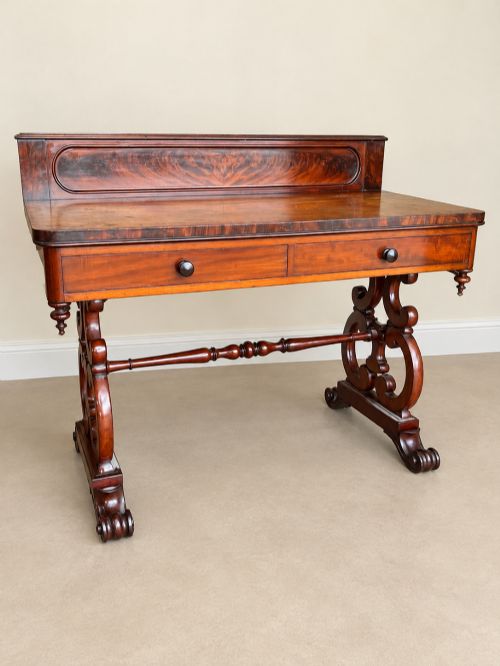
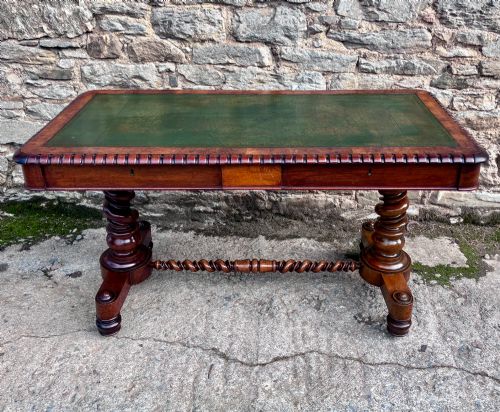
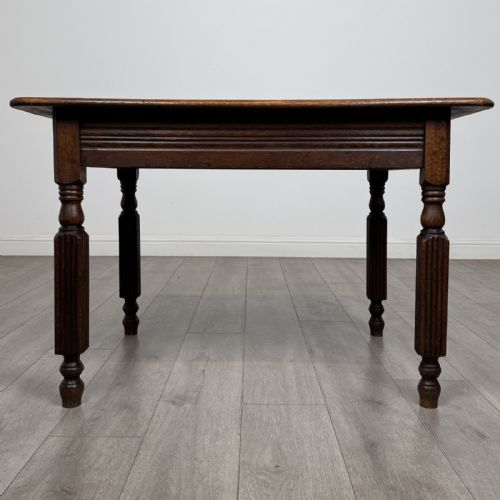
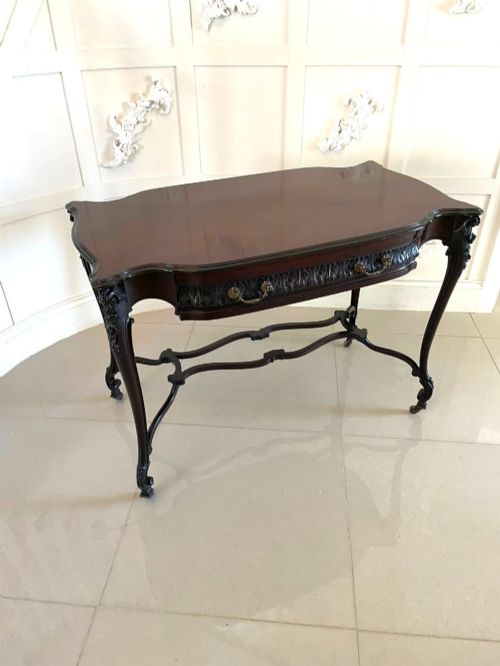
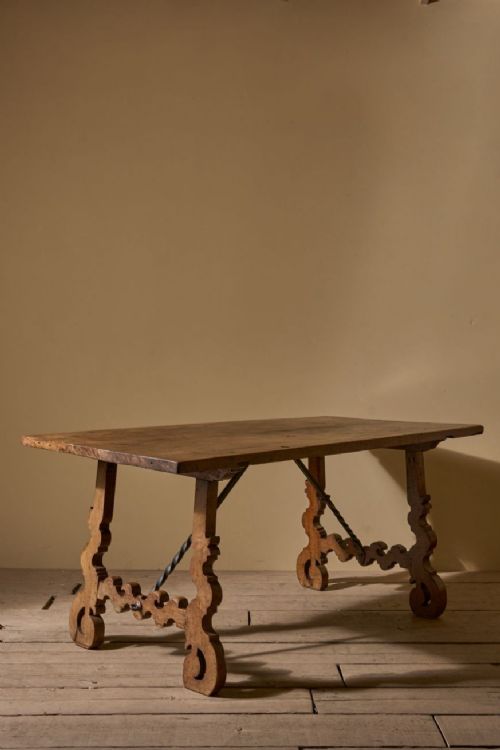
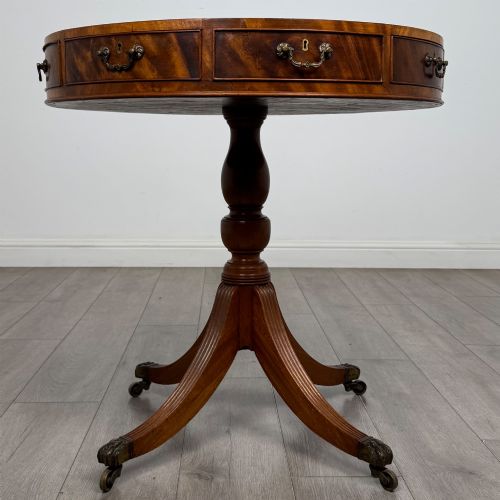
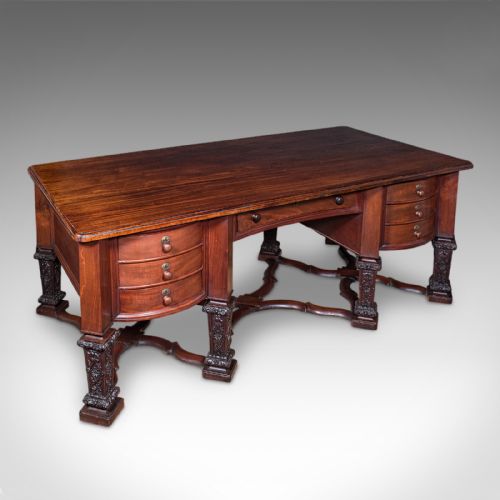
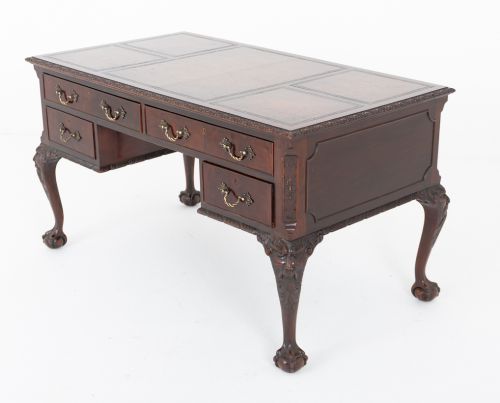
Carved Leg Library Table
A carved leg library table anchors a study with substantial timbers and solid presence.
Carved Leg Library Table
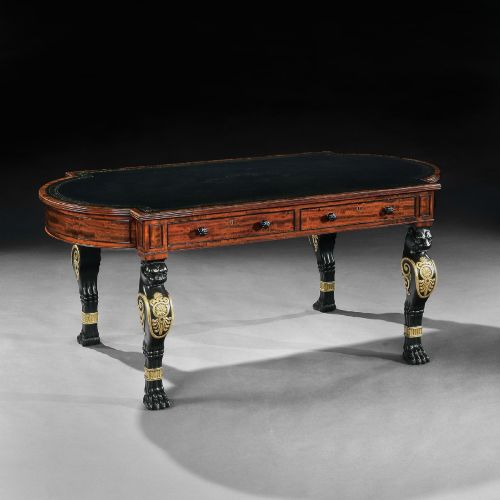
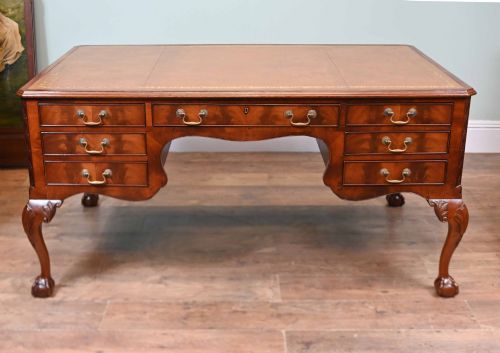
A carved leg library table is a heavy writing surface or centre table designed for domestic studies and larger rooms, appearing frequently in Victorian, Edwardian and nineteenth-century forms. These pieces often feature inset leather tops alongside substantial timber frames built for sustained reading and writing.
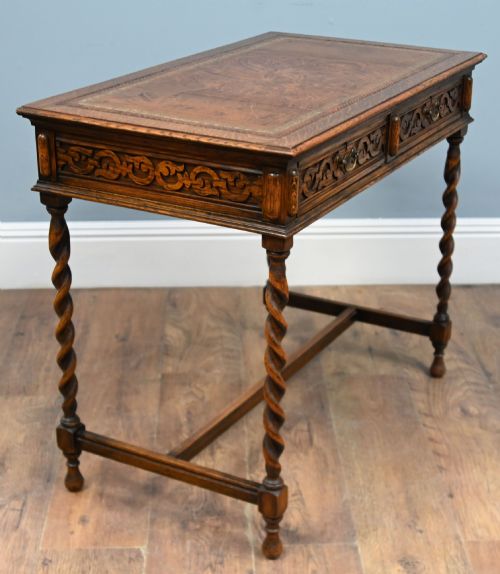
The materials you encounter span mahogany, walnut, burr walnut and oak, occasionally finished with brass mounts or detailed with barley twist and pierced fretwork. Desks, partner desks and centre tables dominate the selection, reflecting the functional demands of grand period interiors.
Construction and materials
Cabinetmakers utilised dense hardwoods such as mahogany and walnut for the primary framework, ensuring structural stability for large writing surfaces. Surfaces frequently incorporate inset leather writing panels framed by matching timber borders.
Carved decoration on the legs and aprons relies on hand-chiseled detailing, ranging from revival styles like Chippendale and Jacobean to Renaissance and Victorian Rococo motifs. Joints are traditionally constructed to bear the weight of heavy books and daily study use.
Carved Leg Library Table Retail Price Guide 2026
Typical asking prices for carved leg library table among the pieces listed under this phrase on Sellingantiques today, from the lower quarter to the upper quarter. They describe what is for sale here now, not the wider market.
Listings feature woods spanning mahogany, walnut, burr walnut, rosewood, oak and zebrawood across the nineteenth and early twentieth centuries.
Factors of quality
The calibre of a carved leg library table rests upon the crispness of the hand-carved woodwork and the selection of figured veneers like burr walnut or flame mahogany. Superior examples exhibit harmonious proportions and unblemished timber grain across large expanses.
Internal construction, including drawer linings and the quality of secondary woods, distinguishes standard utility furniture from finer workshop productions. Original leather inserts and well-preserved patination further elevate the standing of a piece.
Gill & Reigate·Jean-Joseph Chapuis·George Smith·Gillows
The Carved Leg Library Table Glossary
- Partners desk
- A double-sided writing table fitted with drawers and cupboards on both long faces, designed for two people to work opposite one another.
- Burr walnut
- A prized timber veneer obtained from the gnarled growth of a walnut tree, displaying intricate swirling patterns across tabletops.
- Barley twist
- A turned wooden column resembling a spiralling rope, commonly found on the legs of seventeenth-century and revival furniture.
- Centre table
- A freestanding piece finished on all four sides so it can sit in the middle of a room rather than against a wall.
- Patina
- The surface sheen and softening of colour acquired by wood and leather through decades of handling and natural ageing.
Carved Leg Library Table: Frequently Asked Questions
What is a library table used for?
A library table serves as a large freestanding desk or writing surface intended for reading heavy volumes and managing correspondence in a study.
Unlike standard writing desks meant to sit against a wall, these tables feature finished backs and sides designed for placement in the centre of a room.
How do I tell Victorian from Edwardian tables?
Victorian tables typically display heavier timbers, deeper carving, and darker finishes associated with revival styles like Jacobean and Rococo.
Edwardian pieces generally lean towards lighter mahogany or oak constructions, frequently incorporating subtle fretwork or simpler geometric lines.
Can I use a library table as a desk?
These pieces function well as primary desks, offering generous surface areas and integrated drawers for storage.
Many examples retain their original leather writing inserts, providing an ideal surface for daily desk work.
What is a partners library table?
A partners table provides identical drawer and kneehole configurations on opposite sides, allowing two individuals to sit and work facing each other.
These large tables were traditionally utilised in professional offices and grand country house libraries.