
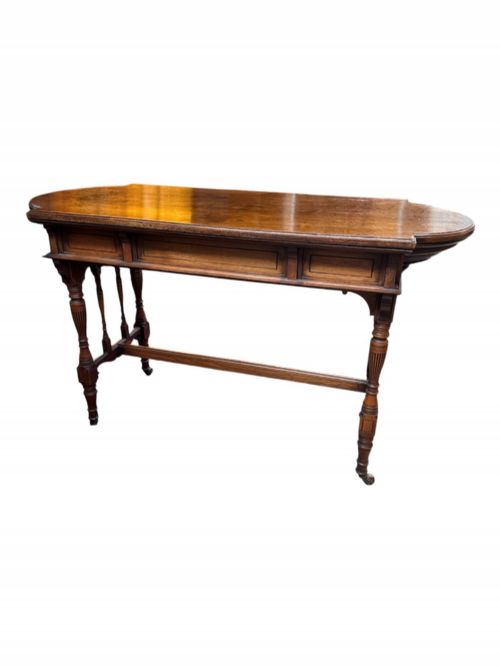
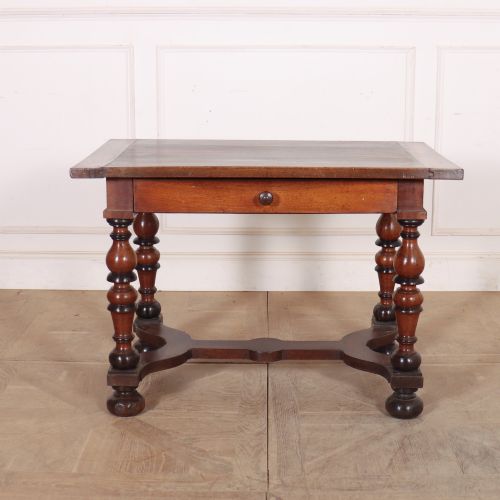
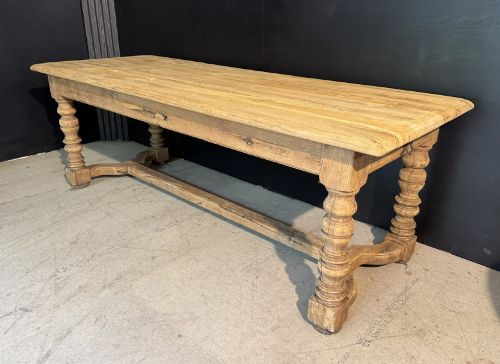


Stretcher Base Desk
These stretcher base desk pieces offer sturdy timber construction and practical writing surfaces desired by collectors of period workspace furniture.
Stretcher Base Desk
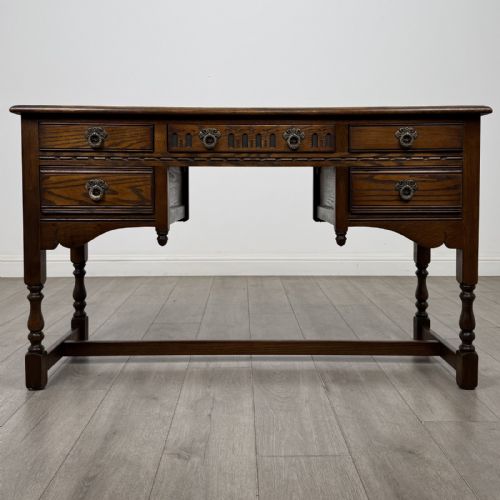
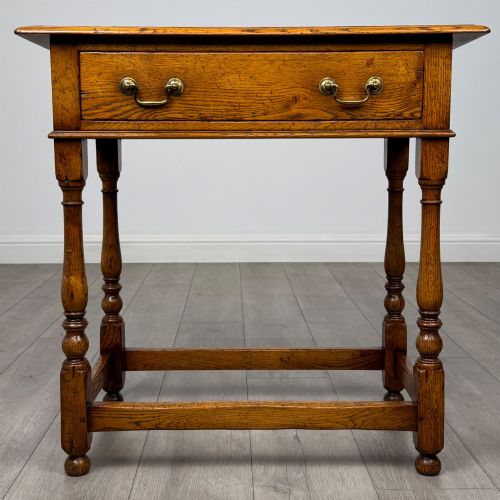
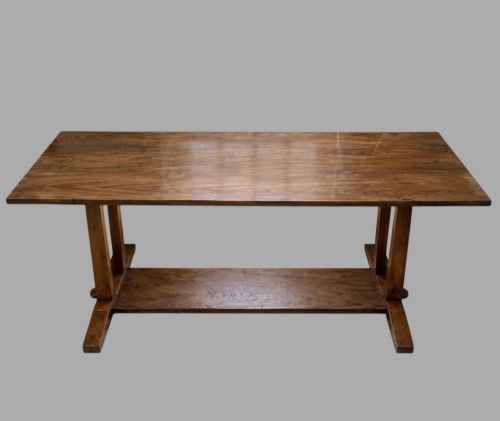
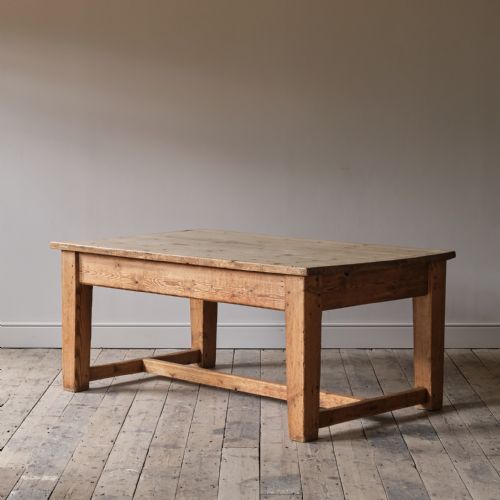
A stretcher base desk provides a stable writing surface supported by horizontal wooden bracing between the legs. These pieces appear across various historical periods, including the eighteenth century, Victorian era, and early twentieth century.
The selection here encompasses forms derived from library tables, writing desks, and side tables utilised for work or display. Oak, walnut, fruitwood, and pine feature prominently among the materials recorded in these listings.
Buyers encounter regional variations ranging from English country and French provincial designs to Italian baroque and arts and crafts styles. Each piece demonstrates the specific utilitarian requirements of its original period of manufacture.
How they were made
Cabinetmakers constructed these desks using solid timbers such as oak, walnut, cherrywood, yew wood, and pine. Iron and brass components occasionally provide structural reinforcement or functional hardware.
Traditional joinery secures the legs to the horizontal stretchers, ensuring the rigidity necessary for heavy daily use. Surfaces show the straightforward working methods typical of provincial workshops and city cabinetmakers alike.
Current selections span the eighteenth, nineteenth, and early twentieth centuries, featuring oak, walnut, pine, and fruitwood.
What varies in quality
Quality rests upon the selection of timber and the integrity of the structural joinery connecting the legs to the stretcher. Dense hardwoods like walnut and oak generally command greater attention than softer pine or fruitwood variants.
Proportion and surface preservation dictate the visual strength of an individual piece. Retaining an authentic timber surface without excessive modern intervention preserves the historic character valued by experienced collectors.
The Stretcher Base Desk Glossary
- Stretcher
- A horizontal wooden brace connecting the legs of a table or desk to provide lateral stability. This structural element prevents the legs from wobbling under heavy loads.
- Library Table
- A large freestanding table designed for reading and writing, often fitted with drawers. These forms frequently double as spacious writing desks.
- Fruitwood
- Timber harvested from fruit-bearing trees such as pear or apple, utilised by regional cabinetmakers. It offers a dense grain and warm tone.
- Yew Wood
- A resilient native timber prized for its rich figure and durability in period furniture construction. It appears in select regional tables.
Stretcher Base Desk: Frequently Asked Questions
What defines a stretcher base desk?
A stretcher base desk relies on horizontal wooden bars connecting the lower legs for enhanced structural rigidity. This design ensures the desk remains stable during writing or daily administrative tasks.
Such bracing distinguishes these tables from standard four-legged designs, reflecting specific period engineering needs.
How do I identify the period of my desk?
Dating relies on examining the timber species, joinery methods, and stylistic cues present in the construction. Eighteenth-century pieces often display hand-cut joinery and regional timbers, whereas Victorian examples may feature denser machine-prepared elements.
Comparing hardware like brass pulls and iron braces further clarifies the likely manufacturing era.
Where were these desks originally used?
These pieces served in libraries, studies, estate offices, and formal rooms as functional writing surfaces. Their robust stretcher construction suited environments where daily paperwork took place.
Over time, many migrated into domestic hallways, dining spaces, and general reception rooms.
How should I care for antique timber?
Maintain antique wood by placing the desk away from direct sunlight and sudden temperature shifts. Regular dusting with a dry cloth protects the finish without introducing harsh chemicals.
Occasional application of appropriate wax preserves the moisture balance within older oak and walnut surfaces.