


Stormy Sea Artwork
Stormy sea artwork captures the raw power of the ocean through turbulent waves and dramatic skies.
Stormy Sea Artwork
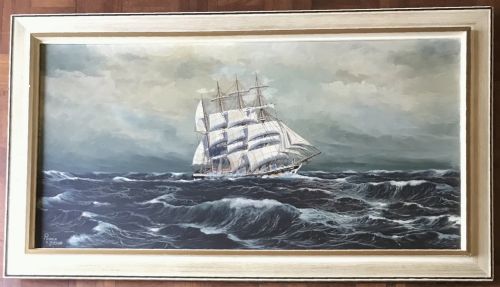
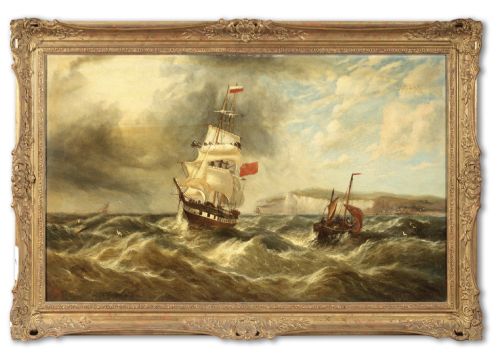
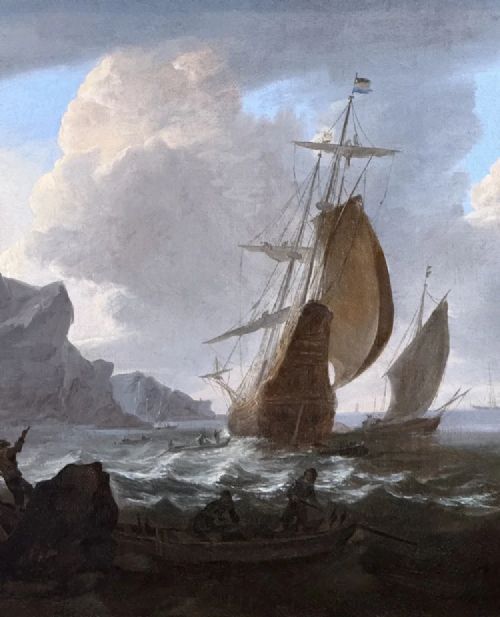
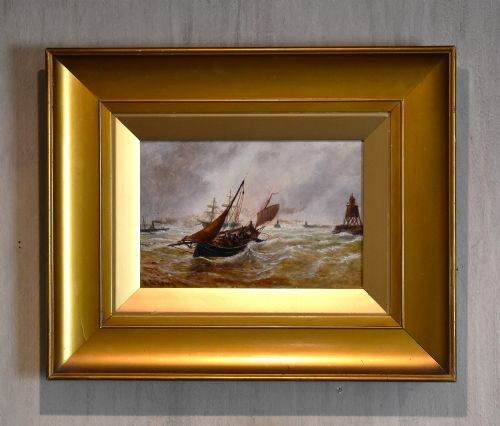
When you search for stormy sea artwork, you encounter maritime paintings and works on paper depicting ships in gales, crashing waves, and coastal lighthouses. These pieces record the historical reality and artistic fascination with maritime dangers, spanning from the seventeenth century through the Victorian era to the mid-twentieth century.
You are most likely to meet nineteenth-century oil paintings on canvas and board, alongside watercolours from the Edwardian period and the Staithes School. The subjects range from Dutch boats in gales to British merchant ships and tall-masted vessels in choppy waters.
How they were made
Artists utilised oil paint on canvas, board, and cardboard to build thick, textured layers that mimic the weight of churning water and dark clouds. Others applied watercolour pigment and charcoal on paper to capture the swift atmospheric shifts of coastal weather.
Many of these works retain their original frames, including giltwood mouldings that complement the maritime scenes.
The listings include works across the 17th Century, Victorian period, Edwardian era, and 1950, executed in oil, watercolour, and charcoal.
What varies in quality
The distinction between standard works and exceptional pieces lies in the artist's handling of light and movement within the water and sky. Stronger compositions convey the kinetic force of a gale and the accurate rigging of vessels, whereas lesser examples rely on formulaic wave patterns.
Condition also separates the range, with surviving canvases maintaining their original pigment stability and paper works showing minimal fading from exposure to light.
John Rose Miles·Bonaventura Peeters·Bernard Benedict Hemy·Percy Brooke·William Kay Blacklock·William Boyce
The Stormy Sea Artwork Glossary
- Oil on Canvas
- A painting medium where pigments suspended in drying oil are applied to stretched fabric. This technique allows for rich texture and deep colour saturation.
- Watercolour Pigment
- A paint made from colourants suspended in a water-soluble vehicle, typically applied to paper. It produces translucent washes that suit coastal skies.
- Giltwood
- Wood that has been coated with a thin layer of gold leaf or gold paint. Frames finished in this manner frequently house nineteenth-century paintings.
- Staithes School
- A group of artists working in Yorkshire influenced by Impressionism. Their output often includes coastal and marine subjects captured in plein air.
- Maritime Realism
- An artistic style focused on accurate depiction of ships, seas, and coastal topography. This approach prioritises technical precision over romantic exaggeration.
Stormy Sea Artwork: Frequently Asked Questions
What periods do these paintings come from?
The works span several centuries, with examples originating from the seventeenth, nineteenth, and early twentieth centuries. Victorian and Edwardian periods are particularly well represented.
Creators utilised styles ranging from Dutch Golden Age marine painting to later British school oil and watercolour techniques.
How should I display stormy sea artwork?
These dramatic maritime pieces suit spaces where their dark, atmospheric tones can command attention, such as studies or living rooms. Ensure they are kept away from direct sunlight to protect watercolours and oils from fading.
Matching the frame to the room's interior helps integrate pieces housed in original giltwood.
What subjects appear in these coastal scenes?
Common subjects include merchant ships in rough seas, tall-masted vessels in choppy waters, and lighthouses on rocky coasts. Shipwrecks and fishing fleets returning to harbour also feature prominently.
Locations range from British coastal waters to specific sites in Portugal and Cornwall.
Are these works painted on canvas or paper?
The selection includes both oil paintings on canvas, board, and cardboard, alongside works on paper using watercolour pigment and charcoal. Each medium creates a distinct texture for the turbulent water.
Supports vary according to the period and whether the artist worked in a studio or outdoors.