







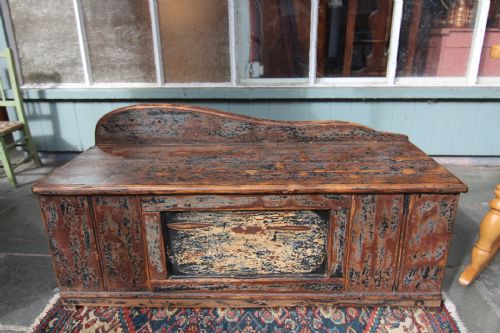


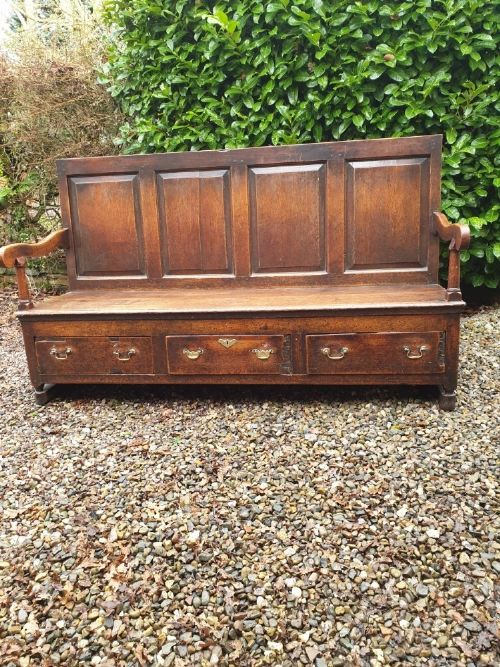
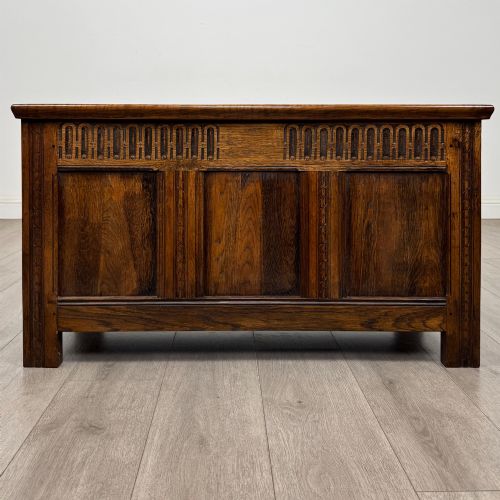
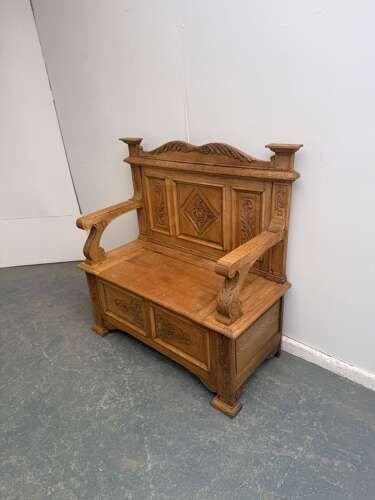
Storage Box Bench
Storage box bench designs span centuries of sturdy seating, combining lift-up lids and enclosed compartments with dependable daily timber furniture.
Storage Box Bench
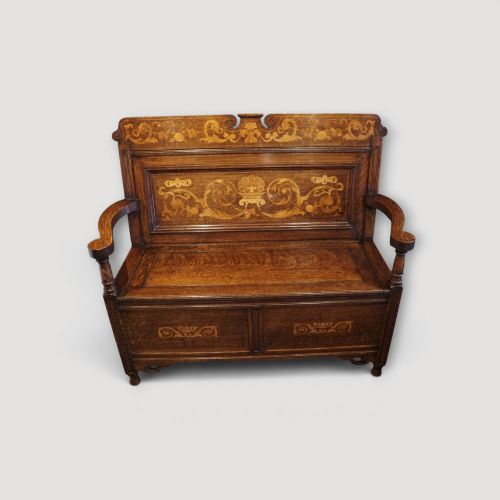
A storage box bench provides dual functionality through integrated seating and concealed compartment space beneath a lift-up lid. When searching this phrase, buyers encounter substantial oak and pine pieces ranging from early country settles to Edwardian hall benches and Victorian box seats.
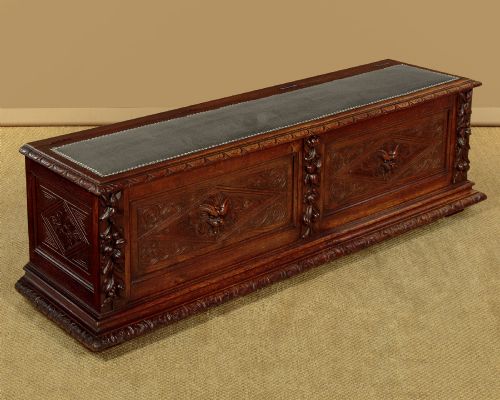
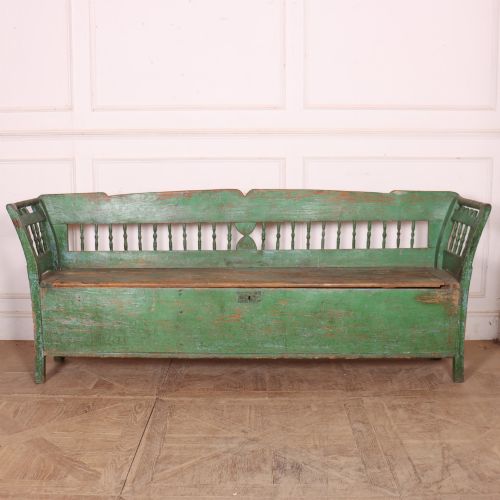
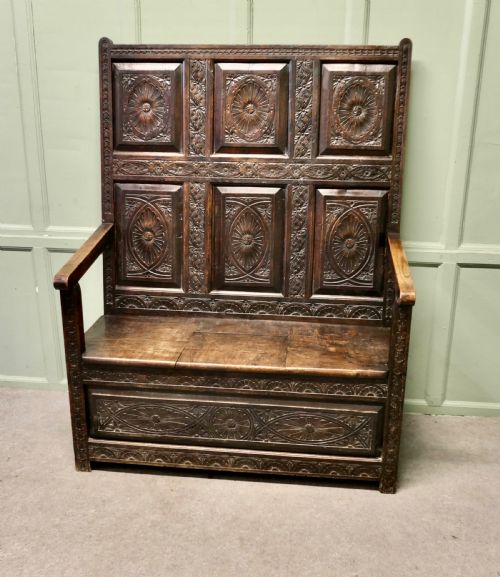
The selection includes regional variations such as Hungarian pine settles, Italian walnut cassapanca benches, and English oak examples spanning the seventeenth through to the early twentieth century. Tall backrests, canopy tops, and hinged seats characterise the larger variants designed for draughty hallways and farmhouse kitchens.
Smaller seating options like piano stools and ottomans with needlework or leatherette upholstery also appear, alongside compact hall seats featuring fold-over tops. These diverse forms reflect centuries of domestic utility across European workshops.
Materials and Technique
Construction relies heavily on solid native timbers, predominantly oak and pine, joined through traditional methods to support regular seating and heavy compartment loads. Many examples utilise sturdy panelled construction for the box bases and backrests, occasionally incorporating ash or walnut.
Surface treatments vary from waxed and polished natural grains to polychrome painted finishes, cream layers, and grey lead-based coatings. Iron and brass hardware, including hinges, latches, and occasional inlay work, provide functional reinforcement and decorative contrast.
Storage Box Bench Retail Price Guide 2026
Typical asking prices for storage box bench among the pieces listed under this phrase on Sellingantiques today, from the lower quarter to the upper quarter. They describe what is for sale here now, not the wider market.
Listings feature regional variations spanning English oak, Dutch chests, and painted pine Hungarian settles.
Evaluating Craftsmanship
Quality reveals itself in the integrity of the timber joints and the retention of original hardware, hinges, and structural bracing. Superior examples maintain uncompromised box bases where the timber has aged evenly through decades of wax polishing or honest paint layers.
Carved detailing demonstrates the hand of skilled regional makers, where depth and precision separate bespoke joinery from utilitarian output. The harmony between the original lift-up seat mechanism and the main carcase dictates the structural longevity of the piece.
James Shoolbred & Co
The Storage Box Bench Glossary
- Settle
- A wooden bench with a high back, solid arms, and a box seat compartment beneath the hinged lid. They were traditionally placed near hearths to block draughts.
- Cassapanca
- An Italian chest bench featuring a backrest and arms, combining a storage chest with formal seating. These often display carved walnut or painted finishes.
- Box Stool
- A compact early seat featuring a lift-up lid over a singular enclosed compartment. These smaller oak pieces date to the seventeenth century.
- Hall Bench
- A narrow seating form positioned in entranceways, frequently incorporating lift-up lids for shoe storage. They often feature carved oak or painted pine construction.
- Ottoman
- An upholstered seat or footstool with a hollow interior accessed via a hinged top. They utilise materials such as mahogany, needlework, and fabric.
Storage Box Bench: Frequently Asked Questions
Where were storage box benches placed historically?
These pieces traditionally stood in hallways, kitchens, and farmhouse living spaces where floor space needed to serve dual purposes for sitting and stowing household goods.
Tall-backed settles often guarded doorways or hearths to keep out cold draughts while offering concealed storage for blankets and winter wear.
How do I care for a waxed oak box settle?
Maintain the timber by applying a traditional beeswax polish sparingly and buffing with a soft cloth to preserve the natural lustre. Avoid placing antique wood near direct heat sources to prevent the panels from splitting.
Are painted finishes on pine benches original?
Many regional pine pieces from Hungary and Britain retain layers of old or original paint in shades of grey, cream, or black. Examining the wear patterns and underlying timber helps determine the age of the surface coating.