


Stoneware Floral Vase
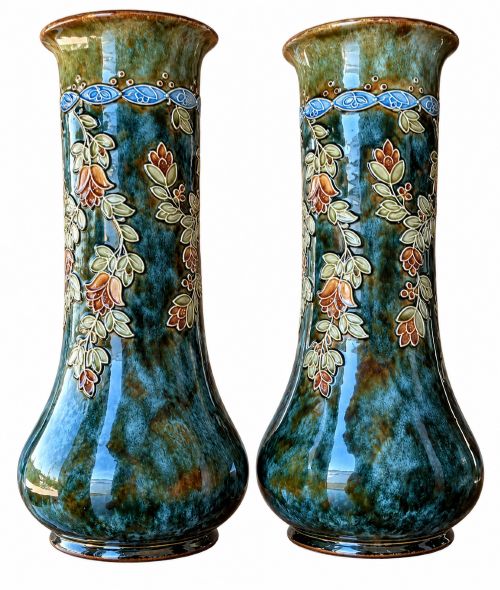
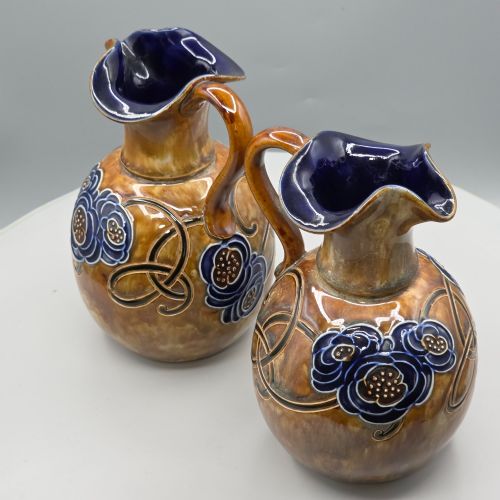
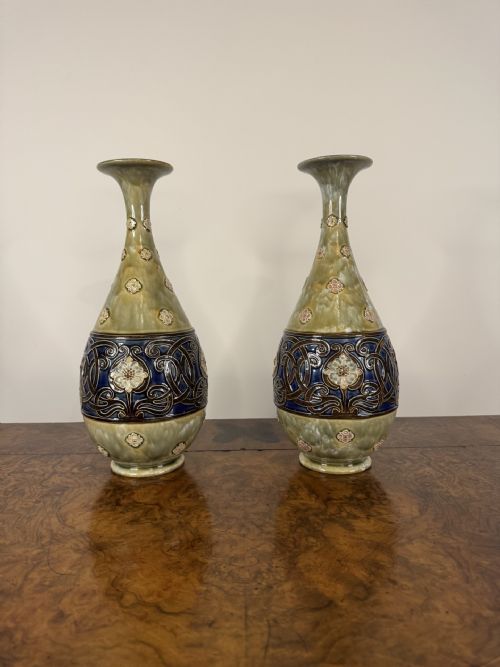
These stoneware floral vase examples bring together heavy-bodied pottery and organic design.
Stoneware Floral Vase
When you search for a stoneware floral vase, you encounter robust vessels produced primarily during the Victorian, Edwardian, and nineteenth-century periods. The examples listed here span Arts and Crafts, Art Nouveau, and Aesthetic movements, often taking the shape of baluster vases or jugs.
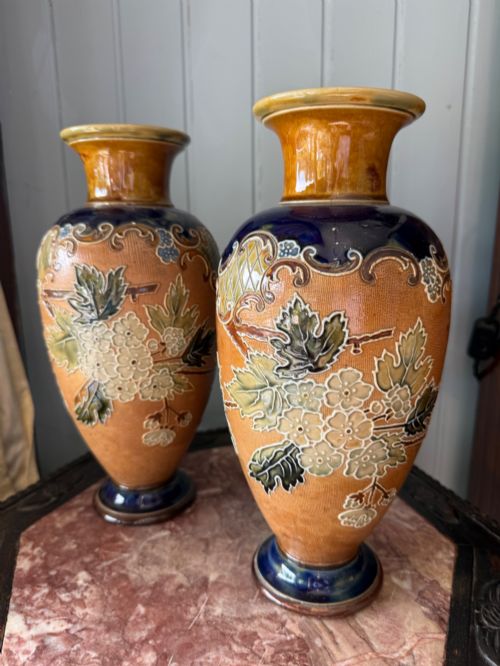
The most common form on this page is the Doulton Lambeth production, frequently appearing in matched pairs. These pieces combine heavy ceramic bodies with botanical ornamentation, reflecting the tastes of late nineteenth and early twentieth-century makers.
Materials and Technique
The makers formed these vessels using dense stoneware and ceramic bodies, fired to high temperatures to ensure durability. Glaze and enamel applications provide the colourful surfaces, sometimes enhanced with gold leaf or gilt details.
Specialised techniques such as Slaters Patent surface texturing appear alongside painted or incised floral patterns. This combination of textured clay grounds and smooth glazed decoration defines the physical character of the pieces.
Listings feature stoneware, ceramic, and glaze materials across Victorian and Edwardian periods.
Assessing Quality and Execution
The distinction between standard production items and the finest examples lies in the crispness of the hand-carved or incised botanical motifs. Master decorators executed floral patterns with a fluidity and precision that elevates the piece beyond standard factory output.
Proportion and form also dictate value, particularly in matched pairs where symmetry and balance are crucial. The application of enamel decor and gold leaf must complement the underlying stoneware body without appearing heavy-handed.
Royal Doulton·Doulton Lambeth·Louisa Wakely·Mettlach Pottery·Eliza Simmance·Poole Pottery Carter Stabler Adams
The Stoneware Floral Vase Glossary
- Stoneware
- A sturdy, vitrified ceramic made from clay fired at high temperatures. It is impermeable to liquids even without a glaze.
- Baluster
- A vase shape characterised by a rounded body that tapers towards a narrow neck and flares slightly at the rim.
- Faience
- Earthenware decorated with opaque coloured glazes, often featuring hand-painted floral designs.
- Gilt
- A thin layer of gold applied to the surface of the ceramic for decorative emphasis.
- Slaters Patent
- A technique involving lace or similar textured materials pressed into wet clay to create intricate patterned backgrounds.
Stoneware Floral Vase: Frequently Asked Questions
What periods do these vases come from?
The pieces span the nineteenth century through the early twentieth century, including Victorian and Edwardian eras. Stylistic influences draw heavily from the Arts and Crafts and Art Nouveau movements.
Dates range from the 1880s up to the 1920s, capturing a period of significant experimentation in British and European pottery workshops.
How were these vases used originally?
These vessels functioned primarily as decorative objects for domestic interiors during the Victorian and Edwardian periods. Their substantial stoneware bodies allowed them to hold fresh cut flowers securely.
Many were produced in pairs to adorn mantelpieces or console tables in formal reception rooms.
Are these pieces marked by their makers?
Many examples carry impressed factory stamps or monograms from the artists who painted or incised the floral patterns. These marks help identify specific workshops and individual decorators.
Patents such as the Slaters method also appear on the bases of relevant vessels.