




Stone Planter Trough
These stone planter troughs are solid vessels shaped from natural and cast stone to hold garden plantings with enduring weight and rustic character.
Stone Planter Trough
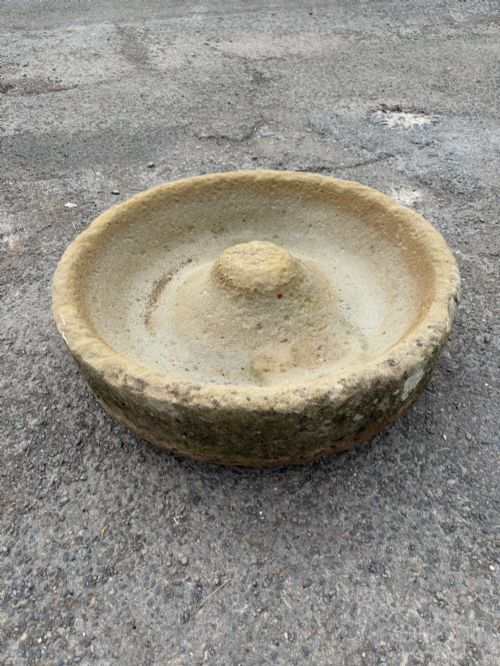
A stone planter trough is a heavy, functional vessel designed for garden planting, taking forms such as square troughs, pig troughs, and mortars.
The selections available span multiple eras, notably including pieces from the seventeenth, eighteenth, and nineteenth centuries alongside later twentieth-century examples.
Makers and artisans have utilised diverse materials, yielding forms ranging from simple rustic vernacular troughs to grand neoclassical Carrara marble cisterns.
How they were made
These vessels are hewn directly from natural geologic materials including sandstone, limestone, Purbeck stone, and Carrara marble using traditional masonry techniques.
Other examples utilise composite stone, cast stone, and reconstituted stone poured or pressed into moulds to replicate the weight and texture of quarried rock.
One extraordinary listed trough is fashioned from stone salvaged directly from the Houses of Parliament after damage sustained during the Blitz in World War II.
What varies in quality
Quality rests in the integrity of the material and the honesty of the hand-carved details, distinguishing solid quarried stone from mass-produced cast alternatives.
The degree of weathering and the depth of natural patination accumulated over centuries contribute significantly to the visual weight and desirability of a piece.
The Stone Planter Trough Glossary
- Sandstone
- A sedimentary rock composed mainly of sand-sized minerals or rock grains, frequently chosen for garden troughs due to its durability. It weathers to a pleasing texture over decades outdoors.
- Limestone
- A sedimentary rock formed from the skeletal fragments of marine organisms, appearing in pieces such as nineteenth-century troughs and millstone bases. It offers a dense structure and subtle tonal variations.
- Carrara marble
- A type of white or blue-grey marble from the city of Carrara in Tuscany, used for high-status neoclassical cisterns. This material brings a refined finish compared to vernacular sandstone.
- Reconstituted stone
- A manufactured material made from crushed or natural stone aggregate mixed with a binder to create cast garden planters. It provides the appearance of quarried rock in moulded forms.
- Mortar
- A heavy bowl historically used for grinding materials, repurposed as a garden vessel. These thick-walled forms often date to the seventeenth and eighteenth centuries.
Stone Planter Trough: Frequently Asked Questions
How do I clean a stone trough?
Gently brush away loose dirt and debris with a soft-bristled brush and plain water. Avoid harsh chemical cleaners that can strip the natural patination.
Allow the stone to retain its weathered surface, as the accumulated moss and lichen often enhance the antique character of the piece.
Can these troughs stay outside in winter?
Natural stone and cast stone troughs are designed for outdoor use and generally withstand cold weather well. Ensure the drainage hole remains clear so water does not pool and freeze inside.
Elevating the vessel slightly on small feet prevents it from sitting directly in freezing ground moisture.
How can I tell the age of a stone trough?
Age is indicated by tool marks left by hand chisels, the type of stone used, and the depth of weathering on the surfaces. Eighteenth-century and earlier examples often display irregular hand-hewn shaping.
Later nineteenth-century and twentieth-century pieces tend to show more uniform dimensions or evidence of mechanical cutting tools.
Are stone troughs too heavy for a patio?
These vessels possess substantial weight, particularly when carved from solid sandstone or limestone. Check the weight capacity of your patio or balcony before positioning a large specimen.
Position the trough in its final location before adding soil and plants, as moving it afterwards usually requires mechanical assistance.