


Stinton Royal Worcester Urn
A stinton royal worcester urn is a porcelain vessel carrying painted game birds or cattle, prized for its miniature animal scenes by a notable family of artists.
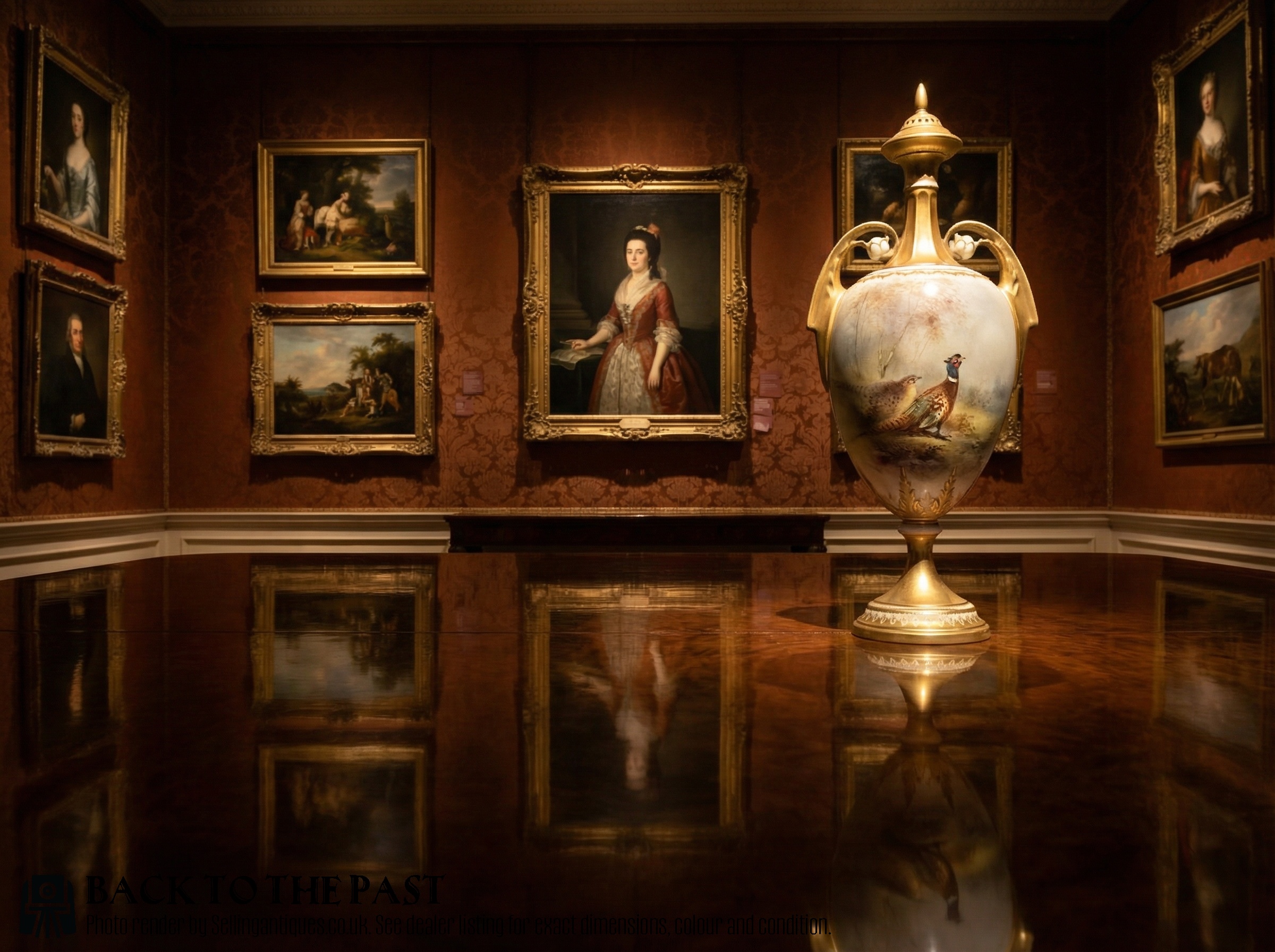
Stinton Royal Worcester Urn
A stinton royal worcester urn is a porcelain vessel designed for display, originating from the Edwardian period and the early decades of the twentieth century. These pieces take the form of decorative urns, vases, pot pourri jars, goblets and bow vases, which are often found as pairs.
The objects on this page centre on painted pastoral scenes and game birds executed by members of the Stinton family. Buyers frequently encounter smaller vases as well as larger covered examples decorated with detailed subjects.
How they were made
Makers utilised fine porcelain as a base for intricate hand painting, applying enamel colours to depict pheasants, cock pheasants and highland cattle. The painted surfaces are combined with gilt, gilding and gold leaf accents on the handles, rims and bases of the vessels.
Artists signed their work directly onto the porcelain body, often using signatures such as James Stinton, Jas Stinton, Harry Stinton, H Stinton or John Stinton. The pieces were then fired to set the enamel pigments and the golden embellishments permanently.
Stinton Royal Worcester Urn Retail Price Guide 2026
Typical asking prices for stinton royal worcester urn among the pieces listed under this phrase on Sellingantiques today, from the lower quarter to the upper quarter. They describe what is for sale here now, not the wider market.
Listings feature porcelain vessels decorated with enamel, gilt, gilding and gold leaf, spanning the Edwardian period up through nineteen thirty.
What varies in quality
Quality rests upon the delicacy and detail of the hand painted subject matter, where naturalistic plumage and animal forms distinguish superior artistry. The complexity of the vessel shape also influences the standing of the piece, ranging from simple small vases to elaborate lidded urns and three piece pot pourri sets.
The application of gilding and gold leaf adds another layer of distinction, as heavier or more intricate gold ornamentation enhances the overall presence of the porcelain. Works by specific family members who specialised in particular subjects hold distinct character within the range.
James Stinton·Harry Stinton·John Stinton·Royal Worcester
The Stinton Royal Worcester Urn Glossary
- Porcelain
- A white vitrified ceramic material used for fine decorative vessels. It provides a smooth surface for detailed enamel painting.
- Enamel
- Opaque vitreous paint applied to ceramics and fired at high temperatures. This medium allows for the vibrant depiction of feathers and fur.
- Gilding
- The application of gold leaf or gold powder onto the surface of porcelain. It highlights handles, necks and bases.
- Bow Vase
- A specific vessel shape featuring curved sides resembling a bow. These forms are frequently painted with landscape scenes.
- Pot Pourri
- A lidded jar or multi piece set designed to hold fragrant dried plant material. The pierced cover allows scent to diffuse.
Stinton Royal Worcester Urn: Frequently Asked Questions
How do I identify the artist?
Signatures appear directly on the painted surface of the porcelain, taking forms such as James Stinton, Jas Stinton, H Stinton, Harry Stinton or John Stinton. These inscriptions indicate which family member painted the specific scene.
Comparing the signature style helps buyers distinguish between the different artists who worked in the same studio tradition.
What forms do these vessels take?
The inventory includes various shapes such as small vases, large vases with covers, bow vases, goblets and three piece pot pourri sets. Many of these decorative objects were produced as matching pairs.
Each form provides a different canvas for the landscape or animal paintings that characterise the production.
Which periods are represented?
The pieces date from the Edwardian era through to the early decades of the twentieth century, spanning specific years such as nineteen hundred, nineteen ten, nineteen twenty and nineteen thirty.
This timeframe marks a period of notable decorative painting within the factory's output.