


Cream China Urn
These cream china urn and vase forms bring hand-painted artistry from the late nineteenth and twentieth centuries into your home.
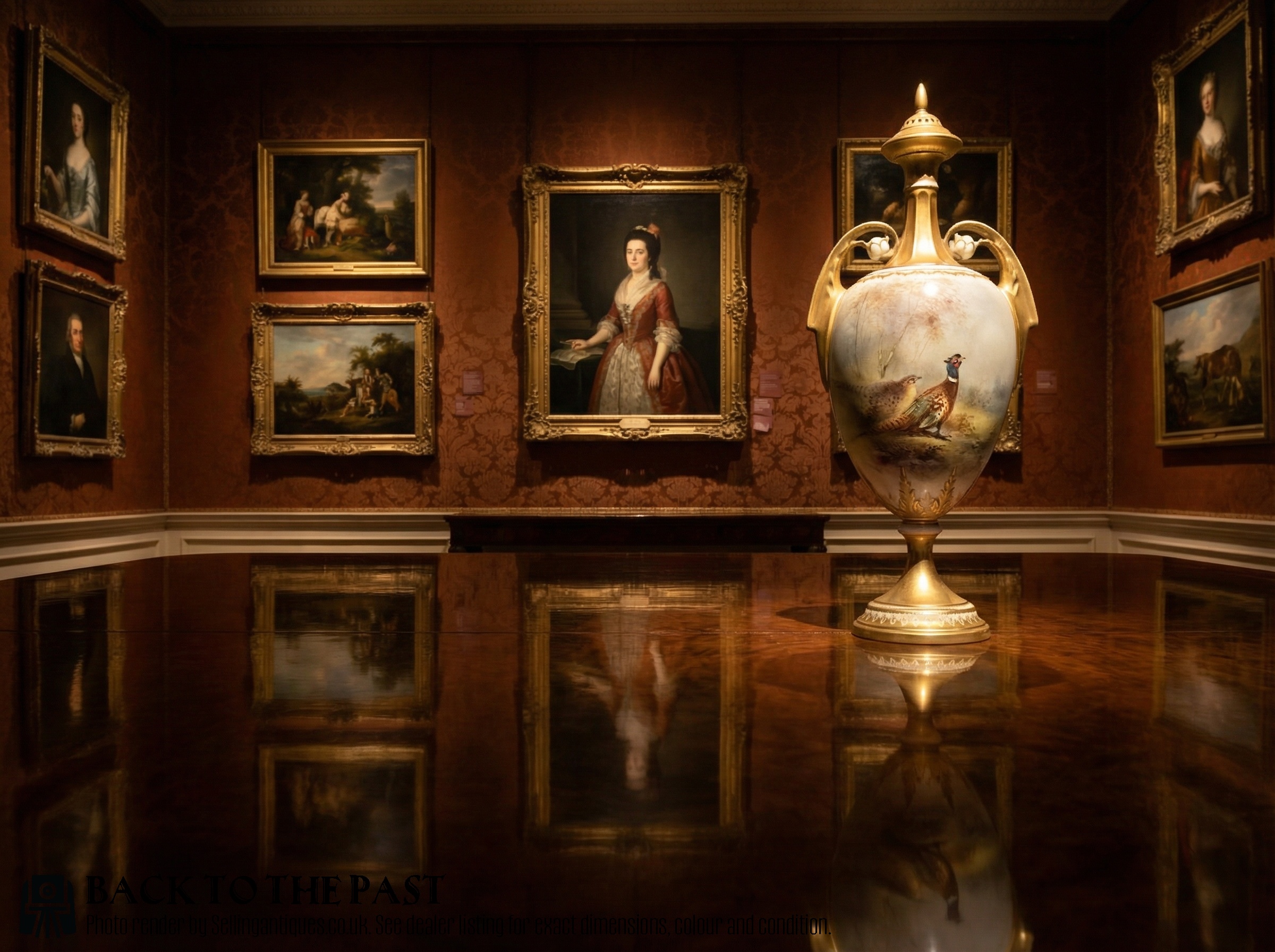
Cream China Urn
When you search for a cream china urn, you are looking at fine porcelain and bone china vessels produced primarily by Royal Worcester across the Edwardian period and into the mid-twentieth century. The forms range from ovoid vases and covered vessels to spill vases and goblets, characterised by their pale ivory or cream grounds.
You are most likely to meet pieces decorated with delicate hand-painted scenes of birds, sheep or fruit by noted artists such as James Stinton, Harry Davis, and E Raby. These items combine classical urn and vase shapes with meticulous naturalistic illustration set against soft cream surfaces.
Materials and technique
These items are shaped from porcelain and bone china, providing a smooth white or cream body that accepts detailed hand painting. Artists applied enamels directly to the pale surface to create lifelike depictions of pheasants, livestock and botanical subjects.
Many examples incorporate gilt, gold leaf, and rich gilding around the rims, bases and handles to frame the painted panels. This application of precious metal highlights the classical contours of the vases and goblets.
Cream China Urn Retail Price Guide 2026
Typical asking prices for cream china urn among the pieces listed under this phrase on Sellingantiques today, from the lower quarter to the upper quarter. They describe what is for sale here now, not the wider market.
The inventory records multiple works by James Stinton depicting game birds alongside pieces featuring livestock by Harry Davis.
Judging quality
The standard of these pieces rests largely on the skill of the artist and the complexity of the painted subject matter. Signed works by recognised painters command greater interest because the brushwork displays superior detail and anatomical precision in figures like birds and sheep.
The application of gilding and the balance of the porcelain form also dictate the tier of a piece. Finer examples show crisp, unblemished gold leaf framing intricate enamel work without blurring against the cream ground.
Royal Worcester·James Stinton·Harry Davis·E Raby·Ricketts
The Cream China Urn Glossary
- Bone china
- A type of soft-paste porcelain containing animal bone ash, producing a strong, milky-white body suitable for fine vessels.
- Gilding
- The application of gold leaf or gold powder to the surface of ceramics to create decorative metallic borders.
- Ovoid
- An egg-shaped vessel form frequently utilised for decorative vases and urns.
- Spill vase
- A tall, narrow receptacle designed to hold taper candles or spills used for lighting fires.
- Enamel
- Vitreous coloured glass fused to the ceramic body through firing, used for detailed hand-painted artwork.
Cream China Urn: Frequently Asked Questions
What periods do these pieces date from?
The selection spans from the late Victorian Aesthetic Movement through the Edwardian era and into the mid-twentieth century. Most items date between eighteen-ninety and nineteen-twenty.
Production methods remained grounded in traditional hand-painting techniques during these decades, though specific aesthetic styles shifted from ornate Victorian motifs towards cleaner Edwardian decorative designs.
Who painted these ceramics?
Several pieces feature work by renowned factory artists such as James Stinton, Harry Davis, and E Raby. These painters specialised in natural history subjects like game birds and sheep.
Signatures often appear discreetly on the front or base of the vessel, allowing collectors to identify the individual hand behind the enamel decoration.
How should I display a cream china urn?
Place your urn in a stable position away from direct sunlight and heavy foot traffic to protect the delicate enamel and gilt surfaces. Good lighting helps reveal the fine brushwork of the painted scenes.
Avoid placing them in damp areas or spaces with rapid temperature fluctuations, which can stress antique porcelain over time.
How do I clean these painted vases?
Dust the surface gently with a soft, dry ostrich feather duster or a clean, dry microfibre cloth. Avoid using water, abrasive cleaners, or chemical solvents on the painted panels.
If deeper cleaning is necessary, consult a professional conservator to prevent accidental damage to the delicate overglaze enamel and gold leaf.