


Sterling Silver Top Pot
These sterling silver top pot examples combine precious metal with cut glass and crystal for dressing tables and desks.
Sterling Silver Top Pot
A sterling silver top pot brings together a functional glass or crystal vessel with a hallmarked metal lid, serving various domestic purposes from the dressing table to the desk. Collectors encounter dressing table jars, vanity boxes, inkwells, condiment pots and trinket containers spanning the Georgian, Victorian, Edwardian and Art Deco eras.
The pieces on this page lean heavily towards early twentieth-century production, particularly the 1920s and 1930s, featuring significant representation from Birmingham silversmiths. These items range from small salt cellars and mustard pots to large cut crystal boxes and elaborate dressing table sets.
Materials and construction methods
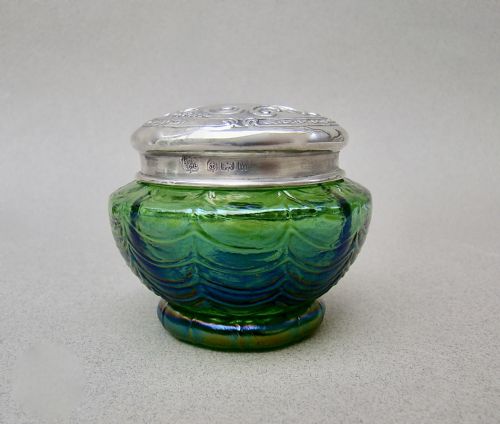
The vessels themselves utilise heavy cut glass, cut crystal, cranberry glass, Kralik glass and occasionally oak, paired with solid sterling silver lids and mounts. Glass bodies are frequently moulded, etched or deeply cut to catch the light beneath the reflective metal closures.
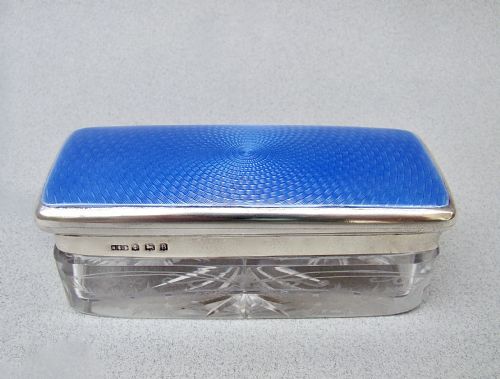
Silversmiths shaped the lids through stamping, embossing and spinning, often incorporating applied enamels, guilloché patterns or hand-engraved crests. Hallmarks stamped directly into the silver record the assay office, such as Birmingham, Sheffield or London, alongside the date letter and maker's mark.
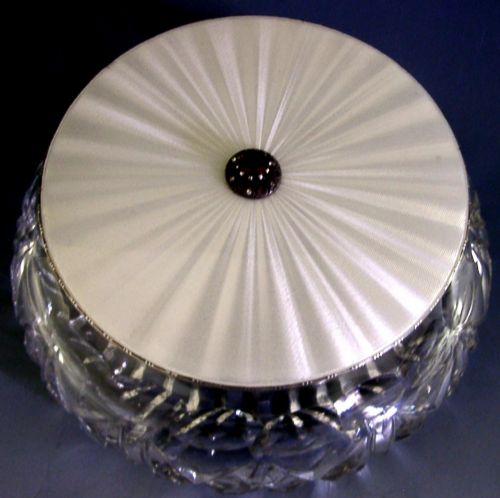
Materials paired with sterling silver include cut crystal, cranberry glass, carved oak, and multicoloured guilloché enamel.
Evaluating craftsmanship and condition
Quality rests upon the weight and depth of the crystal cutting, the crispness of the silver hallmarks, and the integrity of any applied enamelwork. Finer examples display thick, resonant crystal bodies and substantial silver gauges for the lids rather than thin metal sheets.
The sophistication of the design dictates distinction, moving from utilitarian condiment containers to elaborate pagoda mustard pots, heart-shaped boxes and engine-turned guilloché vanity sets by noted makers.
A. J. Pepper & Co·Henry Clifford Davis·Elkington and Company·Jonathan Douglas·Asprey
The Sterling Silver Top Pot Glossary
- Guilloche enamel
- Decorative technique involving precise, intricate mechanical patterns engraved beneath translucent layers of coloured enamel. This method was widely favoured during the Art Deco period on dressing table sets.
- Hallmark
- Official stamp applied to precious metals indicating purity, origin assay office and date of manufacture. British sterling silver standard is denoted by the lion passant.
- Kralik glass
- Art glass produced by the Bohemian factory known for iridescent surfaces and organic forms. Pieces occasionally fitted with silver mounts reflect a crossover in European decorative arts.
- Humidor
- Sealed box designed to maintain humidity, constructed here in oak with silver mountings. These desk accessories protect contents through fitted interior compartments.
- Vanity jar
- Container designed for cosmetics or dressing table accessories, featuring a removable silver lid. They often utilise heavy cut crystal to provide stability and visual weight.
Sterling Silver Top Pot: Frequently Asked Questions
What are these pots used for?
These vessels served diverse domestic functions, holding cosmetics, pins, ink, stamps, mustard or salt upon dressing tables and dining desks.
Many were produced as matching dressing table sets, while others functioned as standalone desk accessories or condiment containers.
How do I date a silver top?
Dating relies upon the stamped hallmarks on the silver lid or collar, which include specific date letters corresponding to the assay office.
Additional clues come from the cutting style of the glass and the overall design aesthetic, such as Edwardian garland motifs or Art Deco geometric lines.
Are the glass bodies always crystal?
The containers utilise a range of glass types, including heavy cut crystal, moulded glass, etched glass, cranberry glass and Kralik glass.
Heavier pieces generally feature deep-cut crystal, whereas coloured glass variants frequently appear in trinket boxes and vanity jars.
How should I clean the silver lids?
Silver components require gentle cleaning with a specialised non-abrasive silver polish to preserve the hallmarks and any delicate engraving.
Care must be taken to avoid applying harsh chemical cleaners directly onto adjoining glass surfaces, enamel panels or fitted wooden interiors.