


Sterling Silver Table Clock
A sterling silver table clock brings genuine weight and quiet mechanical precision to a desk, mantelpiece, or travel bag.
Sterling Silver Table Clock
A sterling silver table clock sits comfortably within desk clocks, mantel clocks, and travel timepieces spanning the nineteenth and twentieth centuries. These pieces appear in periods ranging from the Victorian era through Edwardian designs, the Arts and Crafts movement, and into Art Deco stylings.
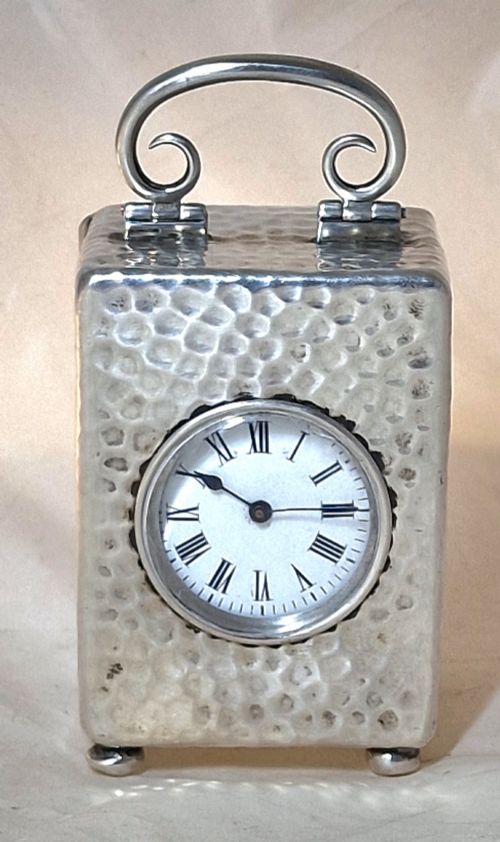
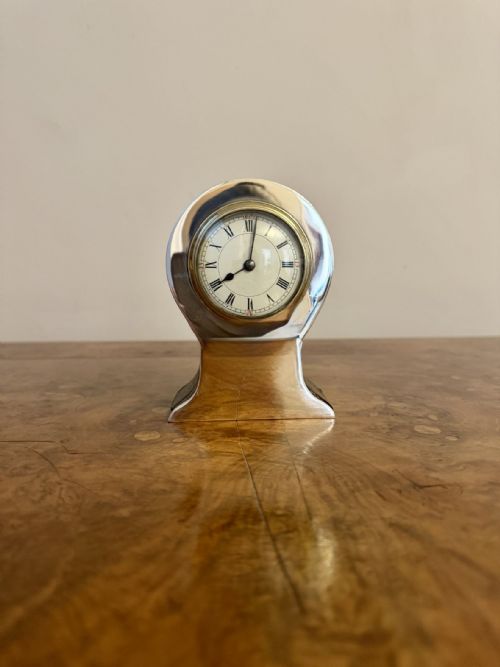
The version most commonly met on this page is the miniature carriage clock or small desk timepiece, often housed in a solid silver case or boasting a silver front. These works frequently incorporate glass panels, enamel details, or tortoiseshell accents to frame the dial.
How they were made
Silversmiths constructed these cases from solid sterling silver or mounted silver fronts onto wooden cores, occasionally utilising brass for internal movements and structural framing. Metalwork techniques varied from smooth polished finishes to the distinct hammered textures seen in Arts and Crafts examples.
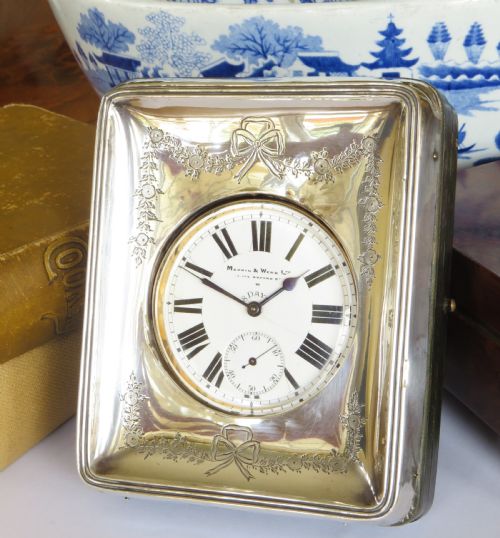
Dials and bezels frequently incorporated glass viewing panels and colourful guilloche enamel work to catch the light. Skilled makers applied hallmarks to confirm the standard of the metal and record the assay office and year of production.
Several miniature clocks are small enough to slip into a pocket or travel bag, proving that past travellers refused to be late.
What varies in quality
The distinction between ordinary and exceptional pieces rests upon the crispness of the silversmith's stamp work and the depth of decorative detail on the silver case. Pieces displaying hand-hammered surfaces, intricate Art Nouveau motifs, or geometric Art Deco skyscraper lines show a higher level of design ambition.
Integration of specialised materials such as translucent blue guilloche enamel or finely worked tortoiseshell elevates a timepiece above standard utility. The presence of named makers and legible London hallmarks adds considerable weight to the provenance and overall character of the clock.
Mappin and Webb·William Comyns·Henry Matthews·Liberty's London
The Sterling Silver Table Clock Glossary
- Guilloche enamel
- A decorative technique involving intricate geometric patterns machined into metal beneath a translucent layer of coloured enamel. This method was widely utilised on dials and cases during the early twentieth century.
- Carriage clock
- A small portable spring-driven timepiece originally designed for travelling officers and gentlemen. These pieces typically feature a rectangular brass or silver frame fitted with glass panels.
- Hallmark
- An official stamp applied by an assay office to indicate the purity of precious metal, the maker, and the year of production. British silver pieces carry these marks to verify sterling standard.
- Timepiece
- A clock that tells the time without incorporating a striking mechanism to chime the hours. Many miniature desk clocks and travel clocks are built to this simpler specification.
- Easel clock
- A desk clock supported by a hinged rear strut that props the dial upright for easy viewing. These designs frequently pair silver fronts with wooden or leather backing boards.
Sterling Silver Table Clock: Frequently Asked Questions
How do I wind a silver carriage clock?
Most portable timepieces use a small matching key fitted to arbours on the back plate to tension the mainspring. Care must be taken not to overwind the mechanism.
Older movements respond best to gentle, consistent turns until firm resistance indicates the spring is fully charged.
How are antique silver clock cases cleaned?
Polishing requires a soft microfibre cloth and a mild, non-abrasive silver cream applied sparingly around the case edges. Care must be taken to avoid getting cleaning agents onto glass panels or enamel surfaces.
Frequent light dusting preserves the natural polish without wearing down crisp hallmarks or delicate hand-hammered textures.
Are these clocks suitable for daily use?
Mechanical spring-driven timepieces can keep reliable time when properly serviced by a professional horologist. Many Edwardian and Art Deco models remain fully functional for everyday desk or mantel placement.
Routine gentle handling ensures the delicate balance wheels and glass panels remain protected over time.