

Sterling Silver T Bar
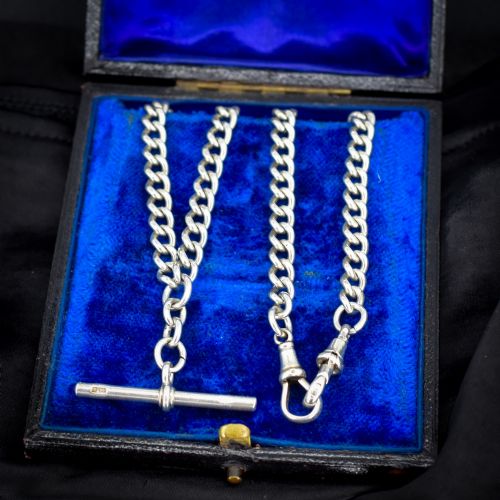
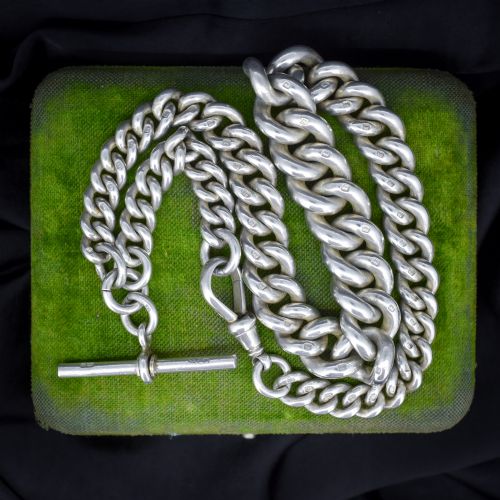
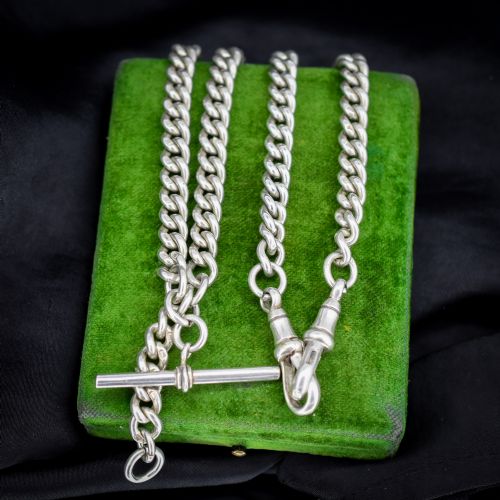
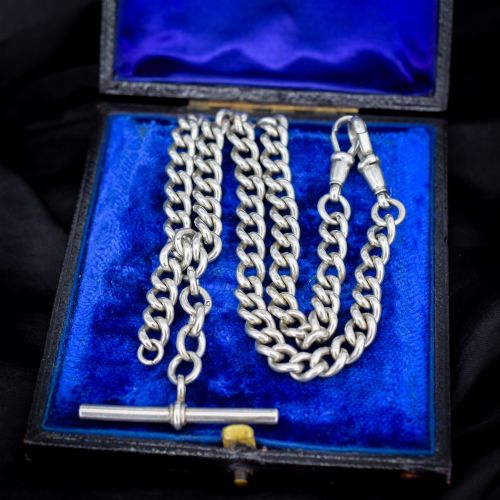
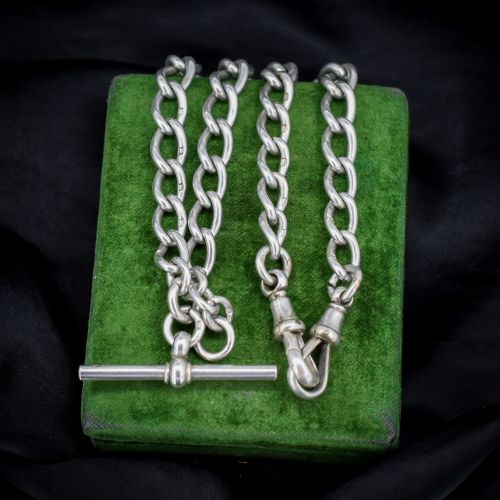
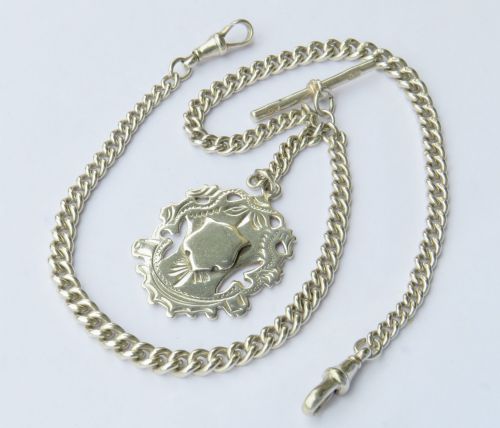
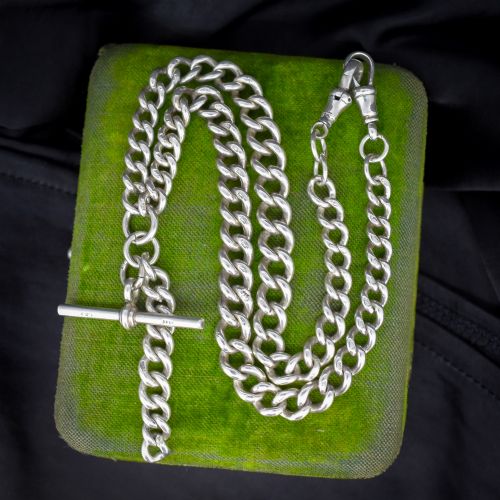
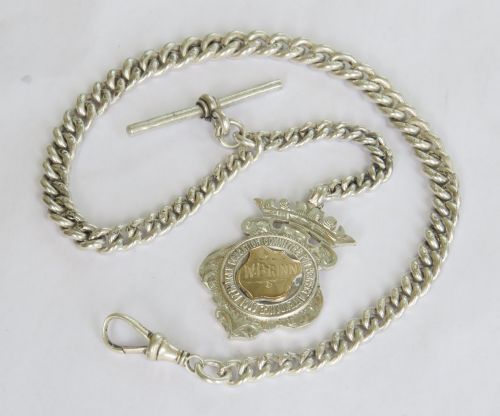
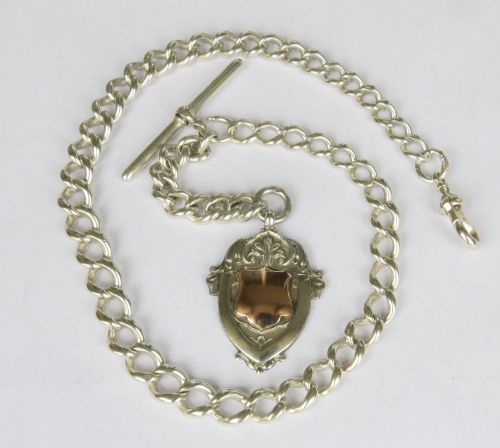
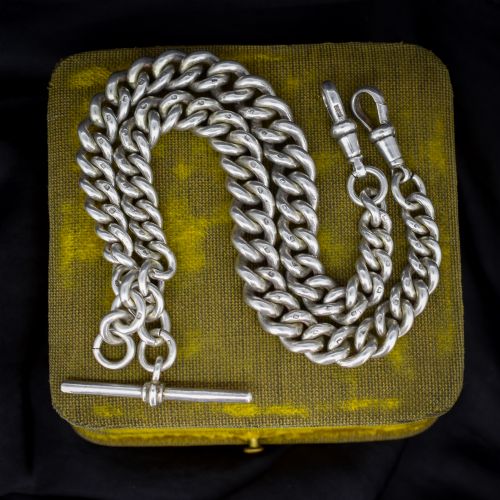
A sterling silver t bar secures a pocket watch albert chain, threading through a waistcoat buttonhole while dog clips anchor the timepiece.
Sterling Silver T Bar
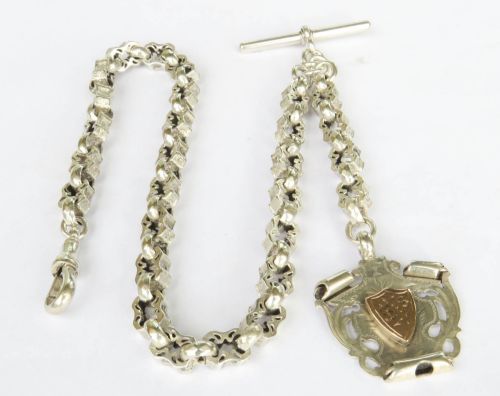
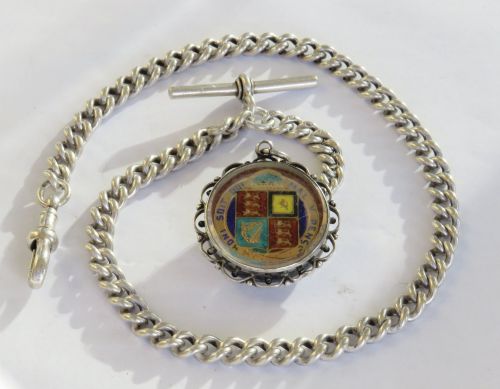
The pieces listed under this search phrase comprise solid silver pocket watch albert chains, often complete with matching t-bars, dog clips, and decorative fobs. Most surviving examples date from the Victorian, Edwardian, and Art Deco periods, reflecting an era when pocket watches were everyday accessories.
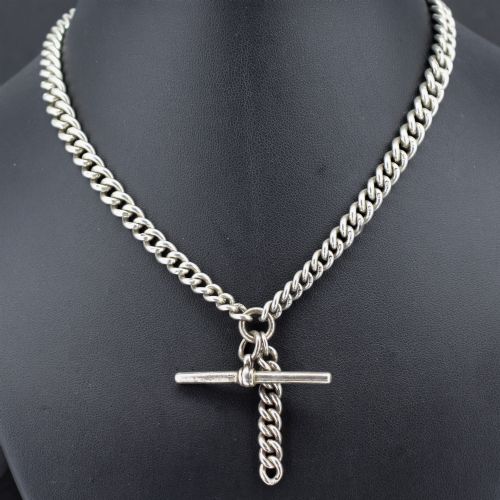
Beyond standard watch chains, buyers will encounter double alberts designed to span two waistcoat pockets, alongside shorter lengths now frequently worn as necklaces or bracelets.
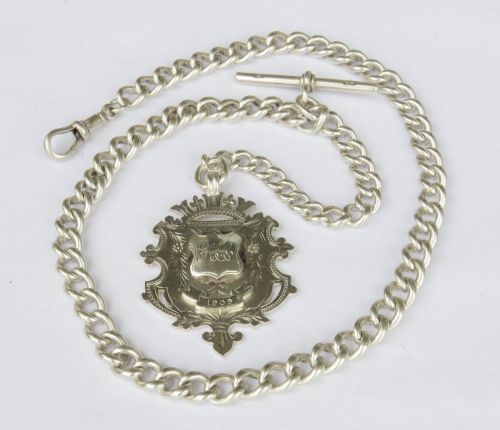
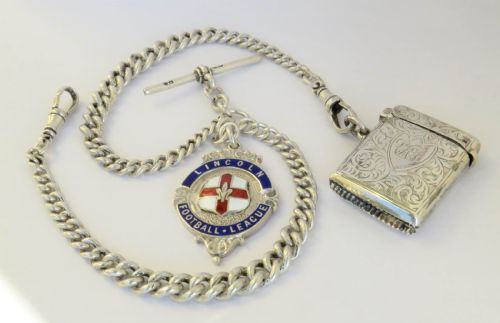
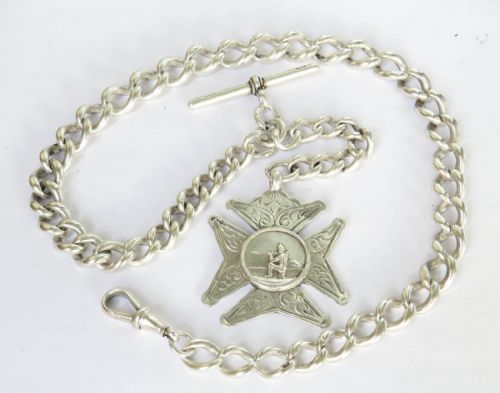
Associated items such as sovereign purses, medallions, and vestas commonly accompany these chains, having been suspended from the central t-bar drop.
Metals and Link Construction
Silversmiths constructed these chains from solid sterling silver, utilising various link formations such as curb, trombone, figaro, and fancy patterns to achieve both flexibility and substantial weight.
Individual links were hand-assembled, soldered, and fitted with swivel dog clips and transverse t-bars, often bearing full British hallmarks indicating the assay office and year of creation.
Sterling Silver T Bar Retail Price Guide 2026
Typical asking prices for sterling silver t bar among the pieces listed under this phrase on Sellingantiques today, from the lower quarter to the upper quarter. They describe what is for sale here now, not the wider market.
Victorian gentlemen secured matches in silver vesta cases dangling directly from their waistcoat watch chains.
Weight, Hallmark Clarity, and Link Integrity
The quality of a watch chain is determined by the gauge of the silver wire and the tightness of the link construction, with heavier gram weights commanding greater desirability among collectors.
Crisp, legible hallmarking on individual links and the t-bar itself preserves the historical record of the piece, whereas excessive wear at the pivot points of dog clips indicates heavy period usage.
Richard Comyns·Edward Barnard And Sons·Georg Jensen·Sampson Mordan·Barker Bros·Susannah Barker·Tiffany And Co·Wallace
The Sterling Silver T Bar Glossary
- T Bar
- A short transverse crossbar attached to the centre of an albert chain, designed to slip horizontally through a waistcoat buttonhole. It anchors the chain securely.
- Albert Chain
- A pocket watch chain named after Prince Albert, worn across the front of a waistcoat. It attaches a timepiece on one end to a secure pocket or buttonhole on the other.
- Dog Clip
- A spring-loaded swivel fastening attached to the ends of a watch chain. It allows the wearer to easily clip and unclip pocket watches and fobs.
- Double Albert
- A watch chain configuration featuring two strands suspended from a central t-bar. One strand holds the watch while the other suspends a fob or vesta case.
- Fob
- A small ornament, medal, or seal suspended from a watch chain. These often commemorated sports clubs, military service, or personal milestones.
- Vesta Case
- A small pocket container used to hold matches, frequently found hanging from antique watch chains. They are often engraved with floral or geometric motifs.
Sterling Silver T Bar: Frequently Asked Questions
How do I wear an antique watch chain?
Thread the t-bar through a central buttonhole of your waistcoat, placing the watch in the lower pocket.
The remaining length of chain can drape across the front with any attached fobs suspended from the centre drop.
Can these chains be worn as necklaces?
Many shorter albert chains are routinely worn around the neck by utilising the existing dog clip and t-bar fastening.
Heavier curb link and trombone variations suit this modern adaptation particularly well.
How can I date my silver chain?
Examine the individual links and the t-bar for British hallmark stamps, which include a date letter indicating the exact year of assay.
Style variations in the links also help assign pieces to the Victorian, Edwardian, or Art Deco eras.