

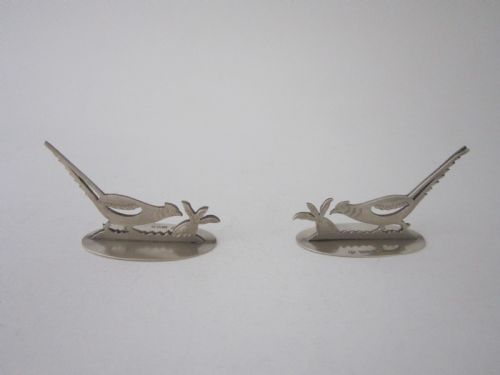


Sterling Silver Place Stands
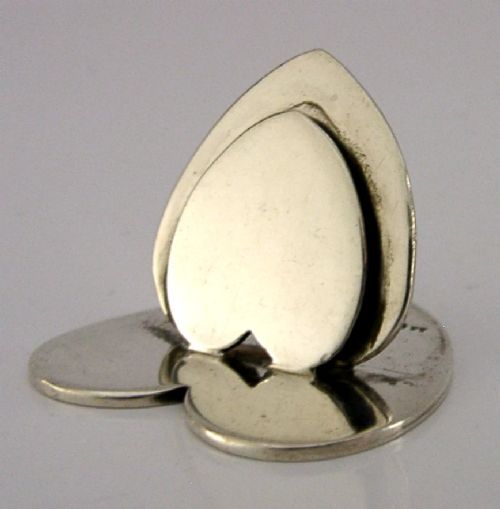
Sterling silver place stands bring dining tables to life, holding menu cards and place markers with unmistakable Edwardian and later character.
Sterling Silver Place Stands
When you search for sterling silver place stands, you encounter table accessories designed to hold menus and name cards during formal meals. The selection spans menu holders, place card holders, and combined tableware accessories intended for dining settings.
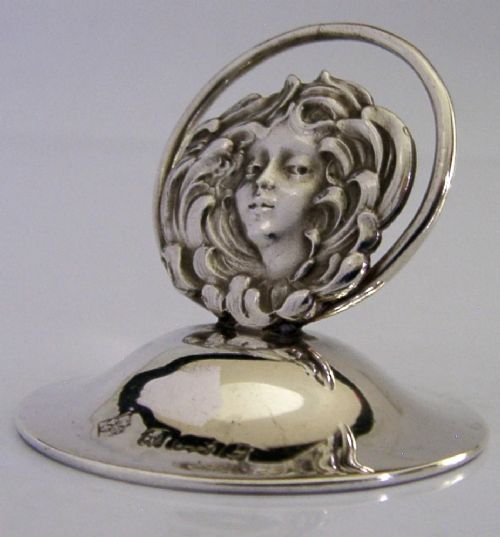
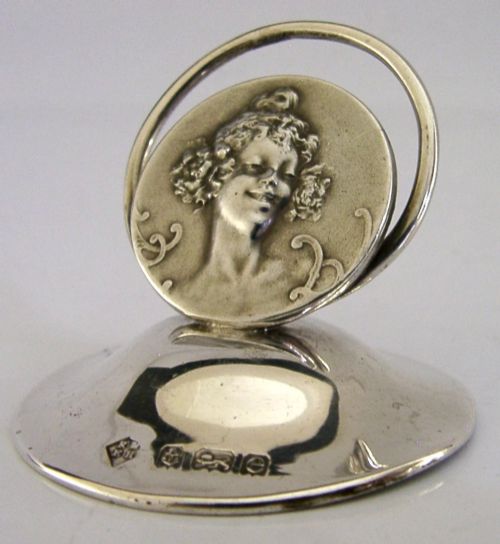
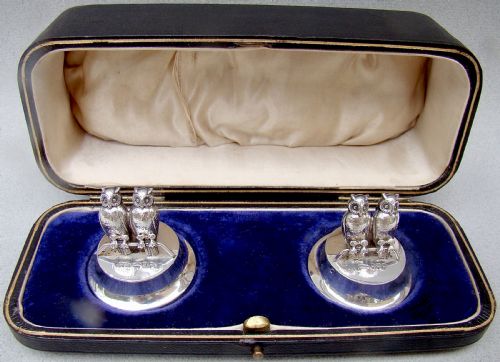
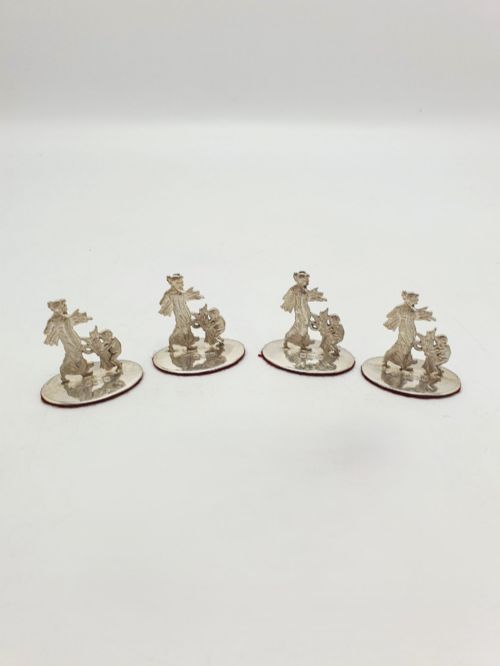
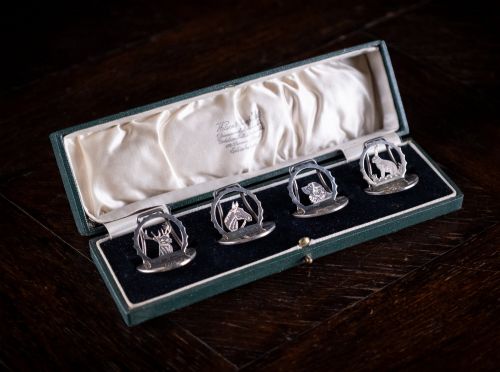
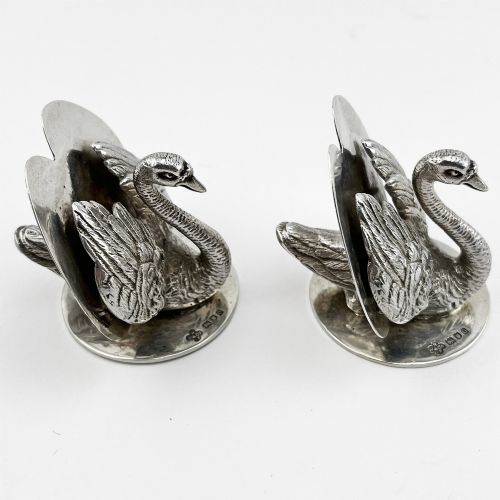
The pieces on this page appear most frequently from the Edwardian period, alongside examples from the 1910s, 1920s, and 1930s under George V and George VI reigns. You will regularly find figural designs depicting animals, birds, and literary or whimsical subjects.
Makers utilised sterling silver alongside velvet, silk, glass, leather, feathers, and guilloche enamel to create varied forms. Styles range from Art Nouveau curves and Art Arts & Crafts simplicity to Art Deco geometry and British Military themes.
Materials and construction methods
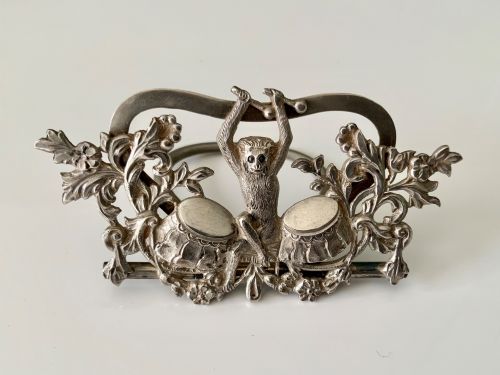
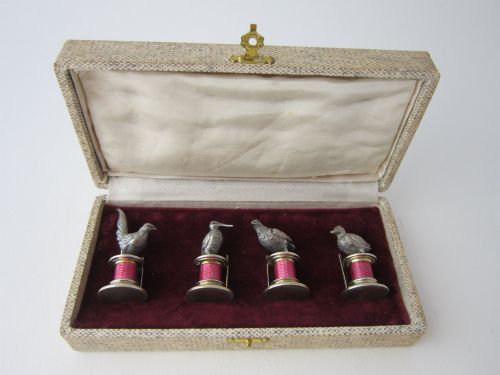
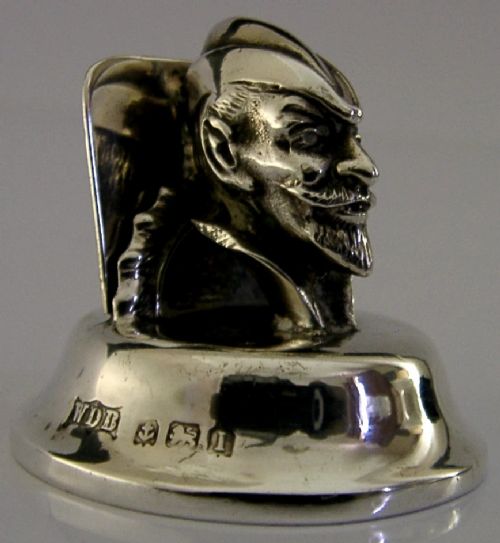
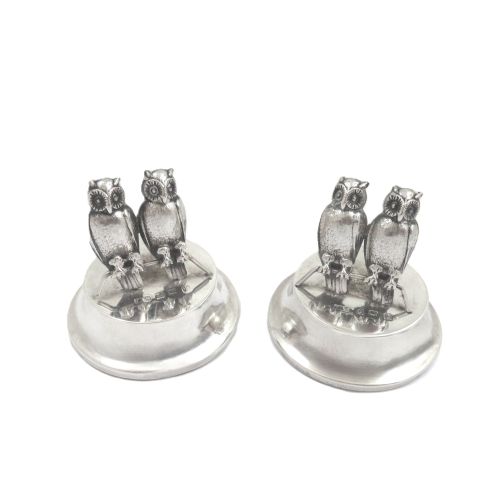
Silversmiths shaped sterling silver through casting, stamping, and hand-chasing to achieve detailed figural subjects such as owls, foxes, grouse, monkeys, and figures from Alice in Wonderland or Robin Hood. These techniques allowed makers to render feathers, fur, and facial expressions with high precision.
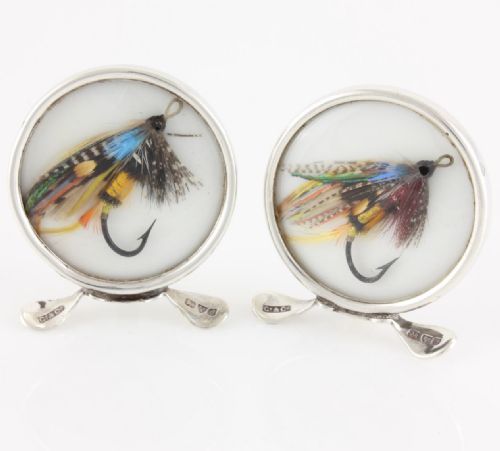
Many items incorporate supplementary elements like weighted bases, easel backs, or clips to support cards securely on the dining table. Enamel work, notably guilloche enamel, adds colour and contrast to silver surfaces on specific menu and place card holders.
Object forms span menu holders, place card holders, photo clips, and tableware accessories created in Art Nouveau, Art Arts & Crafts, and Art Deco styles.
Assessing quality in silver table accessories
Quality in these pieces depends on the crispness of the casting and the depth of the hand-chasing on figural subjects. Finer examples show sharp definition in animal plumage, fur, and facial details, whereas simpler pieces rely on basic stamped outlines.
The presence of maker marks, town hallmarks, and date letters from assay offices in Birmingham, Chester, and London elevates an item's documentary interest. Sets that survive in original fitted boxes or as matched pairs and larger groups retain greater integrity than isolated single pieces.
Levi & Salaman·A. Wilcox·Grey & Co.·Sampson Mordan·Asprey·Liberty
The Sterling Silver Place Stands Glossary
- Sterling silver
- An alloy containing 92.5 percent silver by mass, with the remainder composed of copper or other metals. This standard has been used for centuries to ensure durability in tableware.
- Menu holder
- A small desk-like or upright accessory designed to display the meal selection to diners at a table. They often match smaller place card holders in a suite.
- Place card holder
- A miniature stand used to indicate where guests should sit at a formal dinner party. They frequently share decorative themes with menu holders.
- Guilloche enamel
- A decorative technique where a precise pattern is mechanically engraved into the silver beneath a translucent layer of enamel. This creates a repeating geometric shimmer of colour.
- Hallmark
- A series of official marks stamped on items to guarantee the purity of the metal, the maker, and the year of assay. British pieces typically show a lion passant and an assay office symbol.
Sterling Silver Place Stands: Frequently Asked Questions
How were menu holders used?
Hosts placed menu holders along dining tables so guests could easily read the courses planned for the meal. Sets of multiple holders ensured uniformity across long tables or multiple smaller tables.
They worked in tandem with matching place card holders to guide guests to their designated seats during banquets and dinner parties.
How do I date these silver pieces?
Dating relies heavily on the hallmarks stamped into the sterling silver, which indicate the specific assay office and year of manufacture. Stylistic indicators, such as Art Nouveau curves or Art Deco lines, also point toward specific decades like the 1900s or 1930s.
Design themes, including military motifs or literary characters, often reflect the cultural context of the period in which they were made.
How should I clean silver place holders?
Cleaning requires a soft microfibre cloth and a gentle silver polish formulated to remove tarnish without abrading the fine details of the casting. Care must be taken around enamel, glass, or fabric elements to avoid moisture damage.
Storing pieces in dry conditions helps prevent rapid retarnishing between uses on the dining table.