

Sterling Silver Peppers
Sterling silver peppers bring functional elegance to the dining table, ranging from simple shaker pots to whimsical animal novelties across several centuries of design.
Sterling Silver Peppers
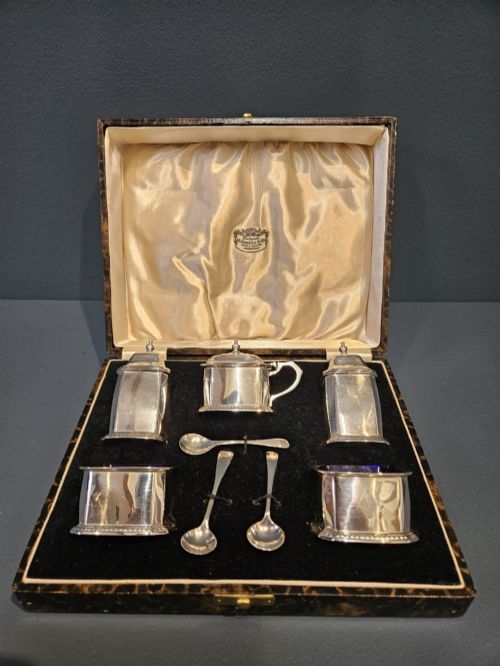
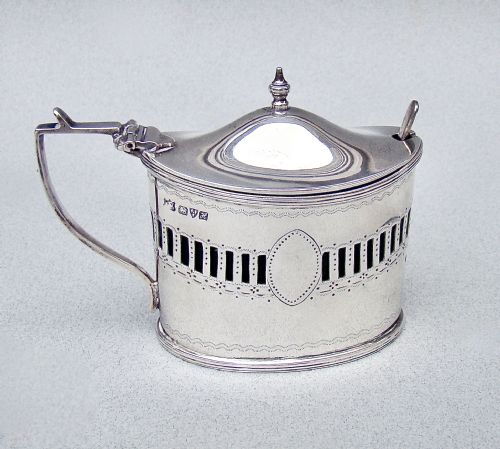
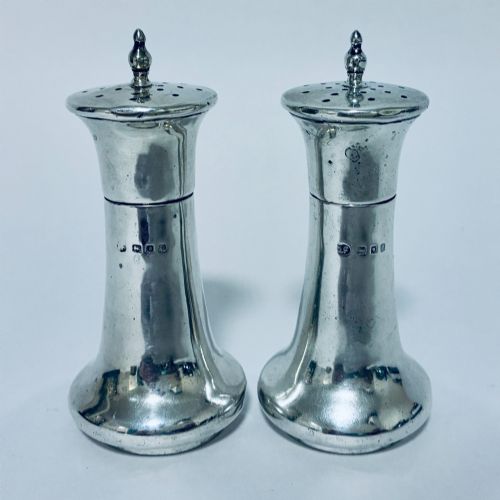
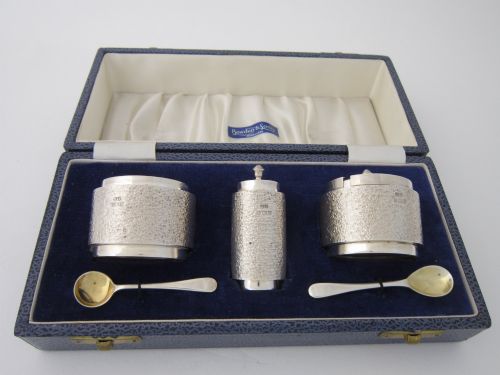
When you search for sterling silver peppers, you encounter small dining table accessories designed to hold and dispense ground pepper or other fine condiments. These pieces appear as individual pepper pots, matched pairs, or components within larger condiment sets alongside salt cellars and mustard pots.
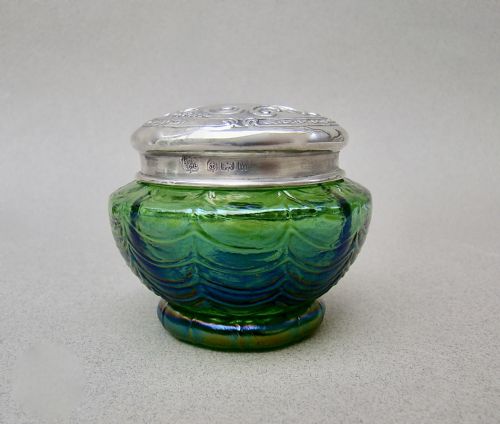
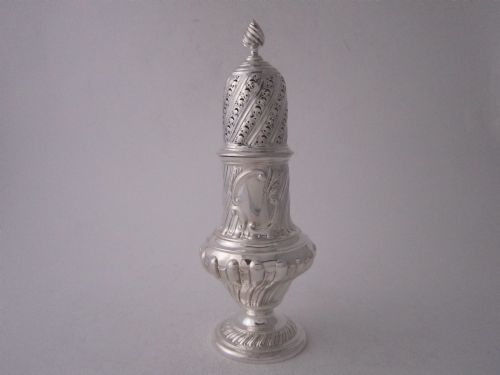
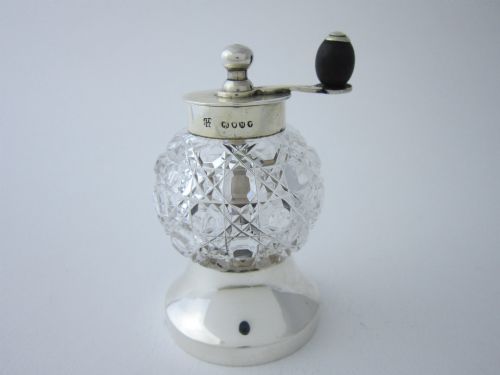
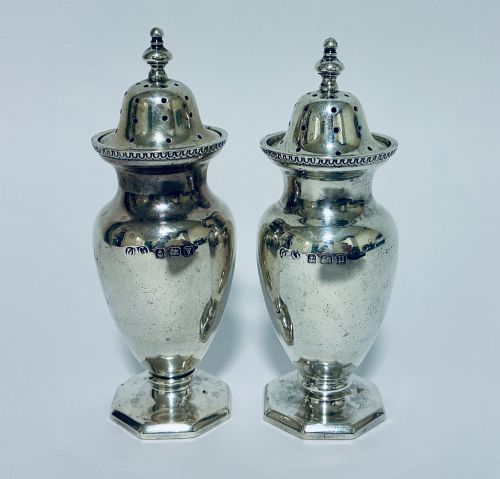
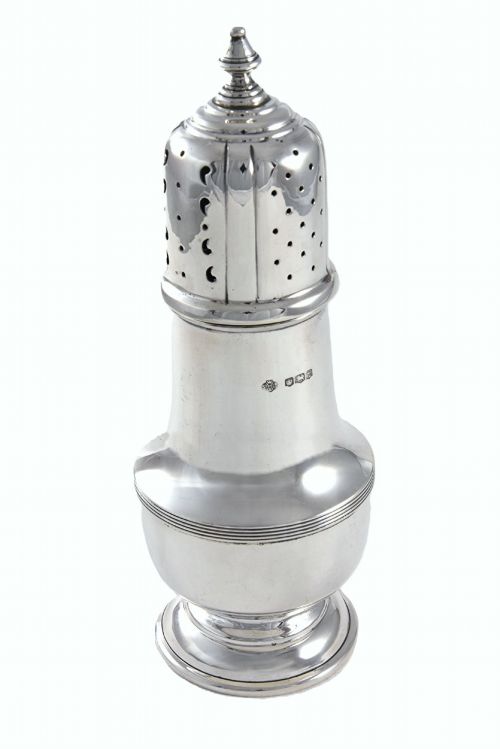
The selection on this page draws from multiple eras, showing particular strength in Victorian and Edwardian examples alongside Georgian forms and twentieth-century interpretations. Shakers, casters, and pepper grinders in glass and silver frequently represent the standard domestic repertoire.
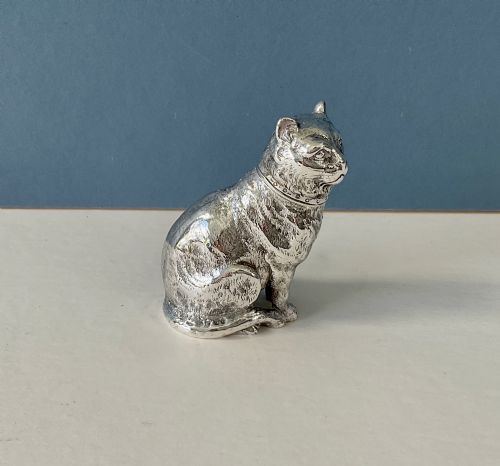
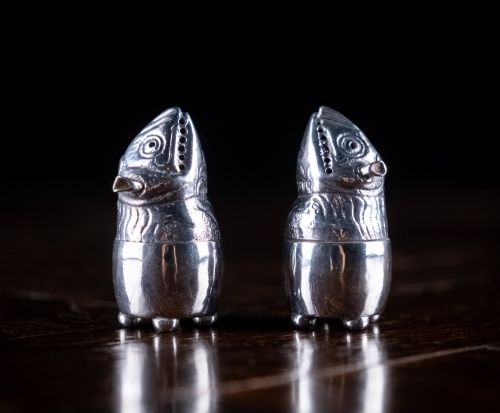
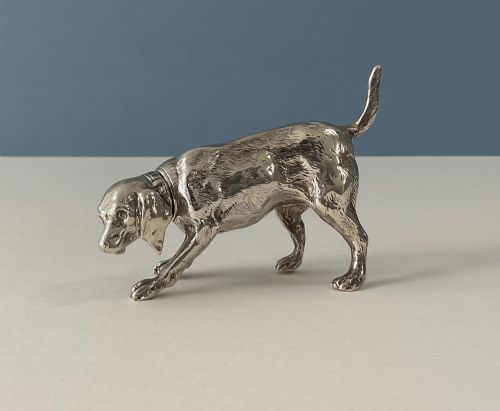
Novelty forms also feature prominently, taking the shape of animals such as owls, chicks, cats, and dogs. These figurative designs offer a lighter counterpart to the formal baluster casters and cruet stands found in Georgian and revival dining services.
Materials and construction
The primary material is sterling silver, worked into shape through hammering, spinning, or casting depending on the era and form. Many pieces incorporate cut glass bodies, particularly pepper grinders and cruet bottles, which reveal the contents while providing weight and stability.
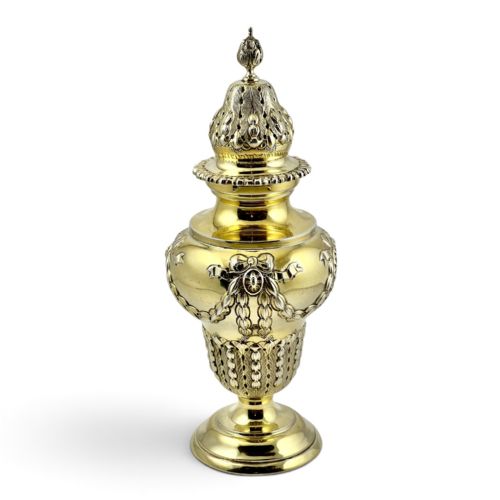
Surface treatments and interior fittings vary, with some early twentieth-century examples utilising silver gilt interiors to resist the corrosive properties of salt and pepper. Associated elements like internal grinders combine steel mechanisms with exterior silver casings.
Dining tables of the past gained character through tiny silver owls and chicks serving as pepper pots with watchful glass eyes.
Evaluating craftsmanship and condition
Quality rests upon the crispness of the chasing, the structural integrity of the piercing on shaker tops, and the weight of the metal. Heavier gauges of silver resist denting during daily use and maintain sharper hallmarks over generations.
In novelty pieces and grinders, the fidelity of the casting and the smooth operation of mechanical parts determine the standard. Maker marks and clear hallmarks contribute significantly to the standing of any individual piece.
A. J. Pepper & Co·Alfred Marston·Frederick Brasted·William Neale·Charles Thomas Fox·Stephen Adams·James Goodwin·Simon Pantin·The Barker Brothers·James Dixon & Sons Ltd·Bricks & Sons
The Sterling Silver Peppers Glossary
- Caster
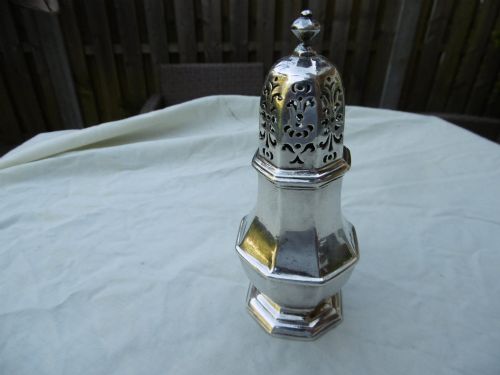
- A small vessel with a pierced top used for shaking sugar or spices over food. These tall, vase-shaped pieces date back to the Georgian period and beyond.
- Muffineer
- An alternative term for a sugar caster or shaker used during breakfast or tea services. It shares the pierced dome lid common to pepper pots.
- Cruet set
- A matched assembly of bottles, casters, or pots held within a standing frame. They organise various condiments for the dining table.
- Pounce pot
- A small container with a perforated lid used to sprinkle resin powder onto rough paper to prepare it for writing. They share a similar form to early pepper shakers.
- Hallmark
- A series of official stamps applied to precious metals indicating the standard of purity, the assay office, and the year of manufacture. They provide the primary means of dating British silver.
Sterling Silver Peppers: Frequently Asked Questions
How do I clean antique silver peppers?
Clean sterling silver peppers gently using a specialist silver cloth or a mild detergent in warm water. Avoid abrasive pastes that can wear down crisp hallmarks and fine chasing.
Dry the pieces thoroughly with a soft cloth immediately after washing. Ensure glass liners or grinder mechanisms are completely dry before reassembly to prevent tarnishing.
Are antique silver peppers safe for daily use?
Most solid sterling silver peppers remain structurally sound for regular dining use. Modern table salt and pepper can accelerate tarnishing if left in direct contact with the silver for extended periods.
Empty the contents after use and check that any glass or gilt interiors are intact. Novelty or delicate cage-work pieces benefit from more careful handling.
How can I tell the age of a silver pepper pot?
Examine the hallmarks stamped on the base, rim, or lid of the piece. These marks indicate the assay office, the silver standard, and a date letter corresponding to a specific year.
The overall style, such as the heavy rococo revival of the Victorian era or the clean lines of Art Deco, also points toward the period of manufacture.
What is the difference between a caster and a shaker?
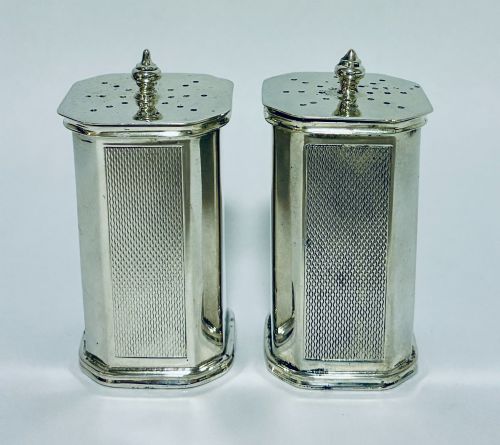
Casters generally feature a taller, baluster or octagonal silhouette with a securely fitting pierced cap, originating in the early eighteenth century. They were designed primarily for sugar or large-grained spices.
Shakers tend to be smaller and more compact, designed for individual place settings or casual dining. Both rely on perforated tops to dispense contents.