


Sterling Silver Mustard Spoons
Sterling silver mustard spoons are small tableware implements designed for dining tables, offering both function and decorative craft.
Sterling Silver Mustard Spoons
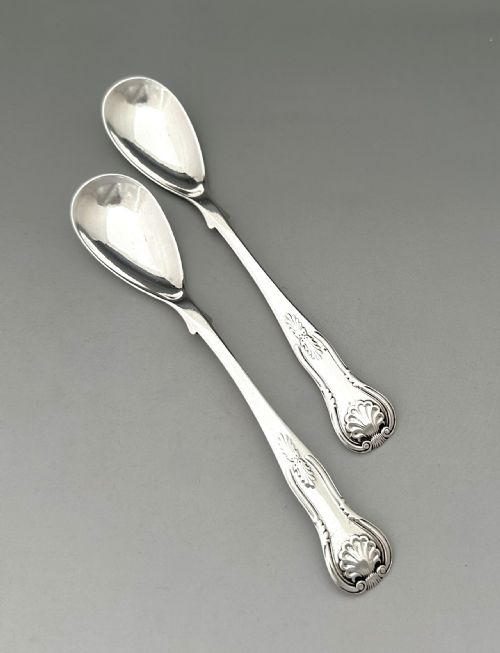
Sterling silver mustard spoons are functional tableware implements designed specifically for serving mustard from pots or cruet sets. These small spoons appear alongside larger condiment sets and individual mustard pots dating across the Victorian, Edwardian, and later periods.
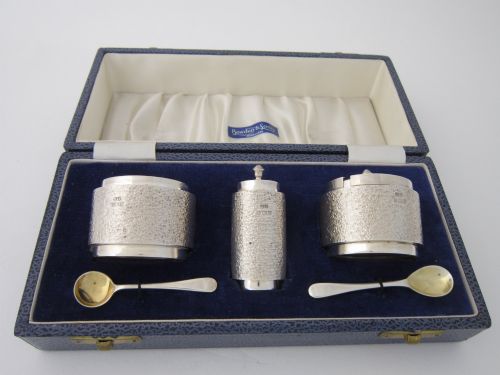
The selections available here range from single pieces to matched pairs and larger groupings associated with complete cruet sets. Scottish novelty designs and traditional regional patterns also emerge among the items listed on this page.
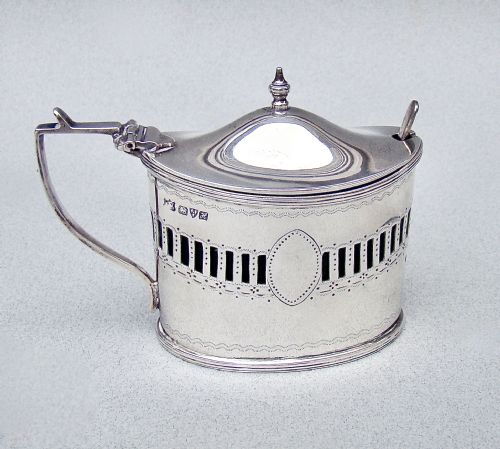
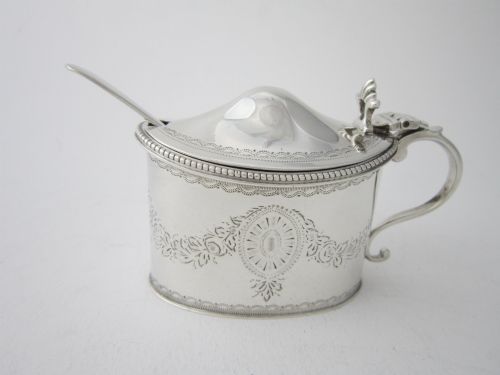
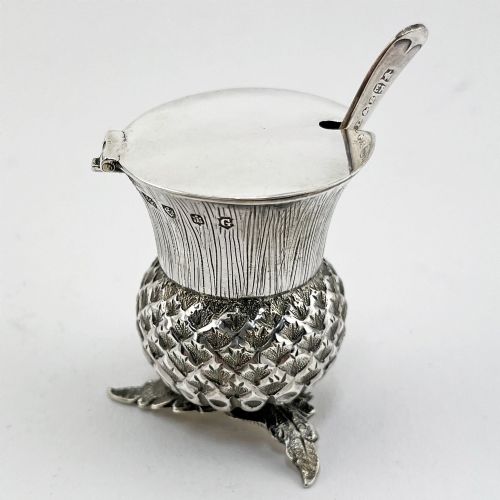
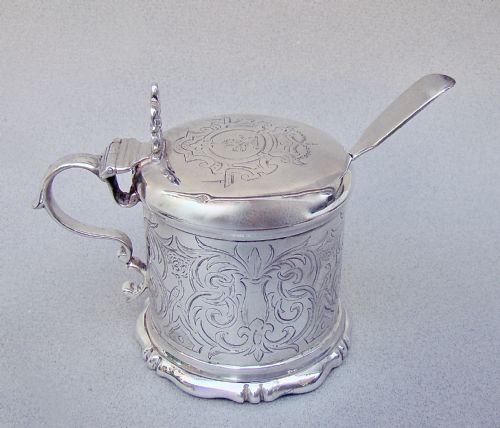
Buyers will encounter these spoons paired with various forms of mustard pots, from simple drum designs to pagoda shapes and thistle-moulded vessels. The material composition primarily relies on solid sterling silver, occasionally accompanied by glass liners in blue or ruby hues.
Materials and construction
Sterling silver serves as the primary material for these spoons and their associated condiment sets, providing durability and a distinct metallic lustre. Silversmiths utilised traditional manufacturing techniques to shape the metal into bowls and slender handles, often incorporating pierced work or cast decorative elements.
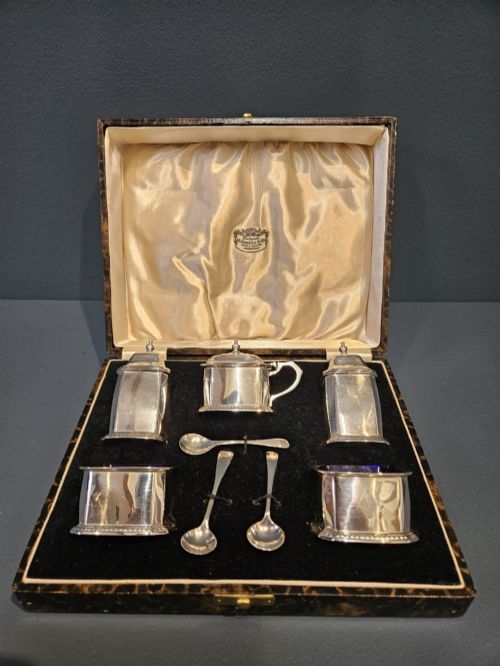
Associated mustard pots frequently incorporate glass inserts, particularly in cobalt blue and ruby red, which contrast with the polished silver frames. Velvet and satin linings occasionally appear inside fitted presentation boxes accompanying multi-piece cruet sets.
Some mustard pots disguised themselves as thistles or pagodas, proving that nineteenth-century dining tables took their condiments with a hearty dose of whimsy.
Markers of distinction
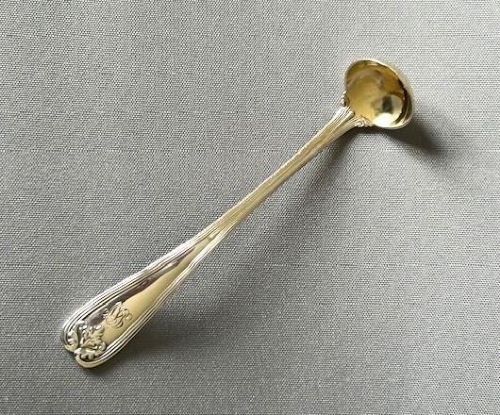
Quality in these items is largely defined by the crispness of the maker's mark and the precision of the silversmith's workmanship. Pieces featuring detailed decorative motifs, such as cast thistles or cherub patterns, demonstrate a higher level of artisan skill than plain utilitarian examples.
The integrity of the form, whether a delicate long-handled ladle or a sturdy Scottish spoon, dictates the overall character of the piece. Complete sets that retain their original fitted boxes and matching components command greater interest from collectors.
Alfred Marston·Tiffany·Charles and George Fox·Hamilton and Inches·William Neale and Son·Omar Ramsden·Elkington and Company
The Sterling Silver Mustard Spoons Glossary
- Cruet set
- A matched group of small bottles, pots, or jars for holding condiments at the dining table. These sets typically include mustard pots alongside salt and pepper shakers.
- Condiment spoon
- A small spoon used specifically for serving table condiments such as mustard, salt, or relish. They vary in bowl size and handle length depending on the pot they accompany.
- Hallmark
- An official stamp applied to precious metals indicating the standard of purity, the assay office, and the year of manufacture. These marks provide definitive historical context for silver items.
- Pierced work
- A decorative technique where portions of the metal are cut away to create openwork patterns. This method frequently appears on the bodies of nineteenth-century silver mustard pots.
- Liner
- A removable glass insert placed inside a silver mustard pot to protect the metal from acidic condiments. These liners often appear in distinct shades of blue or red.
Sterling Silver Mustard Spoons: Frequently Asked Questions
What were sterling silver mustard spoons used for?
These spoons served a purely functional role at the dining table for transferring prepared mustard from a central pot to an individual plate. They were sized specifically to fit inside small condiment containers.
Over time, they became part of larger matching cruet sets used during formal meals in the nineteenth and twentieth centuries.
How do I identify the age of a silver mustard spoon?
Age is determined by examining the hallmarked stamps pressed into the silver, which record the assay office and the exact year of manufacture. Stylistic clues such as Victorian pierced work or Art Deco geometries also indicate the period.
Consulting the maker's mark alongside the hallmarked date letter provides a reliable timeline for each specific piece.
Are mustard spoons part of larger sets?
Many mustard spoons were originally manufactured as part of larger matching cruet sets or condiment groupings. These collections often included mustard pots, salt cellars, and pepper shakers housed within the same service.
Single spoons also appear independently, having become separated from their original cruet sets over generations of use.
How should I care for antique silver spoons?
Regular, gentle cleaning with a soft cloth and specialised silver polish helps maintain the lustre of the metal without wearing away the details of the hallmarks. Storing them away from high moisture environments prevents excessive tarnishing.
Hand washing in lukewarm water with mild soap is recommended if the spoons are used for occasional dining.