





Sterling Silver Lid Pot
These sterling silver lid pot examples combine precious metal with glass, enamel and porcelain to serve dressing tables, dining rooms and writing desks alike.
Sterling Silver Lid Pot
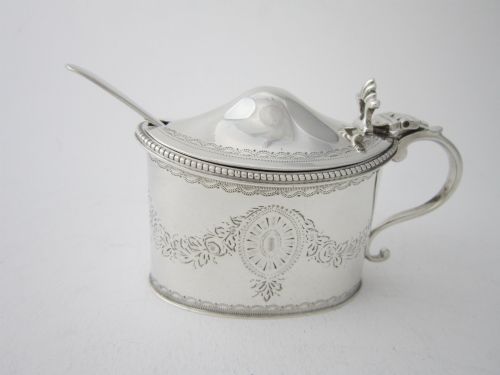
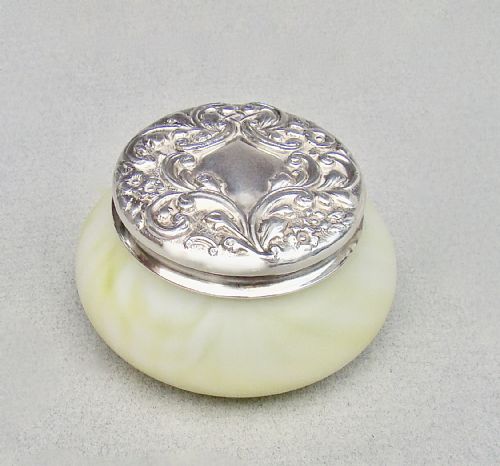
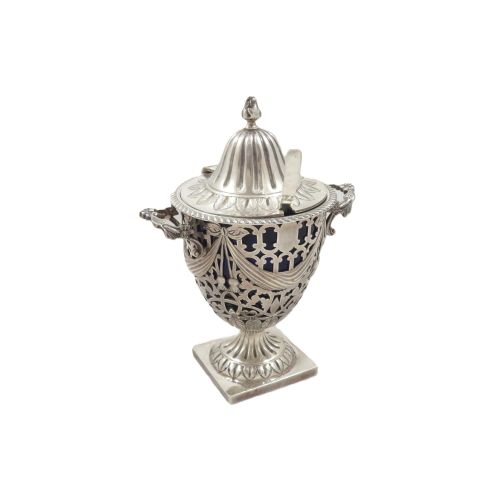
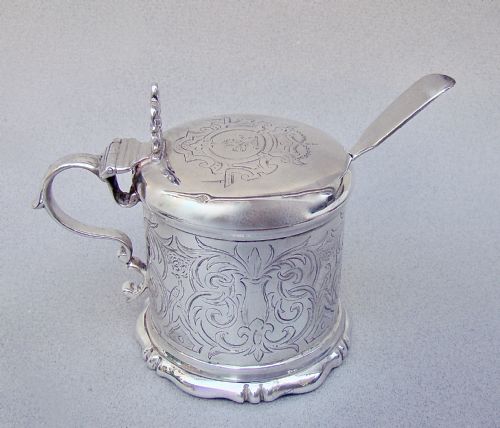
A sterling silver lid pot covers a diverse group of small vessels designed for the vanity, dressing table or dining board. The term brings together everything from cut glass vanity jars and enamel trinket boxes to condiment pots and mustard vessels.
Edwardian and Georgian examples appear frequently alongside Victorian, Art Deco and Mid-Century pieces. Buyers encounter small vanity jars, dressing table pots, mustard pots and sugar bowls united by their precious metal mount or lid.
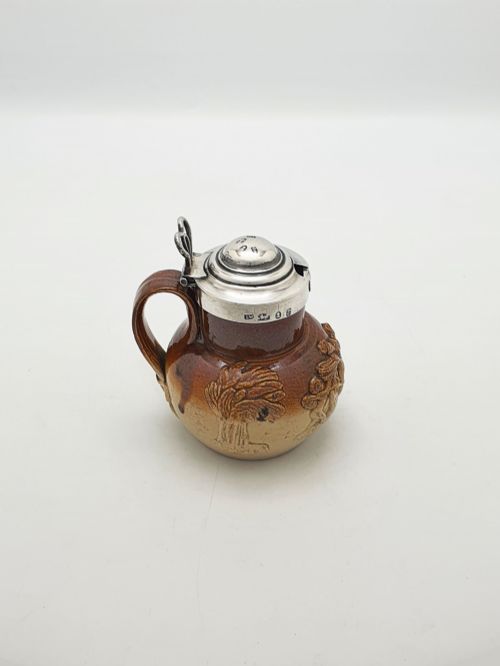
Many variants pair silver with coloured or clear glass, including satin glass, cranberry glass, cobalt glass and cut crystal. Stoneware, porcelain and tortoiseshell bodies also feature beneath sterling silver collars and hinged covers.
Materials and Construction
Silversmiths shaped sterling silver into collars, rims and hinged lids using traditional hammering, piercing and spinning techniques. These mounts were then fitted securely to bodies blown from glass, carved from crystal or thrown in stoneware and porcelain.
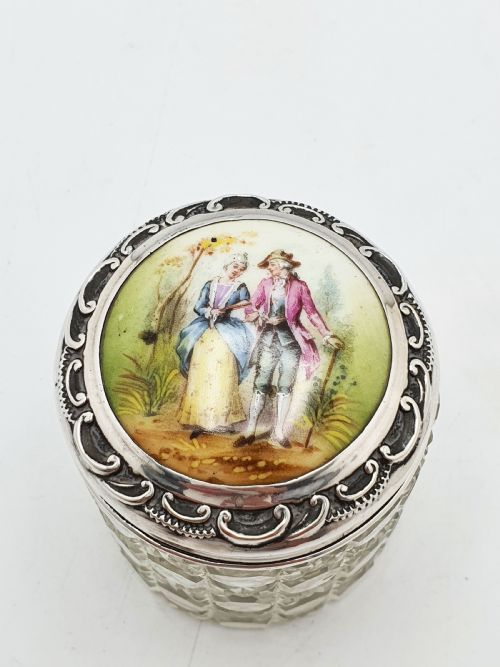
Many lids incorporate decorative elements such as hand-painted porcelain plaques, guilloche enamel work and tortoiseshell inlay. Glass bodies rely on deep cutting, moulding or overlaid colour to catch the light beneath the silver lid.
Sterling Silver Lid Pot Retail Price Guide 2026
Typical asking prices for sterling silver lid pot among the pieces listed under this phrase on Sellingantiques today, from the lower quarter to the upper quarter. They describe what is for sale here now, not the wider market.
Factors That Determine Quality
Quality rests on the crispness of the silver hallmarks, the weight of the metal mount and the precision of the hinge action. Superior pieces maintain a tight closure between the sterling lid and the glass or ceramic collar.
The artistry of the secondary material elevates certain pieces above standard production work. Hand-painted porcelain plaques, complex enamel decoration and heavy, deep-cut crystal bodies distinguish finer examples from plain utility vessels.
A. J. Pepper & Co·A. Bromet & Co·Charles & George Fox·Robert Hennell I·Heath and Middleton
The Sterling Silver Lid Pot Glossary
- Sterling silver
- A standard alloy consisting of silver and other metals, usually copper, meeting a designated purity threshold. Hallmarks stamped into the metal verify this composition and trace the piece to its assay office and maker.
- Hallmark
- A set of official marks stamped onto precious metal items to indicate standard of purity, place of assay and year of manufacture. These stamps allow collectors to date the silver lid pot accurately.
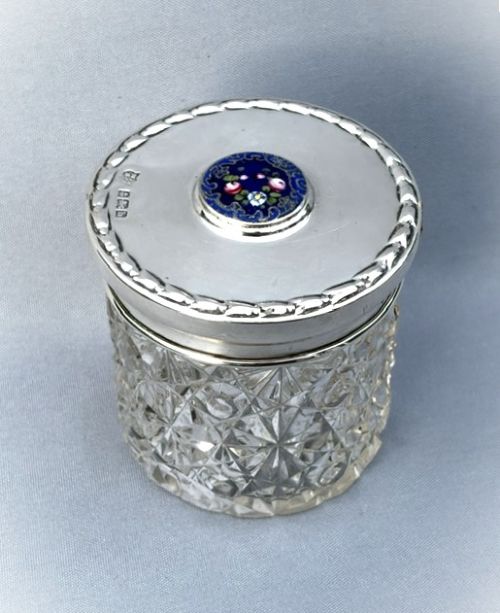
- Guilloche enamel
- A decorative technique where a precise pattern is machined into metal beneath a translucent layer of coloured enamel. This method appears frequently on the lids of Edwardian and Art Deco trinket boxes.
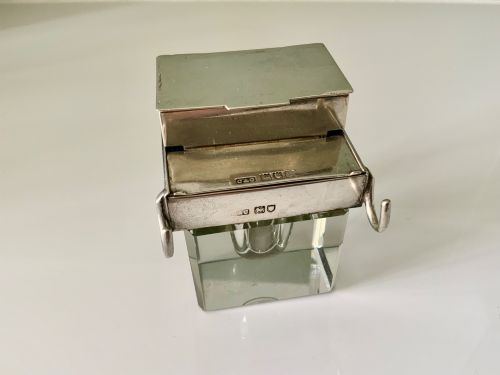
- Capstan inkwell
- A small desk pot shaped like a nautical capstan, featuring a wide weighted base and a hinged silver lid. It holds ink for a quill or dip pen.
- Pot pourri basket
- An open vessel with a pierced or perforated silver lid designed to diffuse dried scented flowers into a room. These decorative pieces often date from the Edwardian period.
Sterling Silver Lid Pot: Frequently Asked Questions
What is a sterling silver lid pot used for?
These vessels served diverse domestic functions depending on their interior volume and material. Vanity and dressing table jars held creams, powders and pins, while smaller boxes secured trinkets.
Dining table examples functioned primarily as mustard pots, pepper shakers or preserve jars. Desk versions served specifically as inkwells or glue pots.
How do I date a silver lidded jar?
Dating relies entirely upon the silver hallmarks stamped onto the lid or collar. These official marks include a date letter corresponding to the specific year of assay at offices such as Birmingham, London or Sheffield.
Stylistic cues like Art Deco geometry or Edwardian floral enamel also help narrow down the period of manufacture when hallmarks are worn.
How should I clean the silver and glass?
Sterling silver benefits from careful polishing with a dedicated soft cloth to remove tarnish without abrading the metal surface. Care must be taken to avoid harsh chemical dips that might damage vulnerable enamel, tortoiseshell or glass bodies.
Glass and porcelain components wash safely in warm soapy water. Liners should be dried thoroughly before returning them to their silver mounts.
Are the glass liners removable?
Many condiment pots and sugar bowls feature loose glass liners that lift out independently from the surrounding silver collar or basket. This allowed for easy cleaning after use on the dining table.
Vanity jars and scent bottles generally cement their glass bodies permanently within the silver mount to maintain structural rigidity.