


Sterling Silver Dressing Mirror
A sterling silver dressing mirror brings reflective polish and embossed weight to a dressing table.
Sterling Silver Dressing Mirror
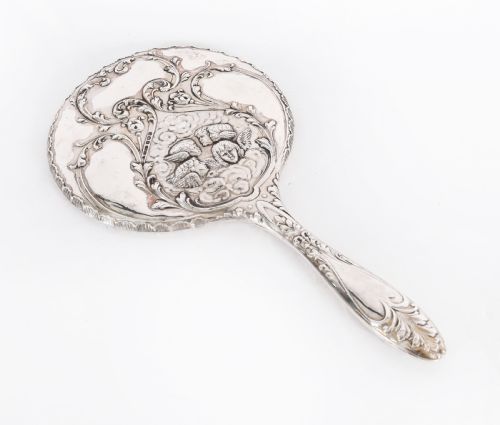
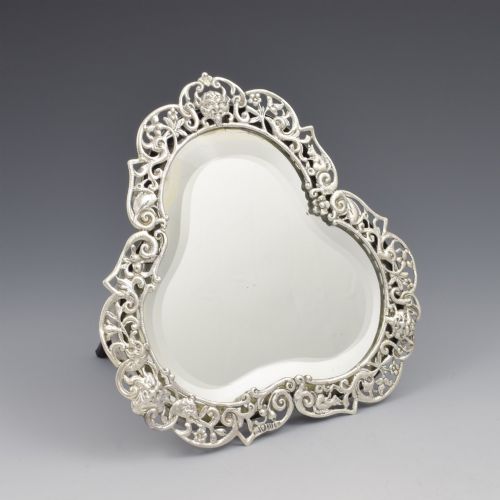
A sterling silver dressing mirror provides a polished reflective surface framed in silver, designed for the dressing table or handheld use. These objects range from compact purse mirrors to large table mirrors supported by wooden or velvet-backed struts.
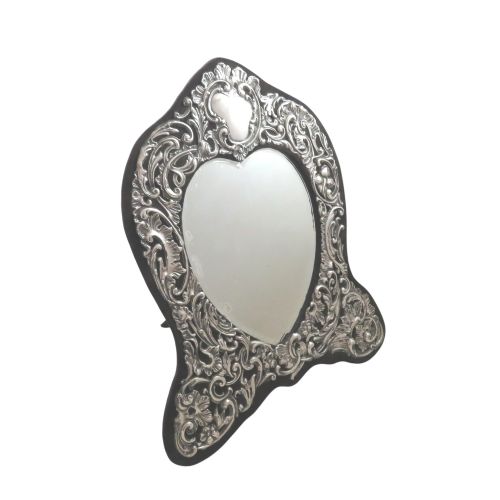
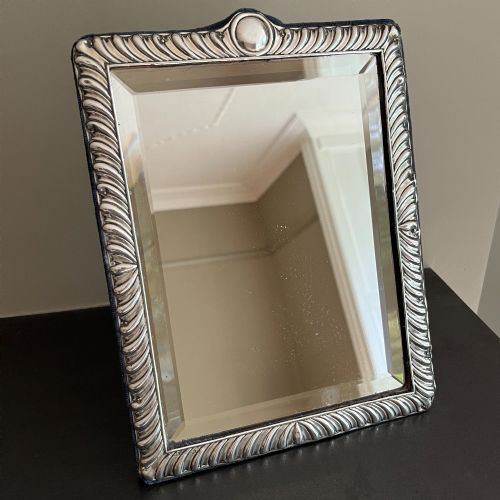
The versions most commonly met on this page date from the late Victorian and Edwardian periods, stretching into Art Deco designs. Makers shaped these pieces into rectangles, hearts, and circular forms with easel backs or handles.
Originating largely from English workshops, these mirrors combine utilitarian glass with decorative metalwork. They reflect the dressing customs of past centuries while serving as decorative tabletop items today.
How they were made
Silversmiths constructed the frames by hammering, stamping, or casting sterling silver over wooden cores or filling them to provide structural rigidity. Easel stands typically utilised wood or leather covered in velvet to secure the mirror frame at an angle.
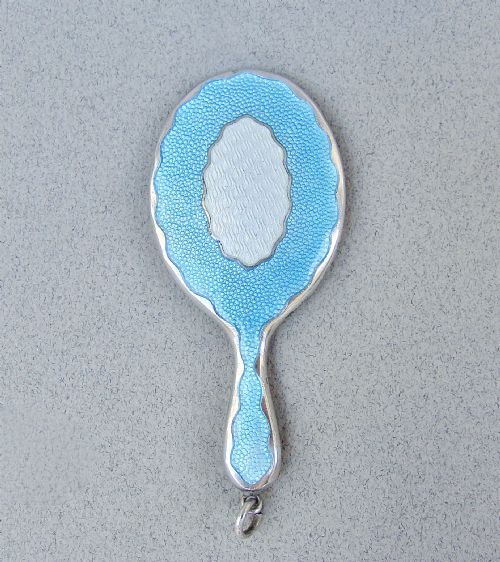
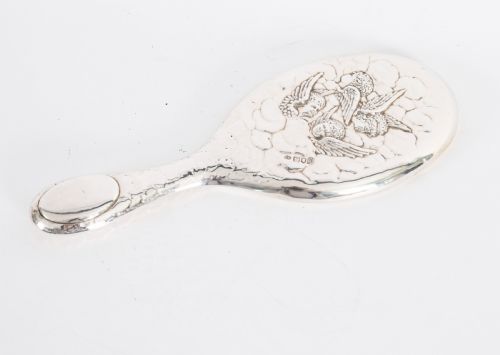
Decoration relied on embossing, chasing, and piercing to create motifs of animals, cherubs, and floral scrolls. Art Deco examples introduced colourful vitreous enamel applied in guilloche patterns over engine-turned metal.
Mirror glass was bevelled at the edges and secured within the silver mount, backed by cardboard or fabric linings in travelling cases and vanity sets.
Listings feature sterling silver, glass, velvet, wood, leather, and vitreous enamel across periods from the nineteenth century through the nineteen-fifties.
What varies in quality
The weight and gauge of the sterling silver frame dictate the tactile quality of the piece, with thicker metal resisting dents and distortion. Substantial table mirrors often feature sturdy wooden backing frames covered in high-grade velvet or leather.
The crispness of the chased or embossed detail reveals the skill of the silversmith, where deep, sharp contours outlast shallow stampings. Enamel work varies according to the precision of the underlying engine-turning and the absence of chips in the vitreous surface.
Henry William Son·Charles Boyton·S Blanckensee And Son·William Comyns·Henry Matthews
The Sterling Silver Dressing Mirror Glossary
- Sterling silver
- A silver alloy containing 92.5 percent pure silver and 7.5 percent other metals, usually copper, to add strength. This standard metal forms the primary frame of the pieces listed.
- Guilloche enamel
- A decorative technique where transparent enamel is layered over metal engraved with repetitive geometric patterns. This style appears frequently on Art Deco vanity pieces.
- Easel mirror
- A freestanding mirror supported by a hinged rear strut that props the glass upright on a table. These stands often feature wooden cores covered in velvet.
- Chasing
- A method of metalworking where the silversmith punches and pushes the front surface of the silver to form raised designs without removing metal. This creates the relief patterns seen on Victorian frames.
- Hallmark
- An official stamp applied to precious metals indicating the standard of purity, the assay office, and the year of manufacture. English pieces carry these marks for dating purposes.
Sterling Silver Dressing Mirror: Frequently Asked Questions
How were dressing mirrors used?
These mirrors were placed upon dressing tables to assist with personal grooming, hair arrangement, and applying cosmetics. Hand versions allowed users to inspect angled views, while easel mirrors remained stationary on furniture.
Larger table examples often formed part of matching vanity sets that included brushes, trays, and jewellery boxes intended for daily boudoir use.
How do I date an antique mirror?
Dating relies heavily upon the hallmarks stamped into the sterling silver frame, which indicate the assay office and year letter. Stylistic indicators also help, such as the heavy floral embossing of Victorian pieces or the geometric enamel of Art Deco items.
Backing materials, including original velvet, leather, and wooden struts, provide further clues to the period of manufacture.
How do I care for antique silver?
Silver frames require gentle cleaning with a soft cloth to remove dust and prevent tarnish accumulation. Polishing creams should be used sparingly to avoid wearing away delicate embossed details or damaging surrounding enamel.
Keep mirrors away from damp environments to protect the wooden backing boards and prevent moisture from degrading the silver backing of the glass.