



Sterling Silver Dessert
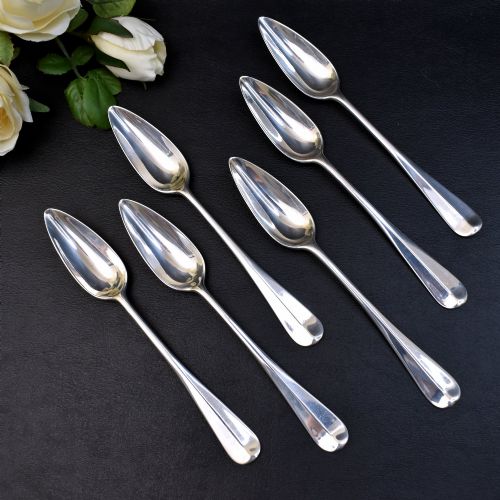
Sterling silver dessert pieces encompass spoons, shears, and cased sets designed for the dining table across Georgian, Victorian, and later periods.
Sterling Silver Dessert
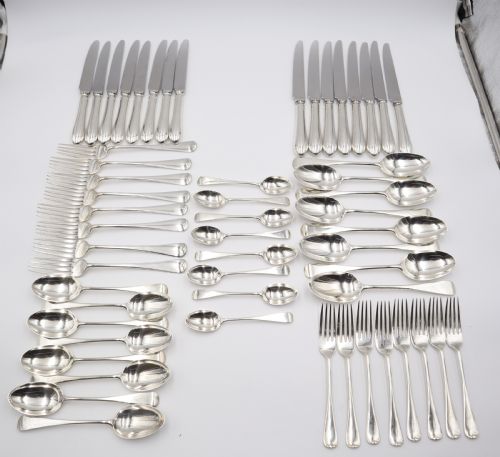
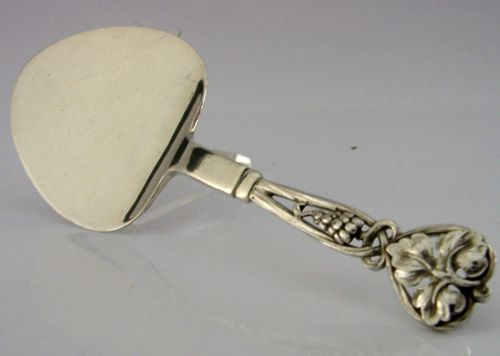
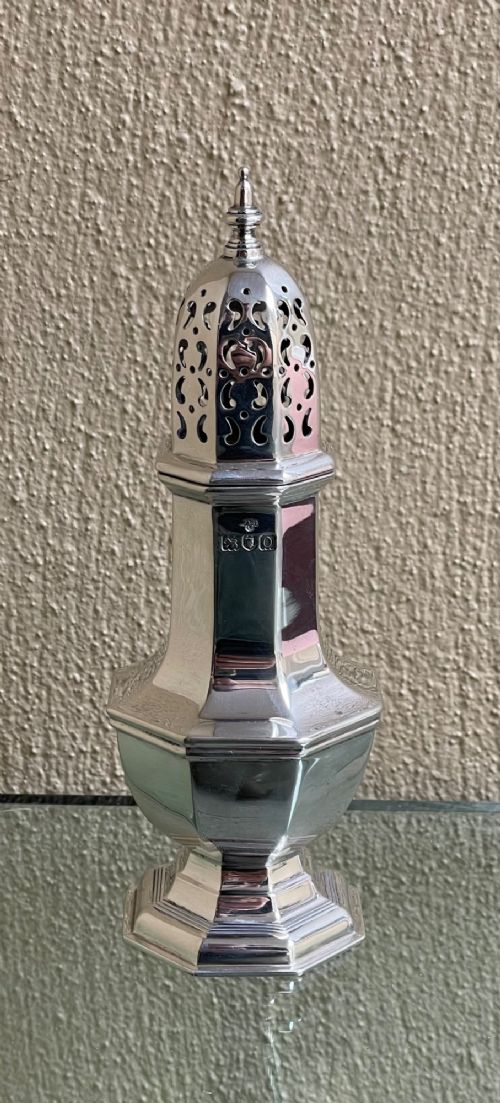
Sterling silver dessert items include serving spoons, cutlery sets, grape shears, and pastry servers spanning the Georgian, Victorian, Edwardian, and Art Deco eras.
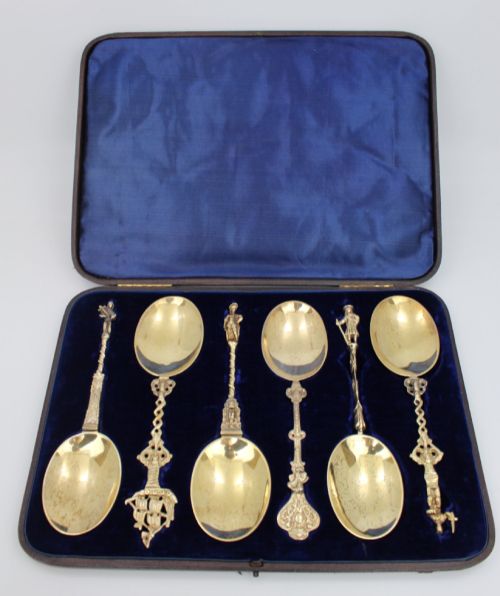
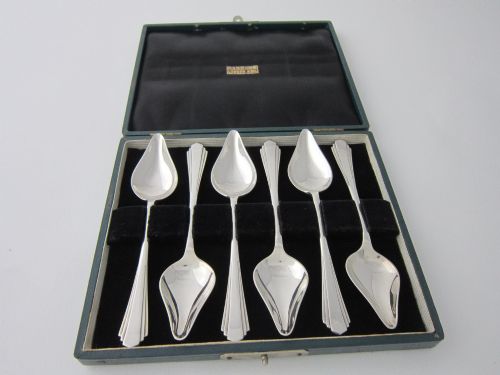
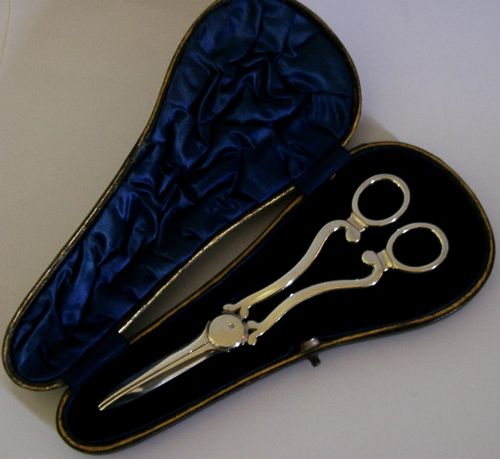
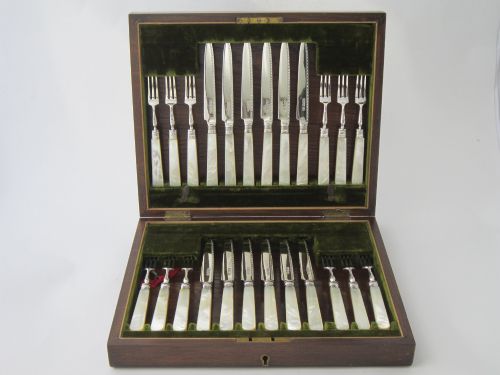
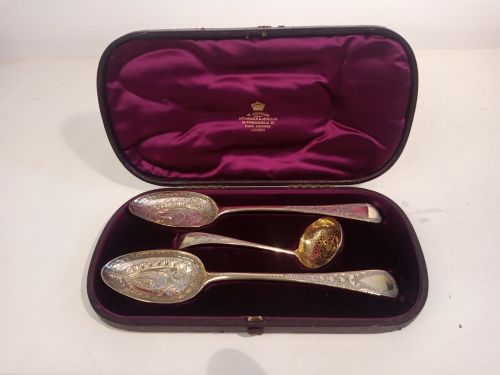
Buyers frequently encounter cased sets of spoons, fruit knives and forks, and specialised serving implements housed in fitted boxes lined with velvet, silk, or satin.
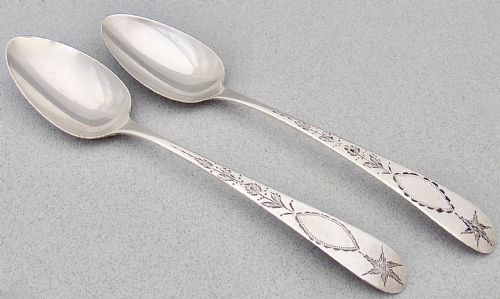
The selection ranges from early George III three-pronged forks and Irish Celtic point dessert spoons to later twentieth-century cased flatware and enamel teaspoons.
Materials and Techniques
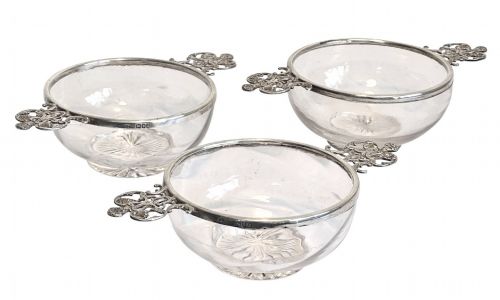
Items are formed from sterling silver, occasionally enriched with silver-gilt plating, and paired with organic elements such as mother-of-pearl handles or glass liners.
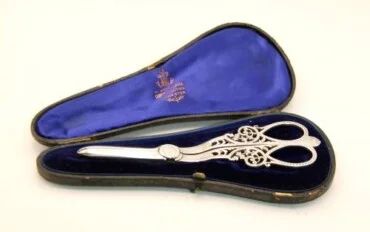
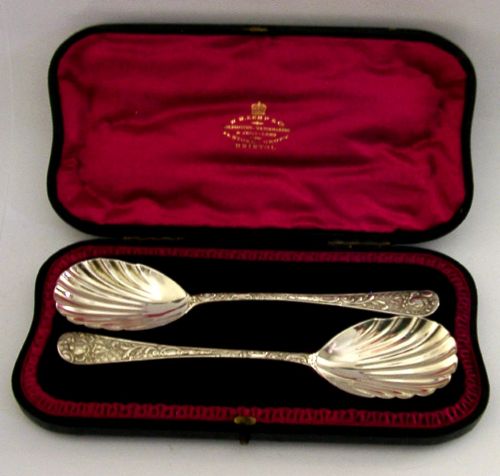
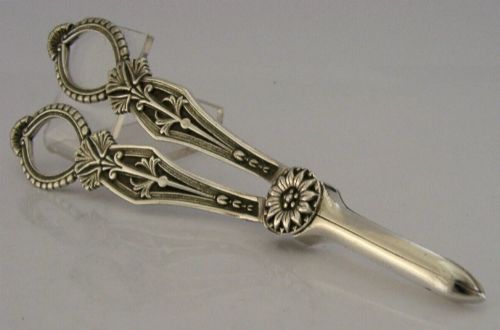
Craftsmen utilised techniques including casting, engraving, and piercing to produce intricate berry spoons, snake-handled grape scissors, and Gothic revival shears.
Fitted presentation boxes employ protective outer coverings of leatherette alongside soft interior linings of velvet, silk, satin, or similar textiles.
Sterling Silver Dessert Retail Price Guide 2026
Typical asking prices for sterling silver dessert among the pieces listed under this phrase on Sellingantiques today, from the lower quarter to the upper quarter. They describe what is for sale here now, not the wider market.
Assessment of Quality
Quality rests on the crispness of cast or engraved decoration, such as the depth of fruit motifs on berry spoons and the structural integrity of pierced blade work.
The presence of a matching, original fitted case with intact velvet or satin lining elevates a set, alongside clear hallmarks confirming maker and date.
Deakin & Francis·John Pittar·Hamilton & Inches·William Comyns·Georg Jensen·Martin Hall & Co·Viners
The Sterling Silver Dessert Glossary
- Berry spoon
- A large serving spoon, often Georgian or Victorian, featuring later repoussé fruit and leaf ornamentation on the bowl.
- Silver-gilt
- Sterling silver that has been coated with a thin layer of gold, providing a rich yellow surface finish.
- Grape shears
- Specialised scissors designed for cutting clusters of fruit at the table, frequently decorated with cast vine or snake motifs.
- Canteen
- A fitted box, chest, or case containing a complete, organised set of cutlery for multiple persons.
Sterling Silver Dessert: Frequently Asked Questions
What pieces belong in a dessert set?
Dessert sets typically comprise specialised cutlery such as fruit knives, forks, pastry servers, and spoons.
They often appear in matched cased groupings intended for formal dining courses.
How are grape shears different from standard scissors?
Grape shears feature short blades and looped handles often cast with naturalistic vine or serpent designs.
Their proportions allow diners to snip individual fruit stems cleanly without damaging the fruit.
Were these items originally boxed?
Many fine sets were supplied in custom wooden cases lined with velvet, satin, or silk.
These fitted boxes protected the silver and made the sets suitable for gifting.
How do I identify a Georgian dessert spoon?
Georgian spoons display distinct regional hallmarks, assay office marks, and style markers like Celtic point handles.
They date from the reigns spanning the eighteenth and early nineteenth centuries.