




Sterling Silver Desk Inkwell
A sterling silver desk inkwell anchors the writing desk, offering a tactile connection to handwritten correspondence through precious metal and glass.
Sterling Silver Desk Inkwell
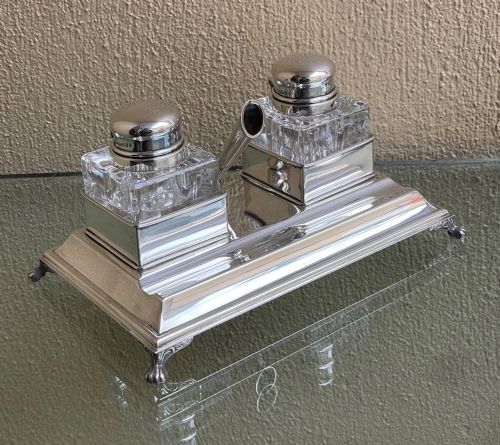
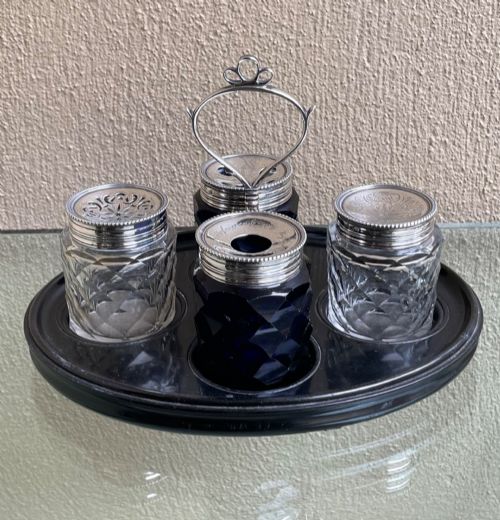
A sterling silver desk inkwell brings functional writing equipment into domestic spaces, serving as a dedicated vessel for liquid ink. Collectors encounter these items in various forms designed for the desk, ranging from single desktop pots to elaborate inkstands.
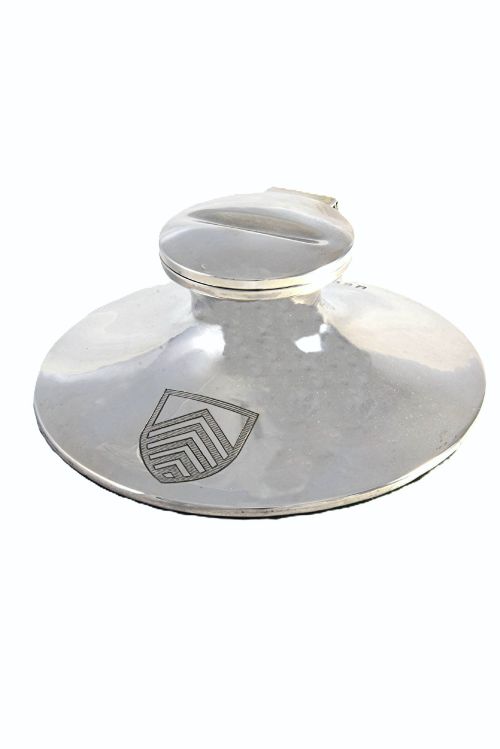
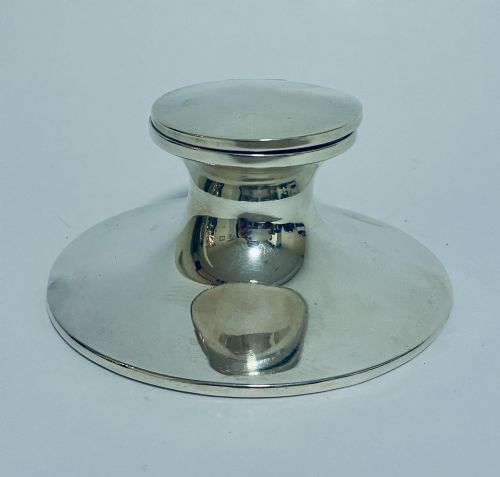
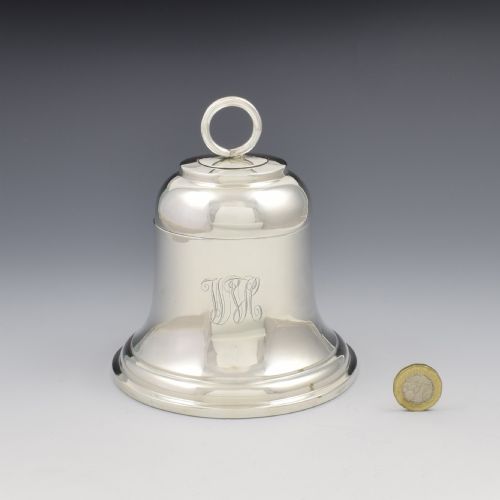
The pieces on this page appear primarily in Edwardian, Victorian, and Art Deco styles, alongside Georgian and Elizabeth II examples. Common configurations include traditional capstan shapes, drum designs, bell forms, and substantial desk stands equipped with multiple wells.
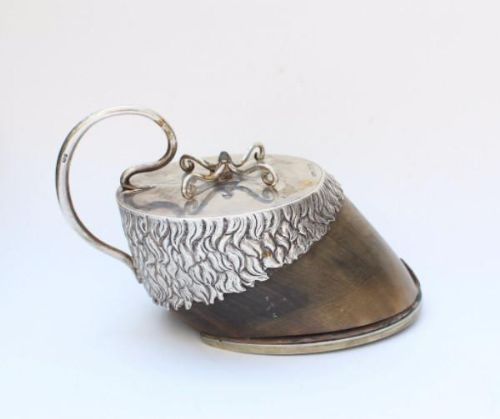
Makers utilised diverse materials to create these accessories, pairing sterling silver mounts with cut glass, enamel, tortoiseshell, and horn. Certain examples incorporate unexpected elements like horse hooves or integrated timepieces such as pocket watches and clocks.
How they were made
Silversmiths constructed these vessels using sterling silver sheets shaped by hand or spun on lathes, often incorporating weighted bases to provide stability during use. Glass bodies and bottles were mouth-blown and subsequently cut or moulded to fit silver collars and mounts.
Decorative techniques involve engine-turning, embossing, and the application of guilloche enamel in floral medallions. Makers also mounted fitted glass inserts and utilised interior liners to contain the corrosive ink.
Some Edwardian writers checked the time while writing thanks to silver inkwells fitted with working pocket watches and desk clocks.
What varies in quality
The distinction between standard items and exceptional pieces rests upon weight, gauge of metal, and the ambition of the design. Heavy cast silver mounts and large multi-piece desk stands with integrated chambersticks or pen trays demand greater craftsmanship.
Unusual novelty forms, such as pen nibs, bells, and animal hoofs, demonstrate the maker's creative scope beyond standard geometric shapes. The inclusion of decorative details like tortoiseshell panels or detailed enamel work elevates a utilitarian object into a display piece.
Robert Garrard·Comyns
The Sterling Silver Desk Inkwell Glossary
- Capstan inkwell
- A desk inkwell shaped like a ship's capstan, featuring a wide base that tapers upward to a smaller top opening. This form provides a low centre of gravity to prevent tipping.
- Inkstand
- A comprehensive desk tray holding one or more ink pots, often accompanied by pen rests, stamp boxes, or candlesticks. These larger stands formed the centrepiece of a nineteenth-century writing table.
- Guilloche enamel
- A decorative technique where translucent enamel is layered over engine-turned metal engraving. This process creates repeating geometric patterns that catch the light beneath the coloured glass surface.
- Hallmark
- An official stamp applied to precious metals indicating the standard of purity, the assay office, and the date of manufacture. British sterling silver typically bears standard marks including the lion passant.
Sterling Silver Desk Inkwell: Frequently Asked Questions
What is a capstan inkwell?
A capstan inkwell is a desk accessory modelled after the nautical device used for weighing anchors. Its wide circular base tapers upward to a smaller top opening, offering stability against accidental knocks on a busy desk.
This shape became particularly popular during the Edwardian period and appears frequently in sterling silver with weighted bases.
How do I date a silver inkwell?
Dating a silver inkwell relies on examining the hallmarks stamped into the metal by the assay office. These marks include date letters that correspond to specific years of manufacture.
Stylistic cues such as Art Deco geometric lines or Victorian ornamentation also help narrow down the period when hallmarks are rubbed.
What are novelty inkwells?
Novelty inkwells are desk accessories shaped to resemble familiar objects, animals, or architectural forms rather than standard pots. Examples include bells, pen nibs, and horse hooves mounted in silver.
These pieces reflect the Victorian and Edwardian taste for wit and amusement in everyday functional items.
How were glass inserts used?
Glass inserts served as removable liners inside the silver housing to hold the liquid ink safely. This prevented corrosive ink from coming into direct contact with the silver metal.
Collectors look for pieces that retain their original fitted glass bottles, as replacements alter the integrity of the object.