


Sterling Silver Cutlery Case
When seeking a sterling silver cutlery case, you enter a domain of fitted boxes safeguarding matched spoons, servers, and specialty utensils from the Victorian era to the mid-century.
Sterling Silver Cutlery Case
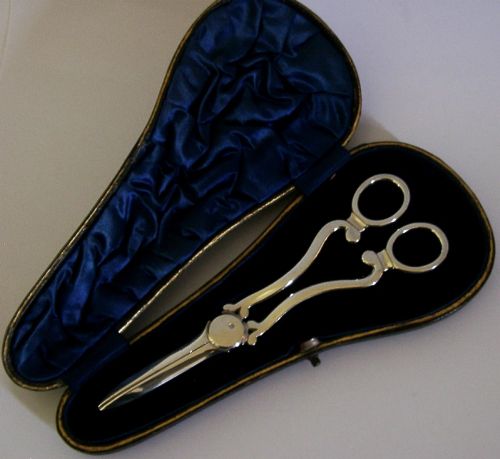
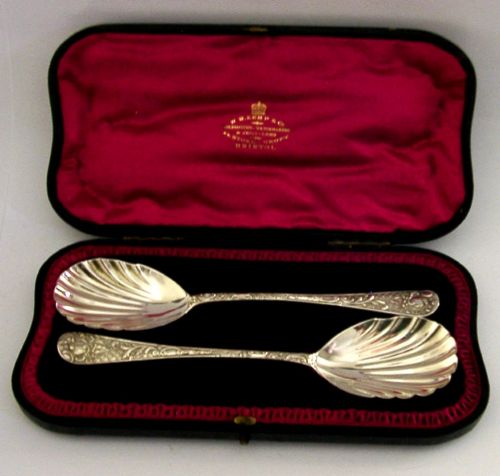
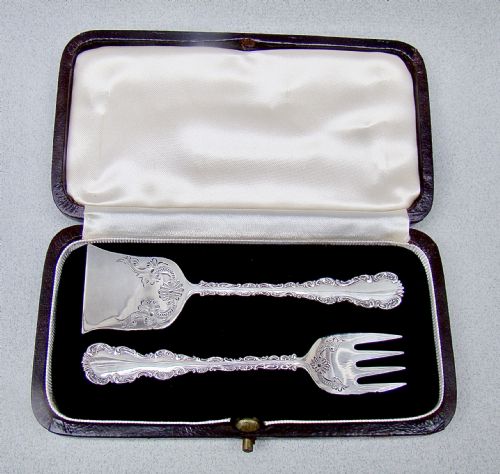
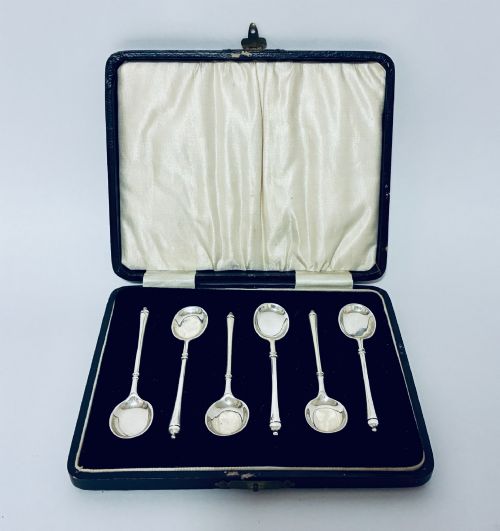
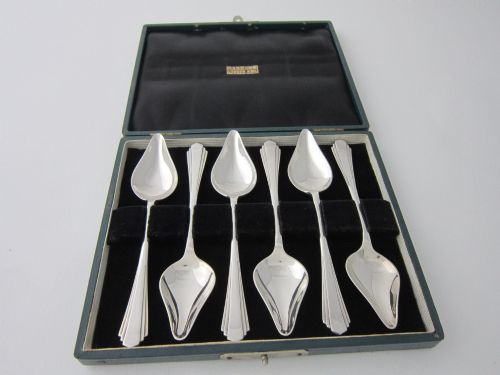
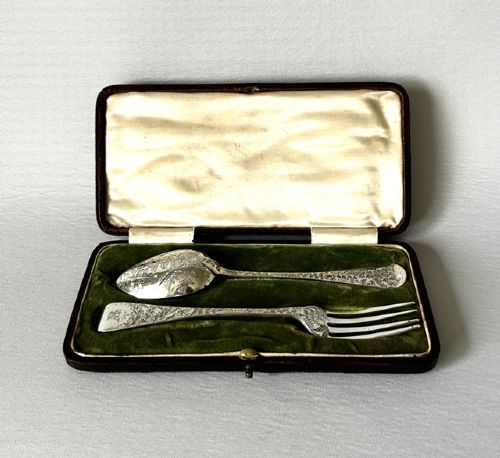
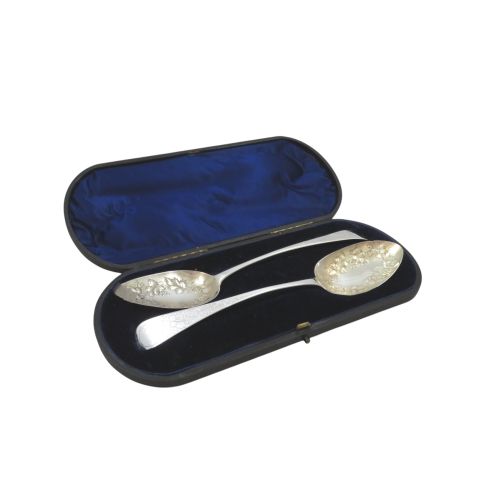
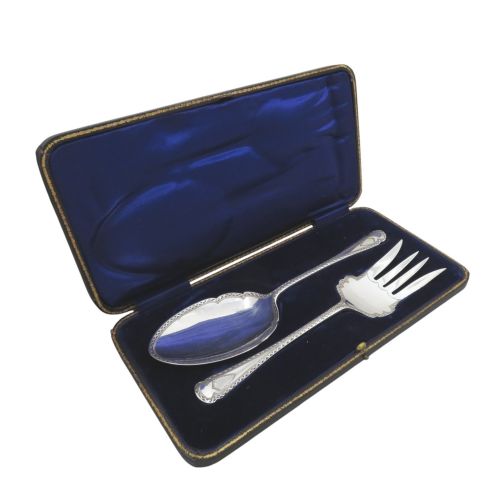
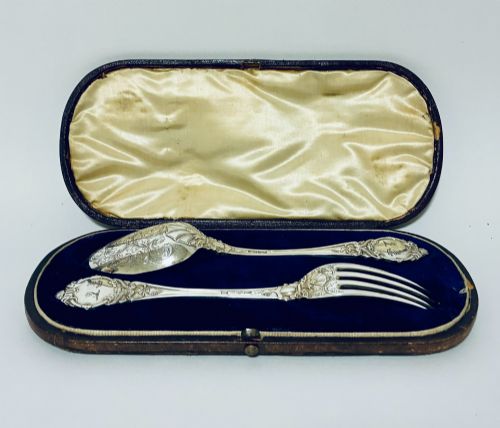
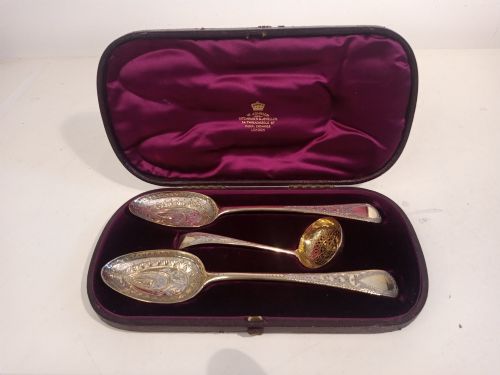
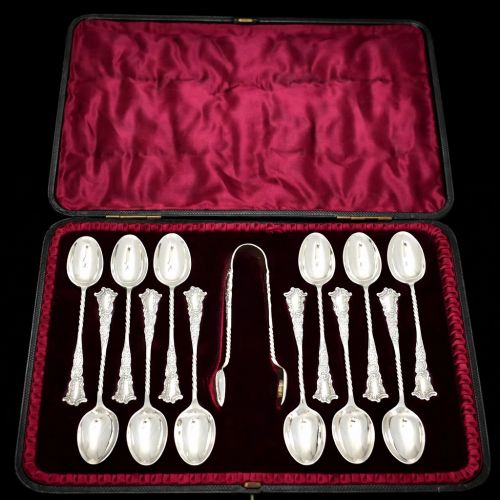
A sterling silver cutlery case typically houses designated sets such as christening cutlery, fish servers, berry spoons, or coffee spoons arranged in fitted compartments. The pieces trace periods from the Georgian era through the Victorian, Edwardian, and Art Deco years into the mid-century.
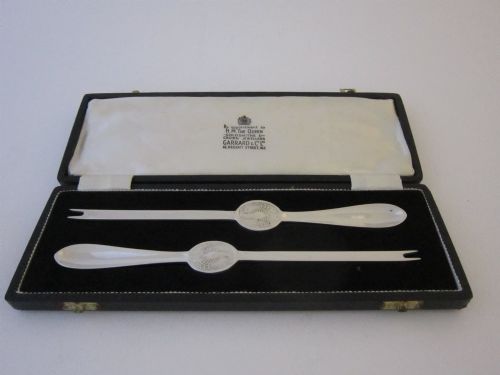
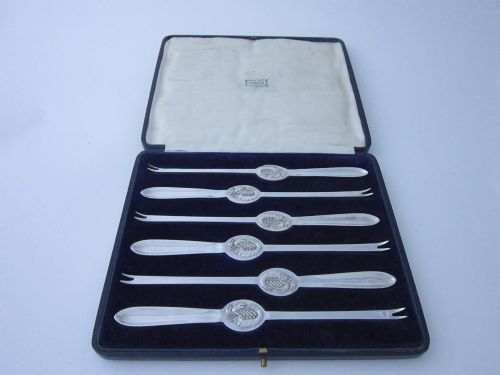
Most examples encountered here originate from British workshops, spanning from nineteenth-century berry spoons and sardine servers to twentieth-century enamel teaspoons and lobster picks. The containers themselves range from dedicated presentation boxes to velvet-lined leatherette cases built specifically for the utensils they hold.
Materials and Technique
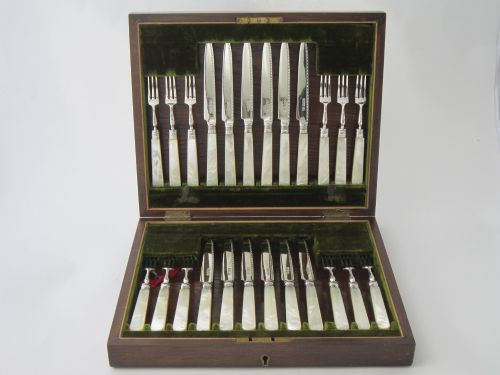
The utensils combine sterling silver blades and handles with secondary materials including mother-of-pearl, enamel, and parcel-gilt finishes. Cases incorporate structural wood or card lined internally with velvet, satin, or silk, and covered externally in leather or leatherette.
Metalwork techniques involve cast silver blades, engraved handles, and applied enamel work, whilst fitted cases rely on custom internal moulding to hold each spoon, fork, or knife securely in place.
Several cased sets include specialised lobster picks designed for navigating intricate shell edges during Victorian and mid-century dining.
The Spectrum of Quality
Quality separates through the integrity of the silverwork, the precision of the engraving, and the preservation of the original fitted case. Complete sets with matching hallmarks retain greater coherence than assembled collections.
The lining materials inside the case, the crispness of maker marks on the silver, and the intact state of delicate additions like mother-of-pearl handles or polychrome enamel distinguish standard production from superior examples.
Henry Wilkinson·William Devenport·John Locker·Souche Lapparra
The Sterling Silver Cutlery Case Glossary
- Sterling silver
- A silver alloy containing 92.5 percent pure silver and 7.5 percent other metals, usually copper, ensuring structural strength for functional tableware.
- Hallmark
- An official stamp applied to precious metals indicating the standard of purity, the assay office, and the date letter for the year of manufacture.
- Parcel-gilt
- Silver objects that have been partially gilded with a thin layer of gold on specific interior or decorative areas, creating a two-tone metallic contrast.
- Cased
- A term describing items sold together with their original fitted storage box designed to protect the set during transport and display.
- Sifter
- A specialised spoon with a perforated bowl used historically for sprinkling sugar over fruit or desserts.
Sterling Silver Cutlery Case: Frequently Asked Questions
What pieces go into a cased cutlery set?
Cased sets commonly comprise matching groups of teaspoons, dessert forks, butter knives, or serving utensils tailored for specific dining rituals.
Larger configurations might include specialised items like fish servers, grape shears, or sugar sifters housed in custom compartments.
How do I identify the date of a case?
Dating relies primarily on the silver hallmarks stamped onto the metal components of the cutlery inside rather than the exterior box.
Assay office symbols and date letters cross-reference specific operating years for makers active during the Victorian, Edwardian, or later periods.
Why are some handles mother-of-pearl?
Mother-of-pearl provided a lightweight, decorative contrast to silver during the Georgian, Victorian, and Edwardian eras.
It was frequently chosen for fruit knives, butter knives, and tea sets where organic texture enhanced the appearance of the table.
How should I store these cased items?
Keeping the utensils inside their original lined case protects the silver from airborne pollutants that accelerate tarnishing.
Store the box in a stable environment away from direct sunlight and excessive humidity to preserve both the leatherette exterior and the interior velvet or silk.