



Sterling Silver Cigar
When you search for sterling silver cigar items, you encounter pieces designed for holding, lighting, and smoking fine tobacco across the Victorian, Edwardian, and Art Deco periods.
Sterling Silver Cigar
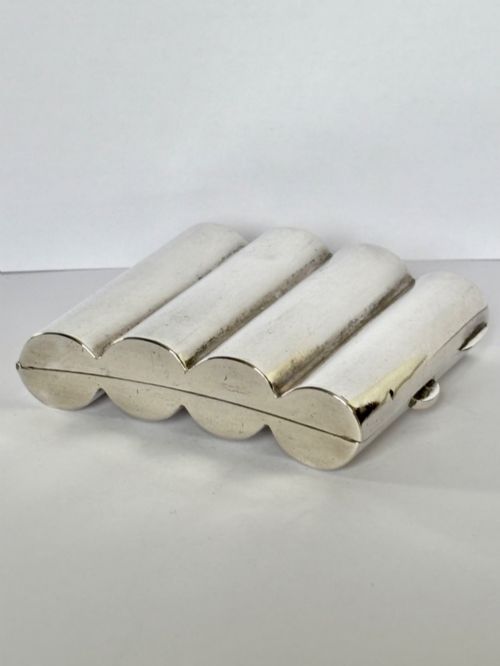
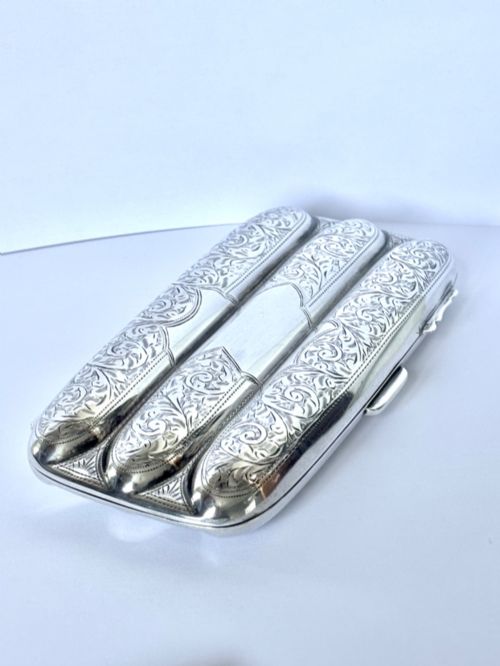
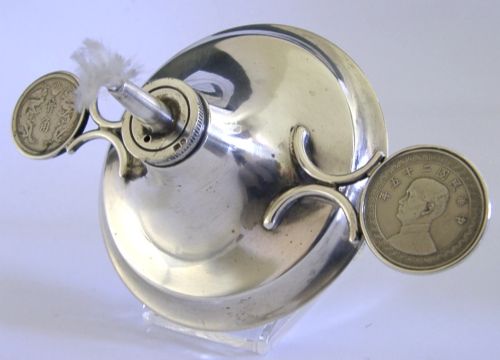
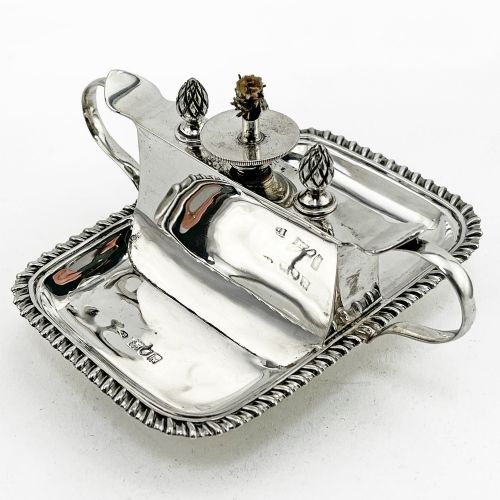
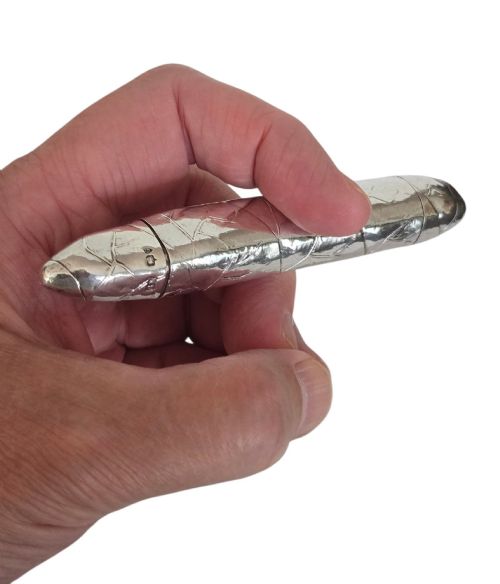
A sterling silver cigar selection on this page centres on smoking accessories from the nineteenth and twentieth centuries. Buyers encounter portable cases alongside desk and table pieces designed for domestic use.
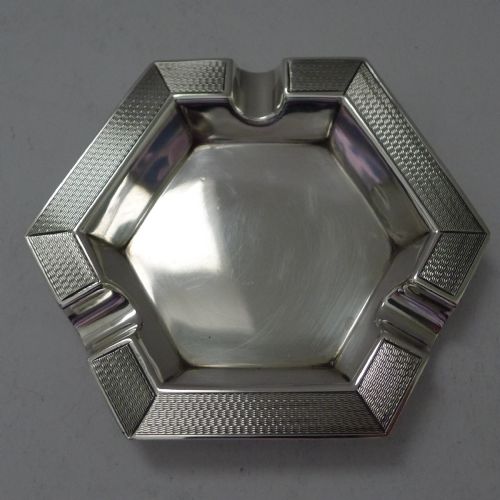
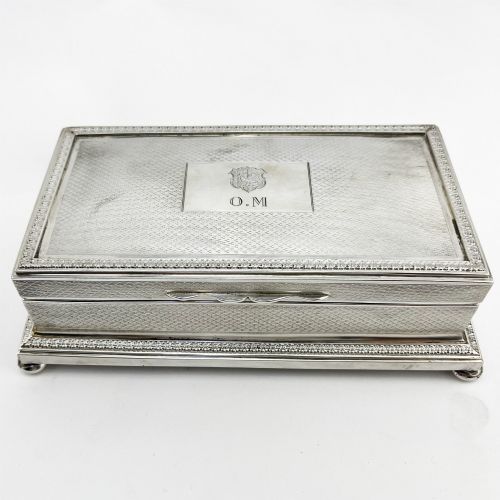
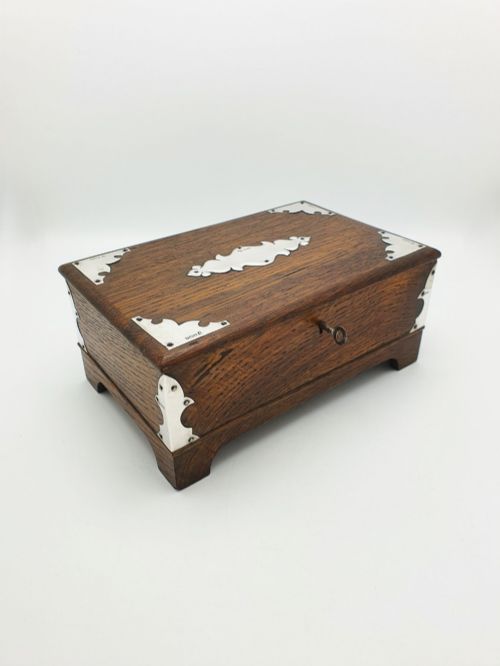
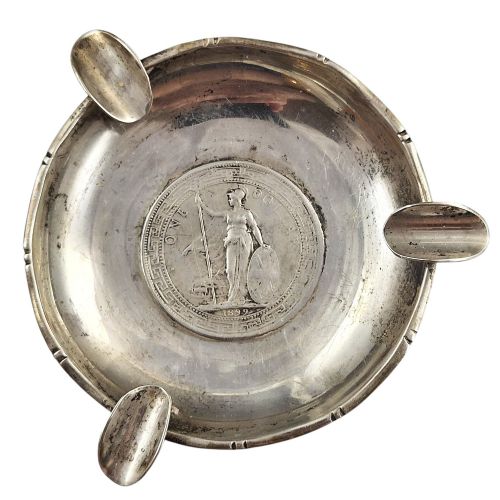
Table lighters, ashtrays, humidor boxes, and pocket cases form the core of the available items. Makers from England, London, and international workshops produced these pieces across various historical reigns and decades.
Materials and Technique
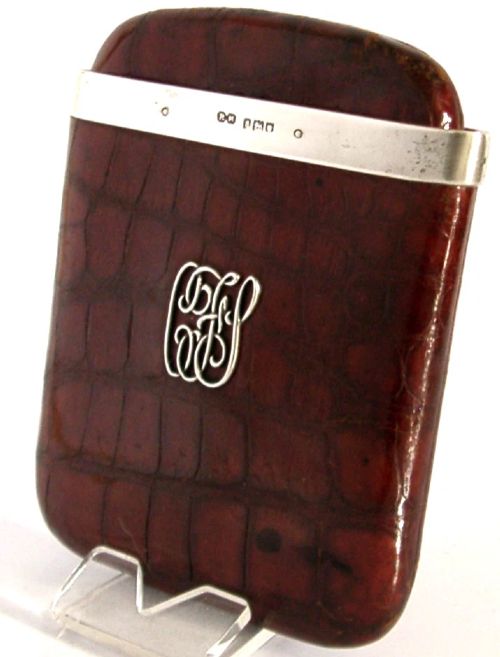
Makers utilised sterling silver, solid silver, and silver gilt alongside structural elements of oak and steel. Crocodile leather and silver plate also appear in pocket containers and desk furnishings.
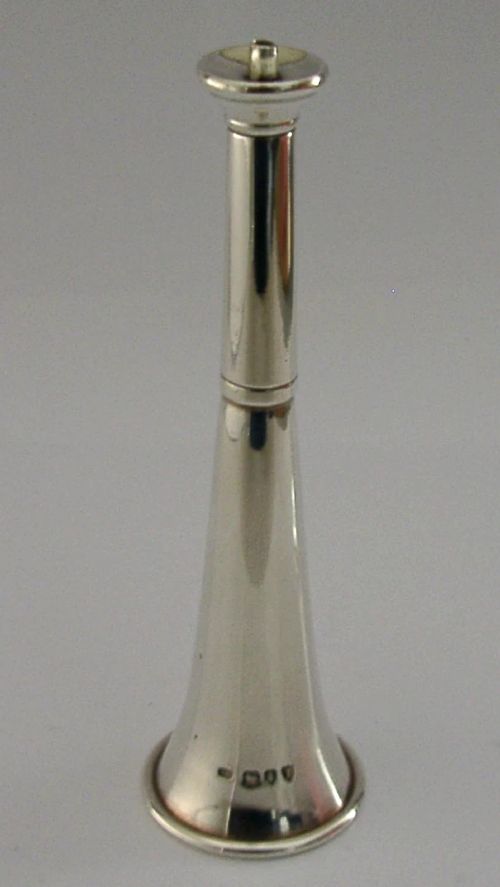
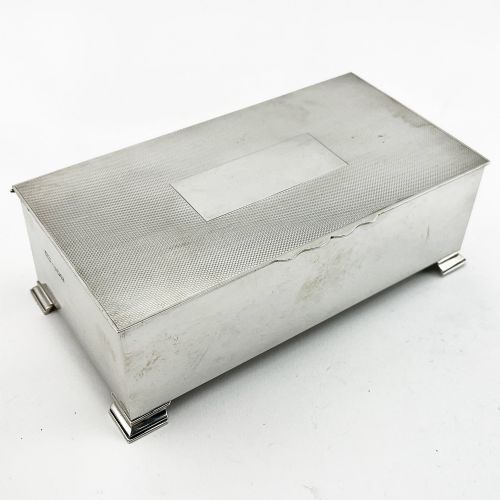
Techniques range from engine turning and repoussé work to novelty casting. Artisans combined silver mounts with wood bodies for large humidors and shaped metal into classical oil lamps and hunting horns for table lighting.
Sterling Silver Cigar Retail Price Guide 2026
Typical asking prices for sterling silver cigar among the pieces listed under this phrase on Sellingantiques today, from the lower quarter to the upper quarter. They describe what is for sale here now, not the wider market.
Object types on this page cover table lighters, ashtrays, pocket cigar cases, and large desk humidors.
Evaluating Quality
Quality rests in the heaviness of the metal gauge, the crispness of chased or engraved ornament, and the integrity of hinges and clasps. Plain surfaces rely entirely on clean proportions and substantial silver weight.
Novelty pieces derive their standing from sculptural detail and the reputation of the silversmith. Maker marks and clear hallmarks anchor the provenance of the work.
William Neale·Mappin & Webb·Sampson Mordan & Co·Georg Jensen·Wang Hing & Co·Joseph Braham
The Sterling Silver Cigar Glossary
- Vesta case
- A pocket container originally made for matches, often adapted or shaped for cigars and cheroots. These pieces frequently feature spring-loaded lids and striker grooves.
- Table lighter
- A decorative desk or smoking room lamp fuelled to provide a flame for cigars and cigarettes. They often take sculptural forms such as classical oil lamps or hunting horns.
- Humidor
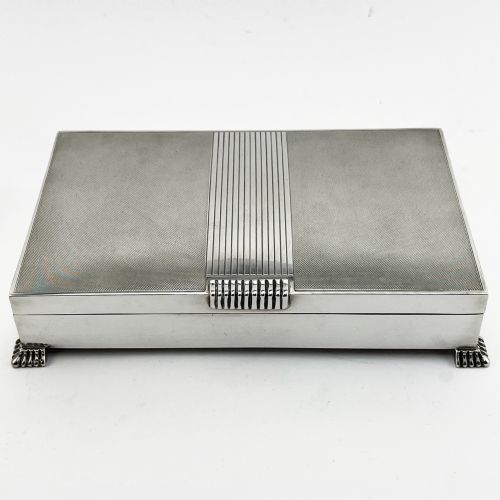
- A lined box designed to keep cigars moist and fresh. These containers incorporate wooden interiors, such as oak, beneath exterior silver mounts.
- Engine turned
- A mechanical decoration technique producing geometric patterns of fine lines etched into the silver surface. This method appears frequently on nineteenth-century cases.
- Silver gilt
- Silver covered with a thin layer of gold on the interior or exterior surfaces. This treatment provides a warm finish and protects the metal from tobacco tars.
Sterling Silver Cigar: Frequently Asked Questions
What are sterling silver cigar cases used for?
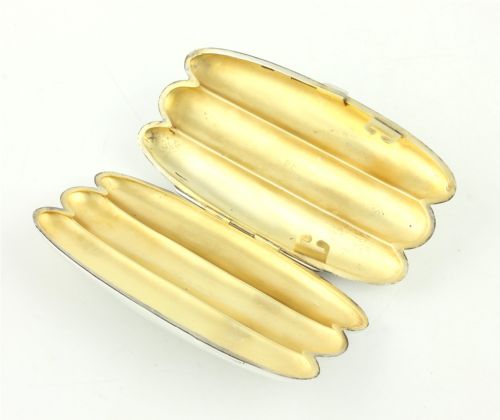
These rigid cases protect cigars from damage while carried in a pocket or travel bag. They preserve the shape and condition of the tobacco.
Pocket versions range from plain curved designs fitting the body to crocodile leather tubes holding multiple cigars.
How do table lighters operate?
Table lighters burn liquid fuel drawn through a wick, ignited by a flint mechanism housed within a decorative metal body. They sit permanently on desks or smoking tables.
Many examples take whimsical novelty shapes, including animals, canoes, and classical oil lamps.
How do I care for silver cigar boxes?
Silver requires gentle cleaning with a soft cloth to remove tarnish without wearing away engraved details. Avoid harsh chemical dips that strip patination.
Wooden interiors should be kept dry and free from excess moisture to protect both the wood and any stored items.
How do I tell Victorian pieces from Art Deco ones?
Victorian items often display ornate chased decoration, naturalistic novelty forms, and heavy surface ornamentation. They date from the nineteenth century.
Art Deco pieces, emerging later, favour geometric lines, streamlined planes, and minimalist surfaces reflecting twentieth-century modernism.