



Sterling Silver Bonbonniere
These sterling silver bonbonniere pieces are small, refined vessels for sweetmeats that bring genuine Georgian, Victorian and Edwardian elegance to a table.
Sterling Silver Bonbonniere
A sterling silver bonbonniere encompasses small sweet bowls, pierced baskets, and covered dishes designed for holding confectionery. The forms span from Georgian and Victorian elaborations to Edwardian designs and clean Art Deco lines.
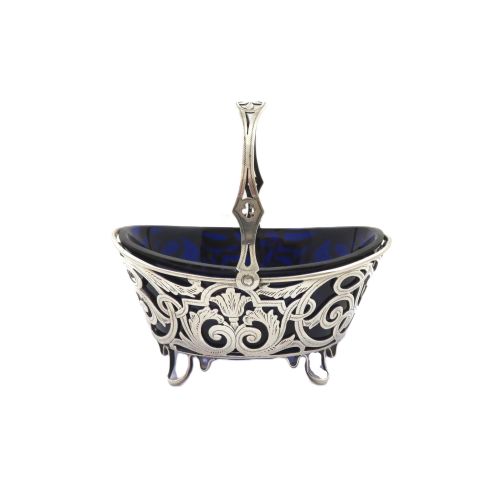
Most examples found here appear as table baskets, small bowls, or handled dishes, often equipped with cobalt glass liners or accented with tortoiseshell. The scale remains intimate, intended for presentation rather than heavy service.
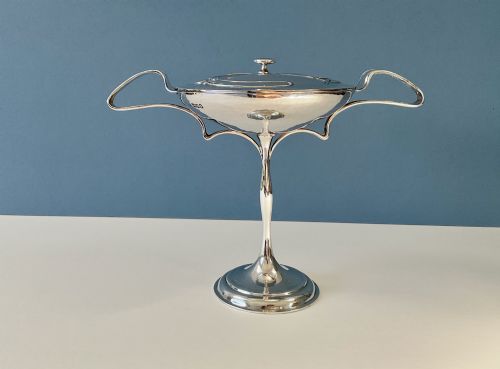
Makers shaped these vessels across distinct historical eras, moving from ornate Rococo revival curves through organic Art Nouveau sinuosity to the geometric restraint of the nineteen thirties.
Materials and construction
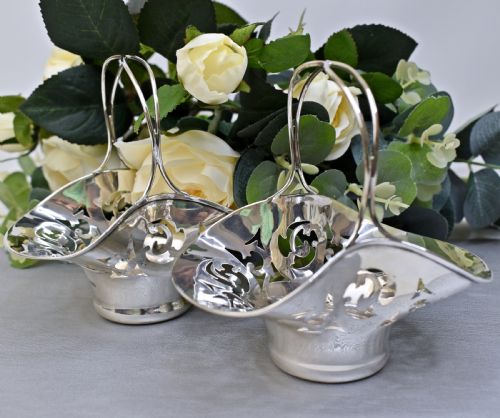
The primary material is sterling or solid silver, manipulated through piercing, casting, and hand-raising techniques. Silversmiths pierced intricate fretwork patterns into the metal walls of baskets to create lightness without sacrificing structural integrity.
Selected pieces incorporate contrasting media such as vibrant cobalt glass liners or rich tortoiseshell panels inset into the silver framework. Hallmarks stamped directly into the metal record the assay office, city, and year of creation.
Sterling Silver Bonbonniere Retail Price Guide 2026
Typical asking prices for sterling silver bonbonniere among the pieces listed under this phrase on Sellingantiques today, from the lower quarter to the upper quarter. They describe what is for sale here now, not the wider market.
Listings feature solid silver and sterling pieces alongside examples combining cobalt glass and tortoiseshell across Victorian, Edwardian, and Georgian eras.
Judging quality in silver sweet dishes
Quality rests upon the crispness of the piercing and the weight of the silver relative to the vessel's size. Heavy gauge metal resists distortion and holds sharp decorative definition along chased rims and handles.
The integration of secondary materials like glass liners and tortoiseshell panels indicates higher ambition, particularly when fitted precisely without excess adhesive or movement.
Fenton Brothers·William Comyns
The Sterling Silver Bonbonniere Glossary
- Bonbonniere
- A small ornamental box or dish for holding sweets or bonbons. These vessels originated in elite European courts before becoming staples of nineteenth and twentieth century dining.
- Pierced work
- Metal perforated with patterns by sawing or punching. This technique lightens the visual weight of silver baskets.
- Epergne
- A large table centrepiece featuring a central dish with branching smaller baskets attached. They dominate the table arrangement during formal meals.
- Hallmark
- A series of official marks stamped on precious metals. It guarantees the standard of purity and identifies the maker and assay office.
Sterling Silver Bonbonniere: Frequently Asked Questions
What were silver bonbonniere dishes used for?
These vessels served sugared almonds, small sweets, and confectioneries during formal dessert courses in wealthy households. Guests would help themselves from the table baskets or centrepieces.
They also functioned as decorative objects on sideboards and mantlepieces when not in active dining use, displaying the household's taste and silver collection.
How do I clean a sterling silver bonbonniere?
Maintenance requires gentle washing with warm water and mild soap, followed by thorough drying with a soft cloth. Avoid abrasive pastes that wear down chased details and hallmarks.
Regular handling naturally retards heavy tarnish on raised surfaces, while stored pieces benefit from anti-tarnish cloths rather than frequent chemical dipping.
How can I tell a Victorian piece from an Edwardian one?
Victorian examples often favour heavy ornamentation, Rococo revival scrolls, and dense piercing, reflecting nineteenth-century taste for elaborate decoration. Maker marks and date letters in the hallmarks provide definitive verification.
Edwardian and later pieces frequently shift toward lighter construction, Art Nouveau organic curves, or clean geometric lines associated with the Deco era.
Are glass liners original to the silver baskets?
Original cobalt glass liners fit snugly into the pierced silver framework without excessive play or gaps. They protect the silver from sticky residues left by sweets.
Replacements remain common due to the fragile nature of old glass, though a correct fit and matching period tone preserve the integrity of the piece.