



Sterling Silver Badge
These sterling silver badge pieces are wearable metal works spanning Victorian to mid-century eras, prized by collectors for their intricate enamel and figural designs.
Sterling Silver Badge
A sterling silver badge search brings up an array of brooches and pins produced across multiple decades, from Victorian examples to mid-century modern designs. The most common forms met here are figural and botanical pieces, frequently detailed with coloured enamel or butterfly wing panels.
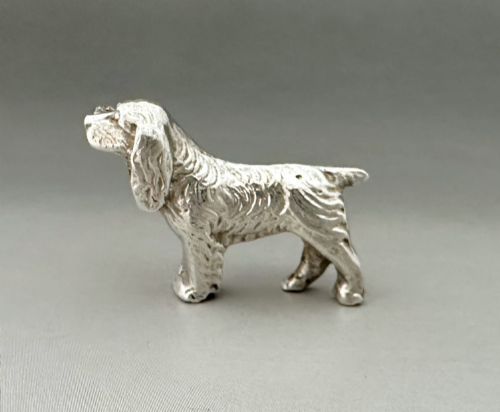
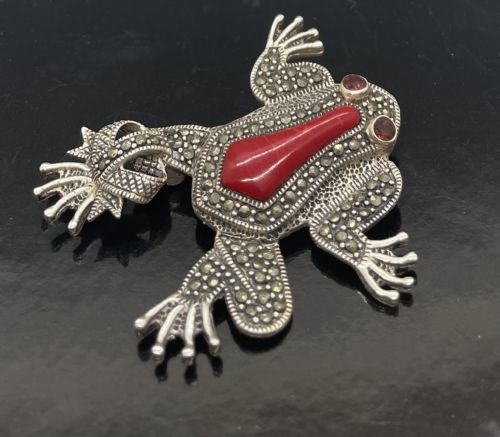
Makers utilised various decorative motifs, ranging from realistic animal subjects like dogs, frogs, and snails to stylised floral arrangements. Pieces frequently reflect distinct aesthetic movements, particularly Art Deco symmetry and Art Nouveau organic lines.
How they were made
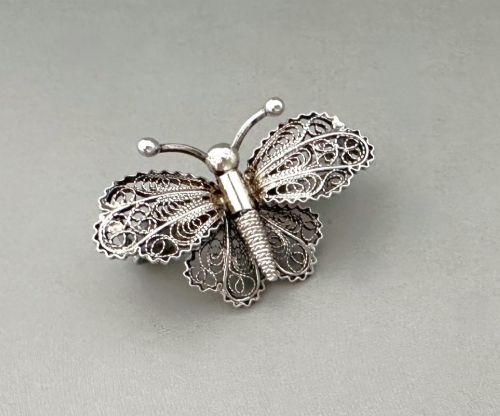
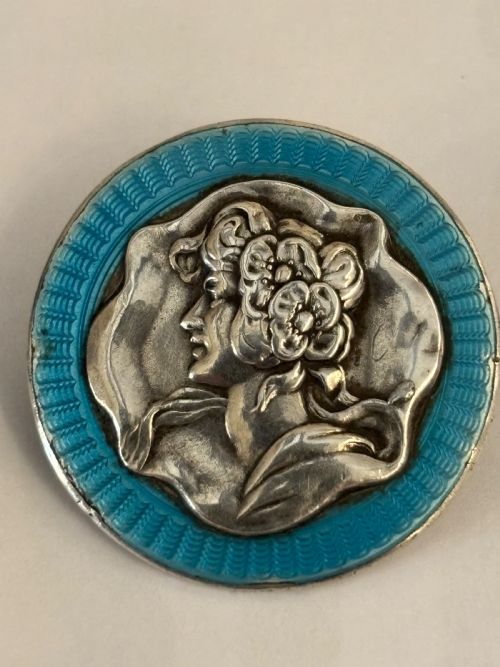
Craftsmen shaped sterling silver and silver gilt into detailed frames using techniques such as filigree wirework and guilloche engraving. These metal foundations often incorporated articulated elements to give movement to the finished item.
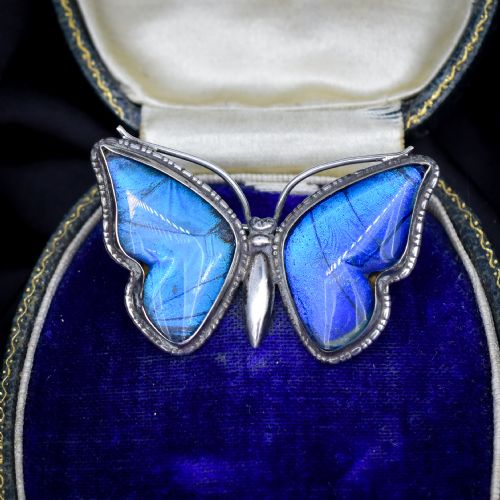
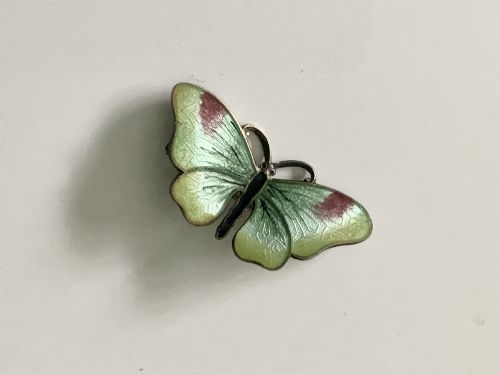
Vitreous enamel and butterfly wing panels were set into the silver housings to provide vibrant colour and texture. Marcasite stones were also flush-set into silver to add sparkle alongside polished glass and natural stones.
Listings feature sterling silver pieces spanning the Victorian era through to the 1960s, incorporating enamel, marcasite, glass, and butterfly wing materials.
What varies in quality
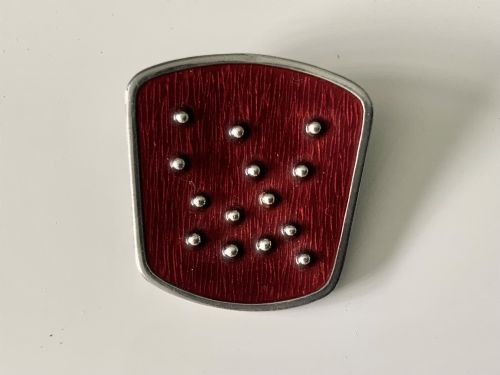
Quality differences rest primarily in the execution of the enamelling and the crispness of the silver casting or filigree work. Hand-applied guilloche patterns and multi-coloured enamel show greater depth and precision in superior examples.
The sophistication of the design, such as articulated joints in Victorian pieces or renowned workshop attribution, distinguishes standard production from finer items. Preservation of delicate materials like glass wings and fragile enamel finishes also dictates the standing of a piece.
A H Darby & Son·Georg Jensen
The Sterling Silver Badge Glossary
- Guilloche enamel
- A decorative technique where an enamel layer is applied over precision-machined metal engine-turning. This creates repeating geometric patterns that shine through the translucent glass coating.
- Filigree
- Fine metal wire twisted and soldered into openwork artistic patterns. It is frequently seen shaping delicate insect wings and floral borders.
- Marcasite
- Small faceted pyrite stones polished and set closely together into silver mountings. They catch the light with a metallic sparkle reminiscent of cut steel.
- Butterfly wing
- A decorative medium using iridescent Morpho butterfly wings sealed beneath a convex glass cover. It creates a shimmering blue backdrop popular in early twentieth-century jewellery.
- Silver gilt
- Sterling silver that has been coated with a thin layer of gold. This treatment provides a rich two-tone appearance alongside the white metal.
Sterling Silver Badge: Frequently Asked Questions
How do I clean sterling silver enamel jewellery?
Clean silver components gently with a soft polishing cloth while avoiding liquid dips that can ruin enamel or glass panels.
Store pieces separately in dry boxes to prevent scratches on vulnerable surfaces.
Are these badges meant to be worn daily?
Most of these items function primarily as decorative brooches pinned to garments or hats rather than everyday utility badges. Delicate enamel and glass wing elements require careful handling during wear.
Securing them properly prevents accidental loss of vintage clasps.
How can I tell Art Deco from Art Nouveau pieces?
Art Deco designs rely on geometric symmetry, clean lines, and stylised motifs typical of the 1920s and 1930s. Art Nouveau pieces feature asymmetrical, flowing organic curves inspired by natural plant forms.
Examining the underlying silver structure usually reveals these distinct aesthetic periods.
What does butterfly wing jewellery look like?
These pieces display iridescent blue or patterned backgrounds beneath a protective glass dome, often depicting tropical landscapes or insects. The material shifts in colour as the viewing angle changes under light.
Craftsmen produced many notable examples during the early decades of the twentieth century.