
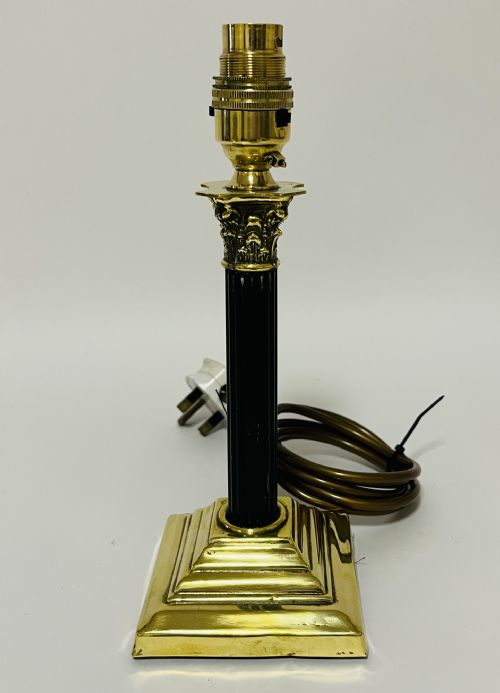
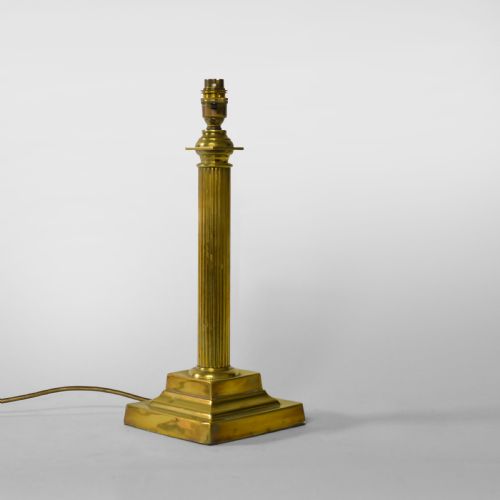


Stepped Base Desk Lamp
A stepped base desk lamp brings period character to a workspace, offering solid metals and clean classical forms.
Stepped Base Desk Lamp
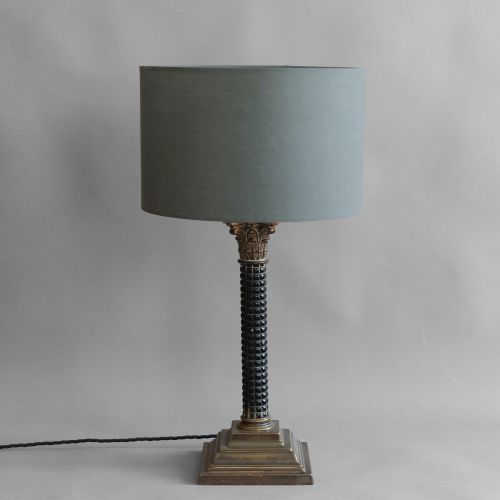
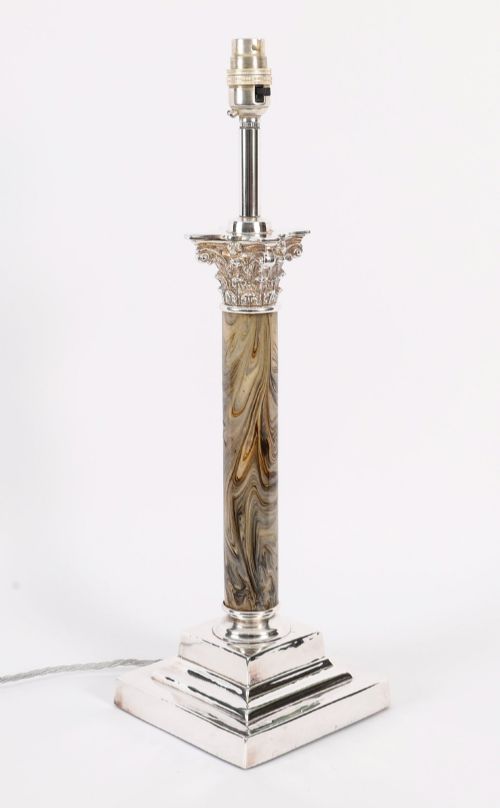
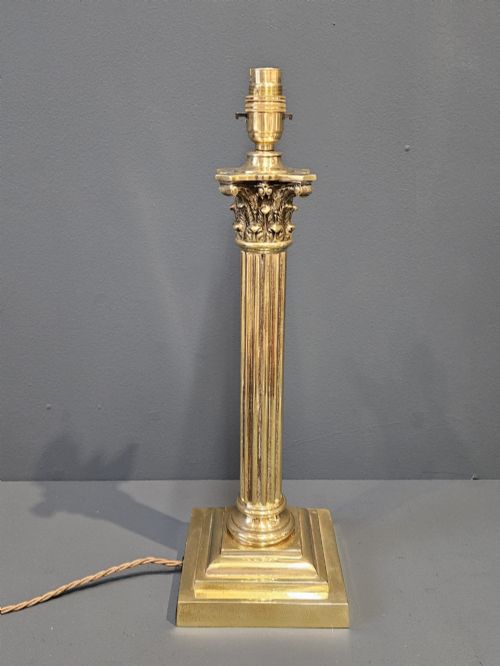
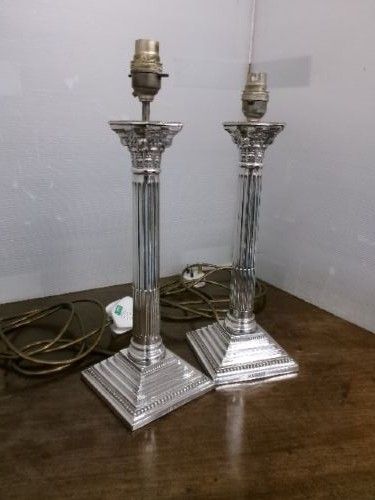
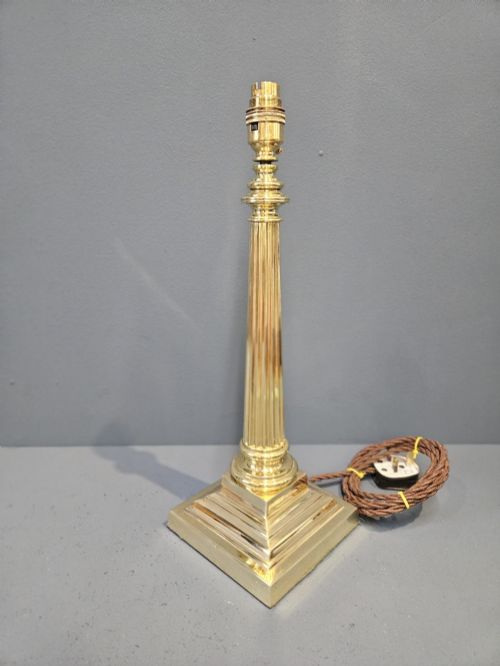
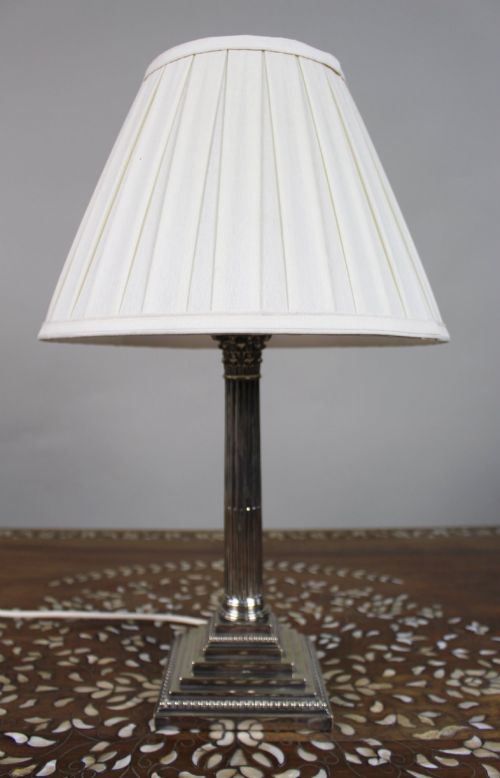
A stepped base desk lamp provides focused illumination while anchoring a desk or table with architectural weight. When exploring a stepped base desk lamp, one predominantly encounters columnar designs and metal constructions dating from the Victorian era through the Art Deco period.
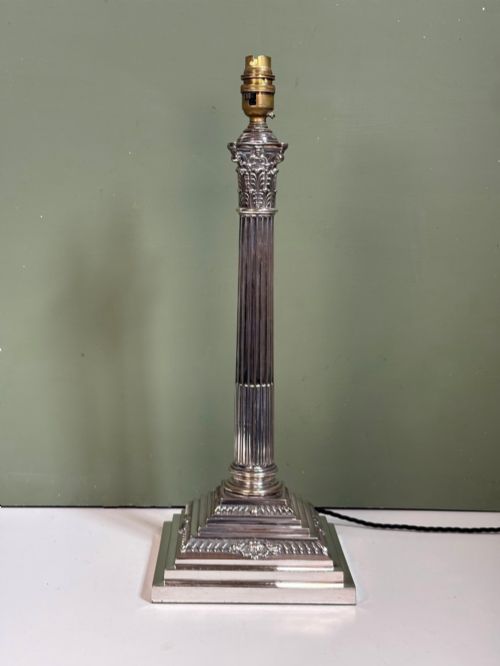
The selection ranges from tall brass and silver plated Corinthian column standards to streamlined chrome Bauhaus creations and contrasting toleware models. Many originate as converted oil lamps or dedicated electric light fittings produced across the nineteenth and twentieth centuries.
How they were made
Workshops utilised cast brass, silver plate, and chrome to build rigid columns and heavy tiered footings that kept tall standards stable. Metal components were turned, cast, and plated before mounting glass reservoirs, fabric shades, or shell shades.
Wiring and flex arrangements were integrated into older structures during later conversions, while Art Deco pieces relied on smooth two tone finishes, onyx mounts, and specialised materials like macassar.
Current listings feature materials spanning brass, silver plate, onyx, chrome, and braided fabric flex across Victorian and Art Deco styles.
What varies in quality
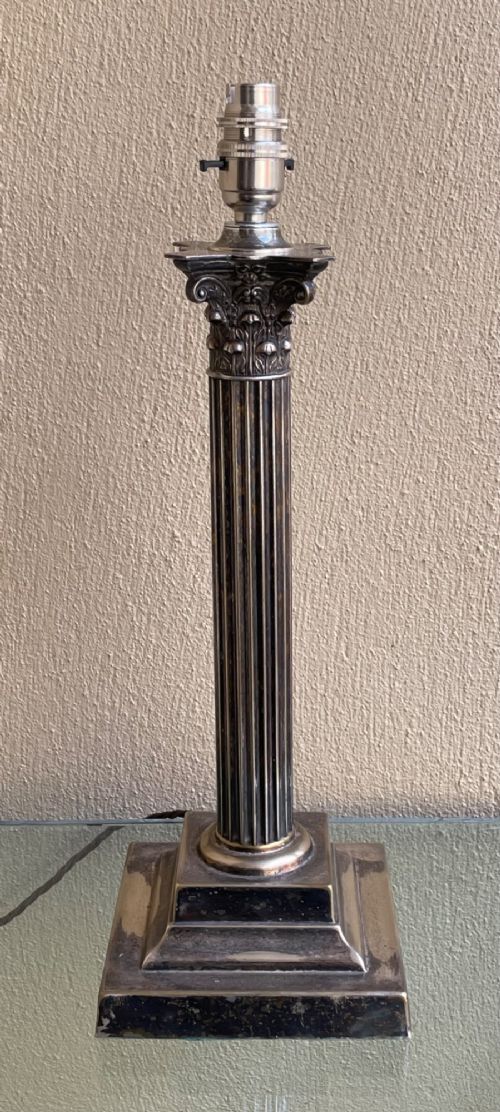
The standard of a stepped base desk lamp rests upon the crispness of the column detailing, such as the acanthus leaves on a Corinthian capital, and the heft of the cast metal base. Substantial gauge brass and thick silver plating separate superior examples from lighter, simpler productions.
Proportion and scale dictate visual success, with finer specimens displaying balanced heights and harmonious pairings of metal columns with cut glass or matched shades.
Walter Latham And Son·Wilhelm Wagenfeld
The Stepped Base Desk Lamp Glossary
- Corinthian column
- A classical architectural order featuring an ornate capital decorated with acanthus leaves, frequently emulated in nineteenth century lamp standards. This design provides a formal profile for heavy brass and silver plated bodies.
- Toleware
- Painted or enamelled metalware, typically tin or steel, used for durable shades and bases. It offers rich colour options on twentieth century pieces.
- Bauhaus
- A modernist design movement emphasising functional simplicity, industrial materials, and clean geometric forms. Pieces from this influence utilise chrome and glass without traditional ornamentation.
- Ormolu
- Gilt bronze mounted onto decorative objects to add metallic warmth and highlight specific sections. It appears alongside onyx and brass on select Victorian examples.
- Macassar
- A dense, heavily figured exotic timber utilised in decorative base details during the Art Deco period. It provides a dark contrast to metalwork.
Stepped Base Desk Lamp: Frequently Asked Questions
How do I wire an old lamp?
Older standards often require modern rewiring to meet current safety standards while retaining their original brass or silver plated components.
A qualified electrician can thread modern braided fabric flex through the central column without altering the exterior character of the piece.
Are these lamps converted oil lamps?
Many Victorian column lamps were originally manufactured as burning oil lamps before being adapted for electricity in the twentieth century.
This conversion history means some examples retain original glass reservoirs or burner collars beneath the modern bulb fitting.
How do I clean brass and silver?
Metal surfaces benefit from gentle dusting and occasional cleaning with appropriate non abrasive polishes suited to plated or solid brass.
Avoiding harsh chemical dips preserves the natural patina accumulated across the Victorian and Edwardian periods.
What shades suit these lamps?
Columnar standards typically pair well with traditional fabric shades, whereas Art Deco models suit metal shell shades or simple glass cylinders.
Proportion guides the choice, ensuring the shade diameter complements the heavy stepped base without tipping the visual balance.