


Industrial Task Lamp
An industrial task lamp brings focused, adjustable light and robust utility to a workspace, combining raw mechanical function with enduring style.
Industrial Task Lamp
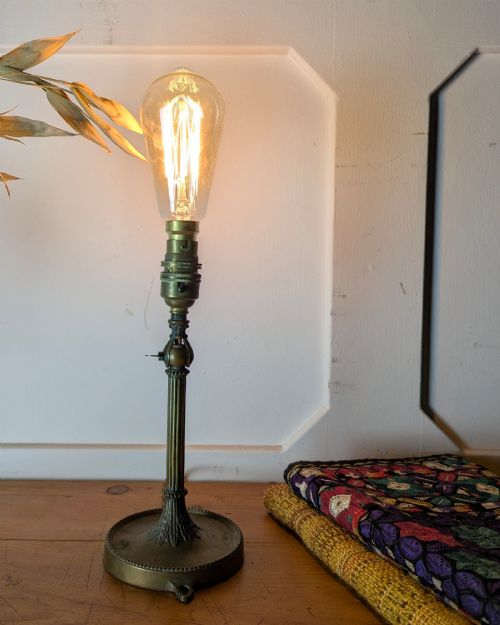
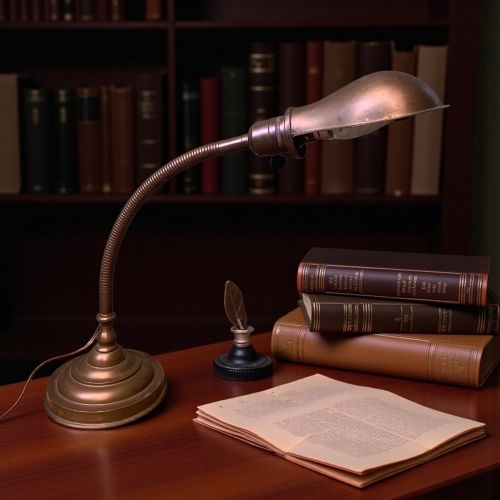
An industrial task lamp is a functional lighting fixture designed to provide direct illumination for detailed work, drawing on heavy-duty workshop and office origins. These pieces primarily take the form of desk lamps and table lamps, with occasional wall-mounted adaptations suited for focused workspace illumination.
The selections available here span periods from the nineteenth century and the Edwardian era through to the 1920s, 1930s, and 1940s. Buyers frequently encounter iconic designs influenced by the Bauhaus movement, alongside French industrial pieces and classic British workshop lighting.
Stylistic expressions across these items encompass straightforward industrial utility, Art Deco geometry, and early twentieth-century modernism. Many examples incorporate adjustable arms and specialised shades, such as shell shades or bankers shades, tailored for practical utility.
Materials and construction
These lamps rely heavily on robust metallic construction, utilising steel, cast iron, and iron to ensure structural stability and durability in demanding environments. Chrome plating and polished brass provide both protective finishes and a distinct aesthetic appeal, often paired with weighted cast bases.
Functional elements integrate glass shades, such as blue glass components, alongside specialised fittings and original light mechanisms. Wood elements occasionally appear in supporting bases or associated chests, complementing the primary metal structures.
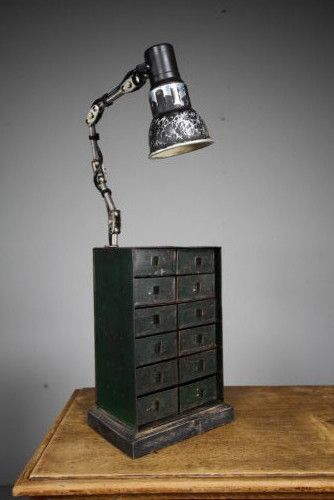
One exceptional Edwardian listing includes an entire jewellers chest equipped with its original light fitting.
Assessing quality in workshop lighting
Quality in these task lamps is defined by the integrity of the mechanical adjustment mechanisms and the retention of original finish components like chrome and brass. Pieces featuring patented articulated arms or branded manufacturing show superior engineering compared to simpler stationary variants.
The sophistication of the design lineage also distinguishes the range, with items directly tied to known modernist or industrial movements holding greater historical interest. Original shades, authentic wiring fittings, and substantial metal gauges elevate the overall execution.
Herbert Terry·Wilhelm Wagenfeld·Pirouette·Hawkins
The Industrial Task Lamp Glossary
- Task lamp
- A focused lighting fixture designed to illuminate a specific working area rather than an entire room. These lamps typically feature adjustable arms or heads to direct light precisely where needed.
- Bauhaus
- A German art school operational in the early twentieth century that emphasised functionalism and mass production. Its design philosophy heavily influenced the clean lines and utilitarian forms of modernist lighting.
- Anglepoise
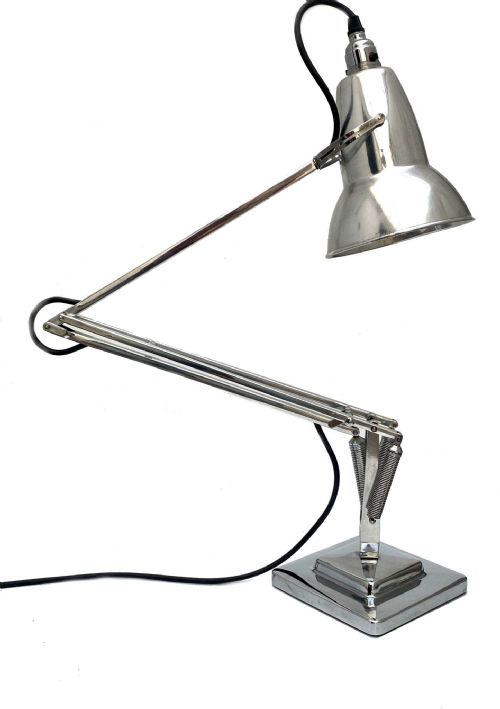
- A type of balanced arm lamp utilising tension springs to hold the lamp in various positions. This mechanical arrangement allows the light to remain stable at any desired angle.
- Art Deco
- A design style prevalent during the 1920s and 1930s characterised by sleek geometric shapes and streamlined forms. In lighting, this translates to polished metallic finishes and structured silhouettes.
Industrial Task Lamp: Frequently Asked Questions
What defines an industrial task lamp?
An industrial task lamp is a utilitarian lighting fixture engineered for practical workspaces, workshops, and desks. They prioritize directional light and mechanical adjustment over purely decorative qualities.
These pieces utilise durable materials like steel, iron, and brass to withstand heavy daily use. Their forms are shaped entirely by their function as adjustable working tools.
How do I use one in a modern interior?
These lamps function effectively on office desks, bedside tables, or reading surfaces where direct, adjustable light is required. Their metallic finishes and mechanical arms provide a strong focal point in a room.
Pairing them with contemporary furniture highlights their historical design roots. They bridge the gap between practical workspace utility and sculptural interior decoration.
How do I identify different periods?
Nineteenth-century and Edwardian examples often feature heavy cast brass or iron with simple pivoting joints and traditional shades. They lean towards classic, ornate or straightforward heavy utility.
Pieces from the 1920s and 1930s frequently incorporate chrome plating, articulated spring arms, and streamlined Bauhaus or Art Deco geometries. The presence of machine-age styling marks this later transition.
Are these lamps adjustable?
Many of these lamps feature articulated arms, swiveling heads, or weighted bases designed for flexible positioning. Mechanisms range from simple pivot joints to complex spring-balanced systems.
This adjustability was essential for directing light onto detailed tasks in workshops and offices. It remains the defining functional characteristic of the category.