


Steamship Watercolour Painting
These steamship watercolour painting works capture maritime history on paper, offering buyers a direct window into nineteenth and early twentieth century port life.
Steamship Watercolour Painting
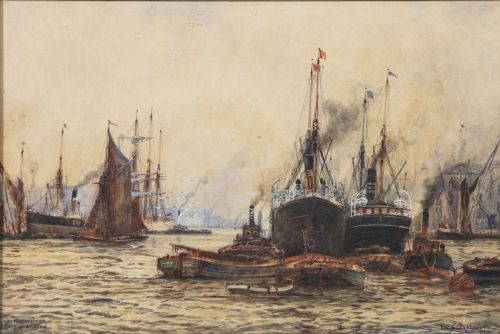
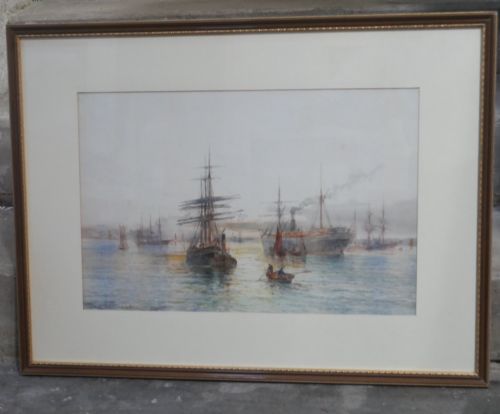
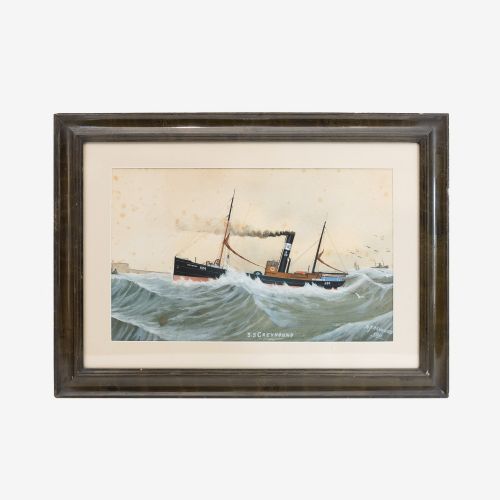
When you search for a steamship watercolour painting, you are examining maritime works produced during the nineteenth century and the Edwardian period. The selection on this page centres on river scenes, port views, and vessel portraits executed in British maritime styles.
Most examples date from around eighteen ninety to nineteen ten, depicting vessels on the Thames, at Dublin Bay, or near Scarborough. These watercolours record commercial shipping, tugs, and steam vessels operating in busy British waters during a period of industrial expansion.
Makers represented include named artists such as Frank William Scarbrough, Ernest Dade, Walter Duncan, Lieutenant Harold E Frecker RNR, Frances E Nesbitt, J Syer, and Alexander Harwood. Their output spans Victorian Marine Realism, British School Maritime, and Edwardian Maritime traditions.
How They Were Made
Artists painted these maritime subjects using watercolour pigment and gouache applied directly to paper supports. The combination of translucent washes and opaque gouache highlights allowed painters to render atmospheric smoke, water reflections, and metal hulls.
Completed works were typically mounted behind glass and housed within wood frames for display as wall art. The paper support required careful handling to preserve the water-soluble pigments used in both Victorian and Edwardian marine painting.
Several watercolours record Victorian London air as genuinely smoky, proving smog has inspired artists for well over a century.
What Varies in Quality
Quality in these watercolours depends upon the artist's handling of light, atmosphere, and maritime architecture. Finer pieces demonstrate precise control over water and pigment to suggest movement in the water and smoke from steam vessels.
The prominence of the artist and the specific setting influence the standing of each work. Top examples by recognised hands like Frank William Scarbrough capture recognizable London or coastal landmarks with secure draughtsmanship.
Frank William Scarbrough·Alexander Harwood·Ernest Dade·Walter Duncan·Lieutenant Harold E Frecker RNR·Frances E Nesbitt·J Syer
The Steamship Watercolour Painting Glossary
- Watercolour
- A painting method in which the paints are made of pigments suspended in a water-soluble vehicle. It provides transparent layers of colour on paper.
- Gouache
- An opaque watercolour paint made from pigment mixed with water and a binder such as gum arabic. It creates solid highlights and dense areas of tone.
- Edwardian Maritime
- A stylistic category covering marine art produced during the reign of Edward VII. These works often focus on steam propulsion and bustling port activity.
- Victorian Marine Realism
- A nineteenth-century approach focused on accurate representation of vessels, water, and atmospheric conditions. Artists prioritized observational truth in recording shipping.
- British School Maritime
- A collective term for marine painting traditions practiced by British artists. It encompasses coastal scenes, river traffic, and portraiture of specific ships.
Steamship Watercolour Painting: Frequently Asked Questions
What subjects appear in these watercolours?
The works depict steamships, tugs, and sailing vessels operating in British waters and commercial ports. Common settings include the River Thames, London pool views, Dublin Bay, and Scarborough harbour.
Artists recorded the industrial activity of the period, capturing vessel traffic, smoke from funnels, and urban architecture along the waterfront.
How should I display a watercolour?
Watercolour paintings require protection from direct sunlight to prevent fading of the pigments on paper. Framing behind glass helps shield the delicate surface from dust and atmospheric moisture.
Keep these works away from damp environments and extreme temperature fluctuations to preserve the paper support and the wood frame.
How do I identify an Edwardian marine painting?
Edwardian examples often feature steam-powered vessels, industrial port infrastructure, and looser atmospheric effects compared to earlier Victorian works. Subject matter frequently includes specific named steamships or busy commercial waterways.
Signatures, dates, and stylistic markers such as the influence of the British School Maritime tradition help place a painting in this era.
What is the difference between watercolour and gouache?
Watercolour uses transparent washes of pigment that allow the white of the paper to shine through. Gouache incorporates a binding agent that makes the paint opaque, providing solid coverage.
Many marine painters combined both mediums to render translucent water alongside dense clouds of steam and smoke.