

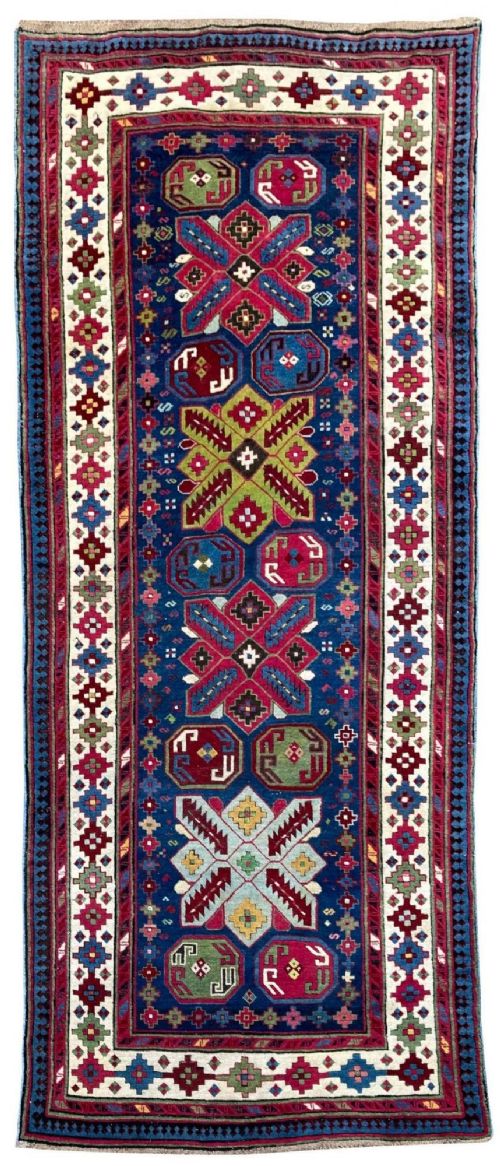
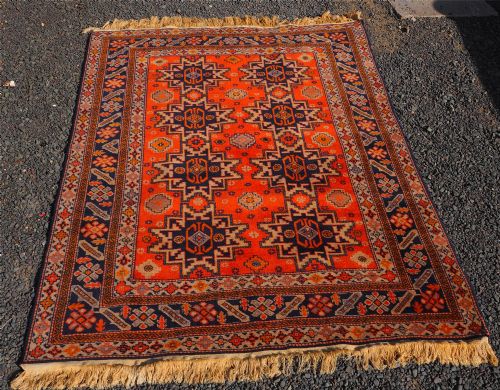


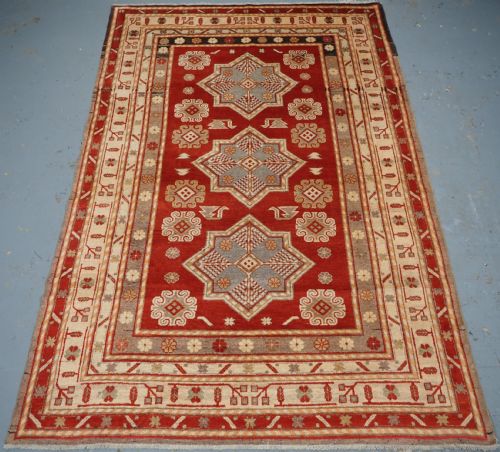
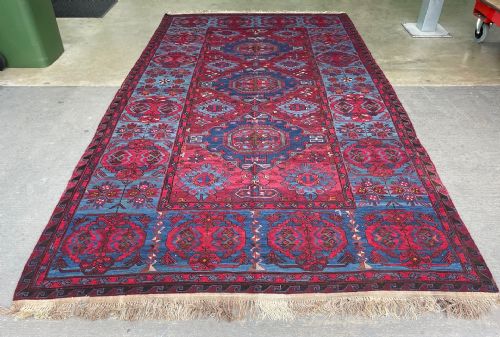


Star Medallion Rug
A star medallion rug brings a distinct geometric geometry and central motif to a floor, offering rich regional history in wool and silk.
Star Medallion Rug
A star medallion rug centres its design on geometric star motifs, drawing from traditions across the Caucasus, Persia, Anatolia, and East Turkestan. Buyers seeking these textiles encounter area rugs, runners, and carpets spanning the late nineteenth century into the early twentieth century.
Materials and construction
Weavers construct these rugs predominantly using wool for the pile and foundation, supplemented by cotton for structural warps and wefts in specific regional traditions. Silk appears in special pieces, such as embroidered panels on red felt.
Regional workshops and tribal groups employ hand-knotting and flatweave techniques, including Soumak construction, alongside embroidery. Natural dyestuffs and local fibre preparation define the traditional manufacture visible across the collection.
Star Medallion Rug Retail Price Guide 2026
Typical asking prices for star medallion rug among the pieces listed under this phrase on Sellingantiques today, from the lower quarter to the upper quarter. They describe what is for sale here now, not the wider market.
The listings span the period from 1880 to 1930, featuring wool, cotton, silk, and wool felt.
Factors determining quality
Quality rests in the precision of the geometric drawing, the crispness of the star medallion, and the depth of the wool pile. Finer knot densities and balanced proportions elevate certain examples above simpler village productions.
The integrity of the foundation, the vibrancy and retention of natural dyes, and the preservation of original borders distinguish superior textiles. Condition plays a role, though historical wear reflects genuine age in these antique pieces.
The Star Medallion Rug Glossary
- Medallion
- A central decorative motif placed in the middle of the carpet field. In these pieces, it takes the form of a geometric star.
- Soumak
- A flatweave technique utilising a wrapping stitch over warp threads. It creates a sturdy textile without a cut pile.
- Pile
- The upright yarn surface of the rug formed by knotted loops. Wool and silk form this upper layer.
- Warp
- The vertical threads stretched on the loom that form the structural foundation. Cotton and wool serve this purpose in these weaves.
Star Medallion Rug: Frequently Asked Questions
Where were star medallion rugs made?
These rugs originate from weaving traditions across the Caucasus, Persia, Anatolia, and East Turkestan. Tribal groups and regional workshops produced them.
Specific centres include regions like Daghestan, Shirvan, and Ushak. Each area applied distinct local colour palettes and knotting techniques to the central star design.
How do I care for an antique rug?
Protect the textile by placing it in a low-traffic area away from direct sunlight. Vacuum gently without using a rotating brush roll.
Professional cleaning tailored for antique wool and silk textiles maintains the fibres. Avoid harsh chemical treatments and excessive moisture.
What materials are used in these rugs?
Wool forms the primary material for both the pile and foundation of most pieces. Cotton frequently appears in the structural warp and weft threads.
Silk and wool felt are also utilised in specific embroidered or fine woven examples. Natural fibres dominate the entire selection.
How can I tell the age of a rug?
Age is assessed through structural analysis, material examination, and stylistic markers. Natural dyestuff variations and wool patina provide further clues.
Most pieces date from the late nineteenth century to the early decades of the twentieth century. Specific construction traits link them to this historical period.