


Standing Tier Shelf
A standing tier shelf provides open display and storage across multiple levels, uniting practical utility with period elegance.
Standing Tier Shelf
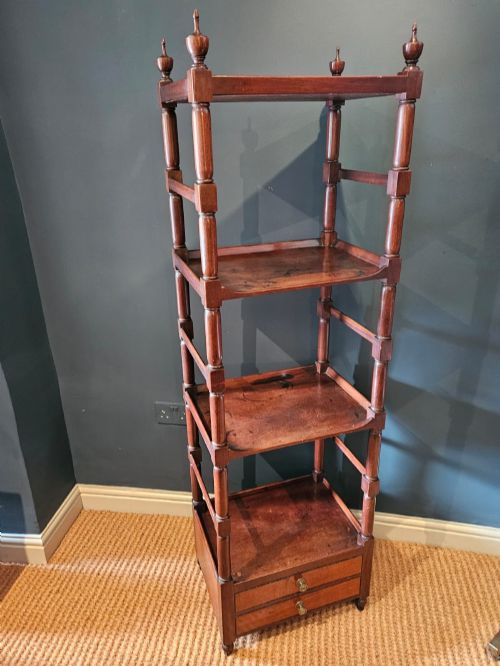
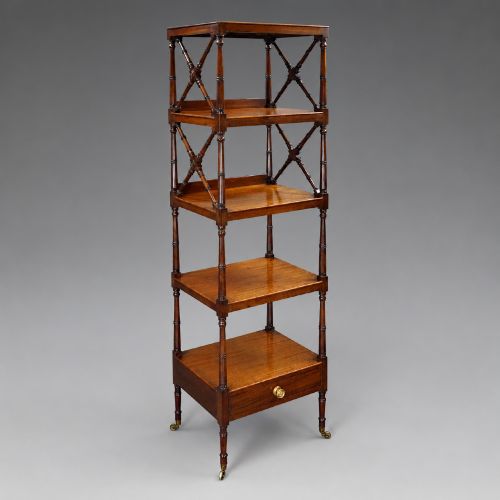
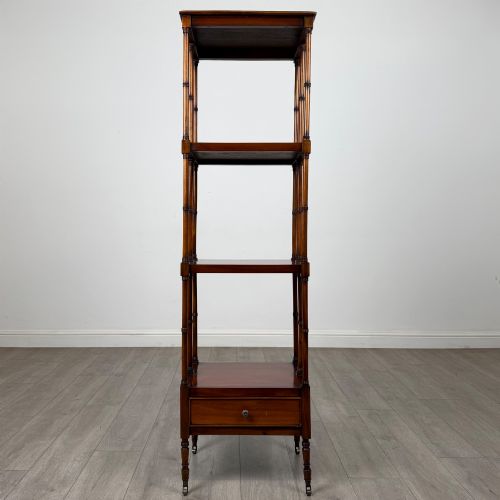
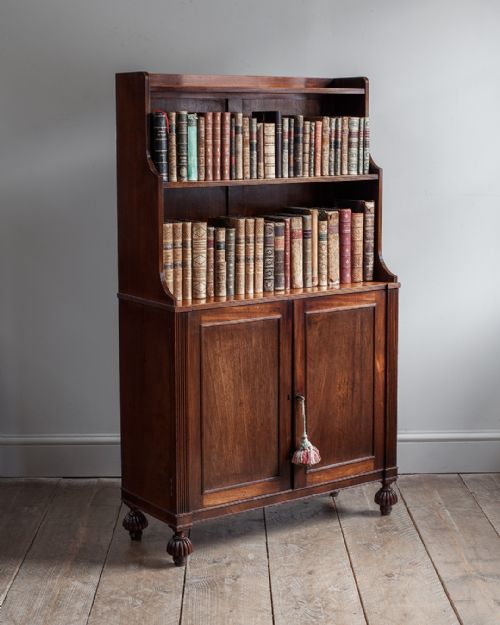
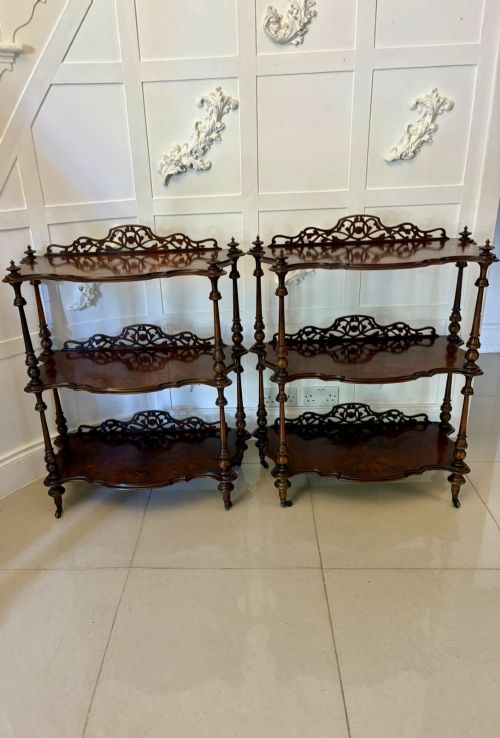
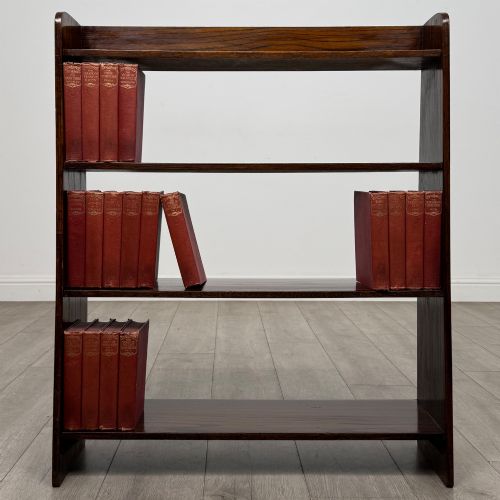
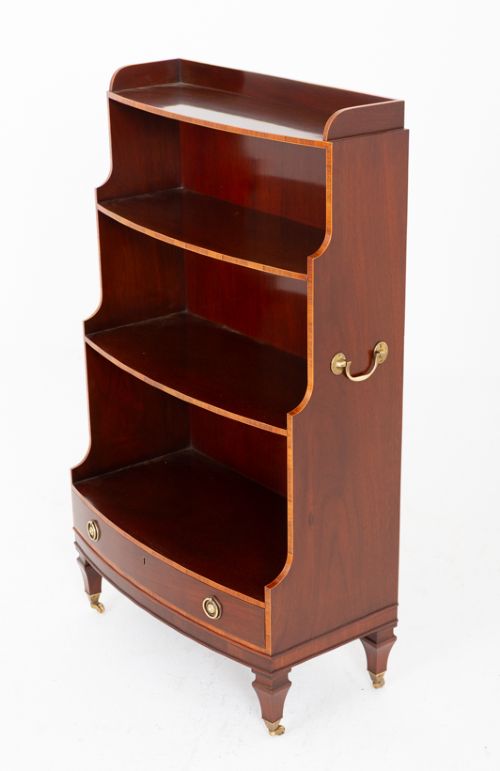
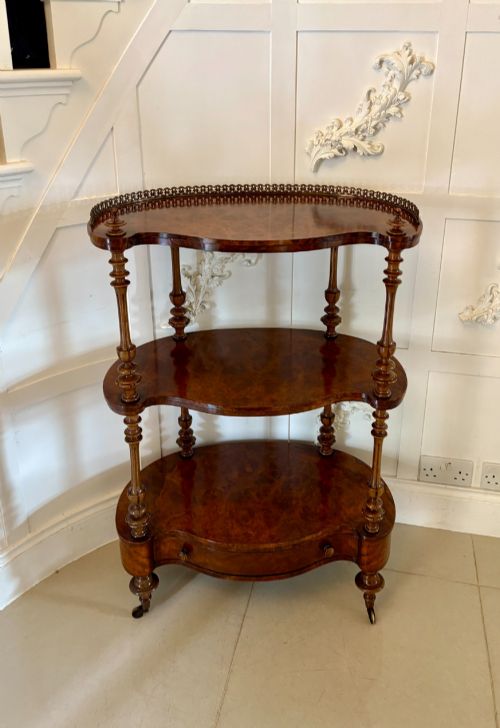
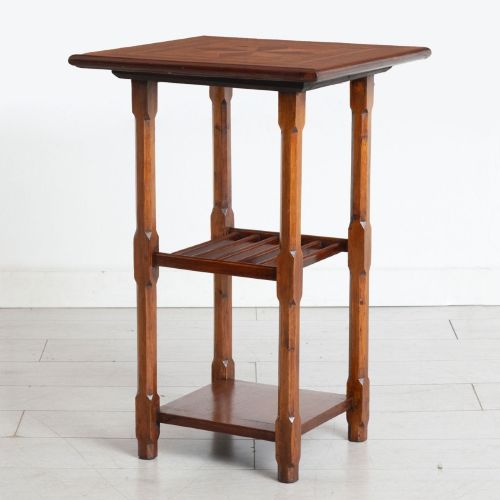
When you search for a standing tier shelf, you encounter pieces designed for open display and vertical storage, frequently catalogued as whatnots, etageres, or waterfall bookcases. These furnishings appear across the 19th Century, Victorian, Edwardian, and Georgian periods, showcasing forms intended to hold books, ornaments, and occasional items in domestic interiors.
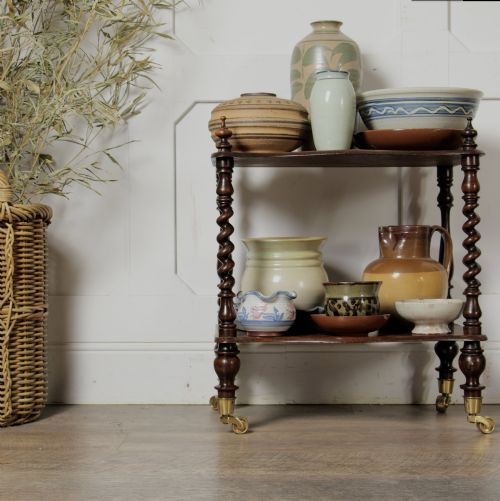
Mahogany and walnut predominate among the materials, alongside burr walnut, rosewood, oak, and ebonised wood, sometimes accented with brass or wood inlay. The structural layouts range from corner whatnots and serpentine shapes to revolving bookcases and multi-tiered trolleys.
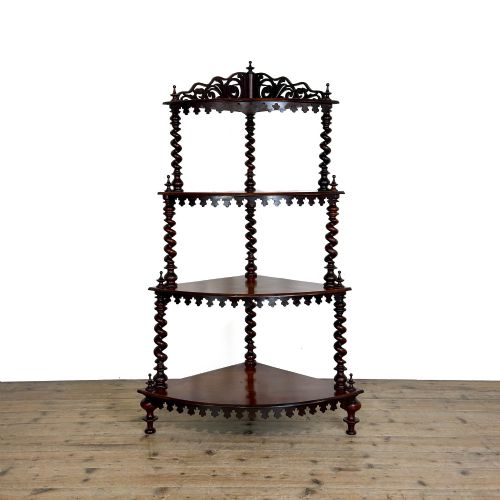
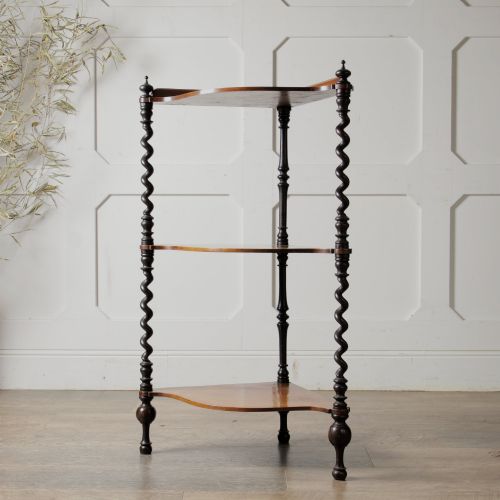
The version you are most likely to meet on this page is a multi-tiered mahogany or walnut piece from the Victorian or Edwardian eras, combining vertical shelving with turned supports or barley twist columns.
Materials and construction
Cabinet makers utilised dense hardwoods such as mahogany, walnut, rosewood, and oak to construct the vertical supports and horizontal platforms of a standing tier shelf. Selected timbers like burr walnut and rosewood were chosen for their distinctive grain patterns, occasionally enhanced by fine wood inlay or parcel gilding.
Structural integrity relied on sturdy turned columns, barley twist legs, or brass fittings to sustain multiple levels without sagging. Joinery techniques from the Georgian through to the Edwardian periods ensured that delicate tiers remained stable under the weight of books and display items.
Listings span multiple decades, incorporating mahogany, walnut, oak, and rosewood forms from Georgian, Victorian, and Edwardian periods.
Assessing quality in tiered shelving
The distinction between standard examples and the finest pieces rests upon timber selection and decorative ambition. Superior items employ highly figured burr walnut, rich mahogany, or exotic padauk, coupled with refined turning, complex serpentine shapes, or intricate inlay work.
Construction subtlety separates the workshops of high skill from mass production. Well-executed pieces display harmonious proportions across every tier, secure joints without undue reinforcement, and thoughtful integration of brass hardware or carved details that elevate the entire silhouette.
The Standing Tier Shelf Glossary
- Whatnot
- A multi-tiered open piece of furniture designed for displaying ornaments, books, or bric-a-brac. It originated in the Georgian period and remained popular throughout the Victorian era.
- Etagere
- A set of open shelves for displaying small objects or ornaments, often featuring slender supports. This French term typically applies to lighter, decorative pieces.
- Waterfall bookcase
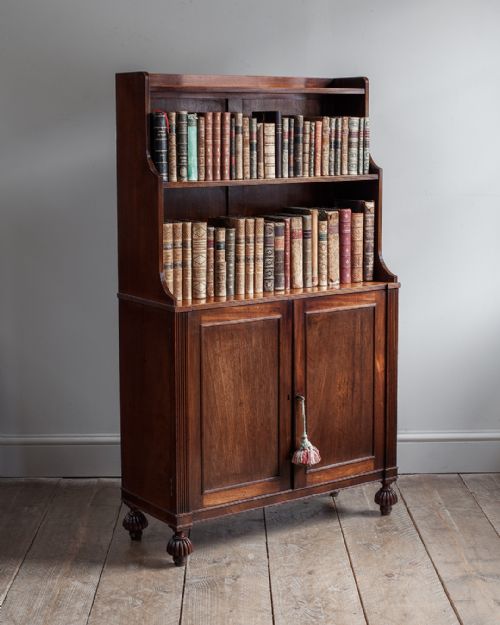
- A set of open shelves where each tier steps back progressively from the bottom to the top, creating a cascading profile. These frequently appear in mahogany.
- Barley twist
- A decorative turning style resembling a rope or helix, commonly found on the vertical supports of Victorian items. It adds tactile texture to structural columns.
- Serpentine
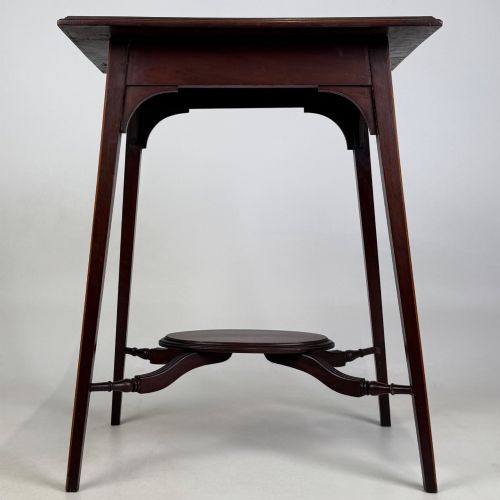
- A curved outline that bends inward and outward in a continuous flowing wave, often seen on the front edges of superior tables and shelving units.
Standing Tier Shelf: Frequently Asked Questions
What is a standing tier shelf used for?
These pieces serve primarily to display decorative objects, hold books, and organise small household items across several vertical levels.
In period interiors, they functioned as versatile storage units in parlours, libraries, and drawing rooms where floor space was at a premium.
How do I style a tier shelf at home?
Balance heavier items such as books on the lower tiers to anchor the piece visually, leaving upper levels for smaller ceramics and ornaments.
Keep surrounding furniture complementary in wood tone, allowing the distinct grain of mahogany or walnut to remain the visual focal point.
How can I tell a Victorian piece from an Edwardian one?
Victorian examples often feature darker, heavily figured timbers like burr walnut, rich mahogany, or rosewood, frequently with elaborate turnings or barley twists.
Edwardian iterations tend toward lighter oak or simpler mahogany constructions, reflecting a shift towards more streamlined domestic furnishings.
What is the difference between a whatnot and an etagere?
A whatnot is traditionally an English multi-tiered shelving unit designed for general display and utility, frequently incorporating small cupboards below.
An etagere is typically of French inspiration, functioning as a lighter, highly decorative framework intended solely for displaying delicate porcelain and ornaments.