
Standing Shelf with Drawer
A standing shelf with drawer combines open display tiers with secure storage, offering a practical way to organise books and display objects.
Standing Shelf with Drawer
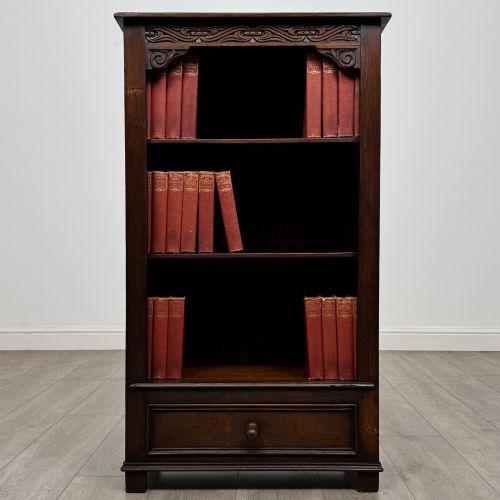
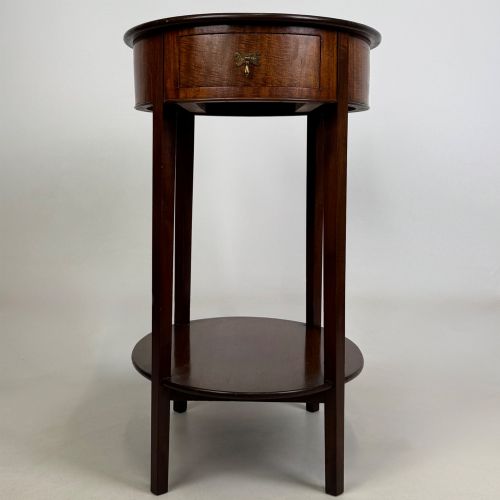
When you search for a standing shelf with drawer, you are looking at multi-tiered furniture designed to hold books, display items and smaller belongings close at hand. These pieces appear in forms such as whatnots, etageres and open bookcases dating from the Georgian, Regency and Victorian periods.
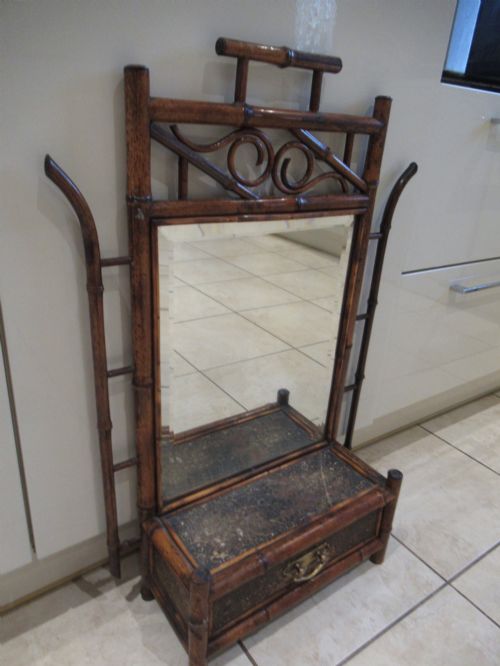
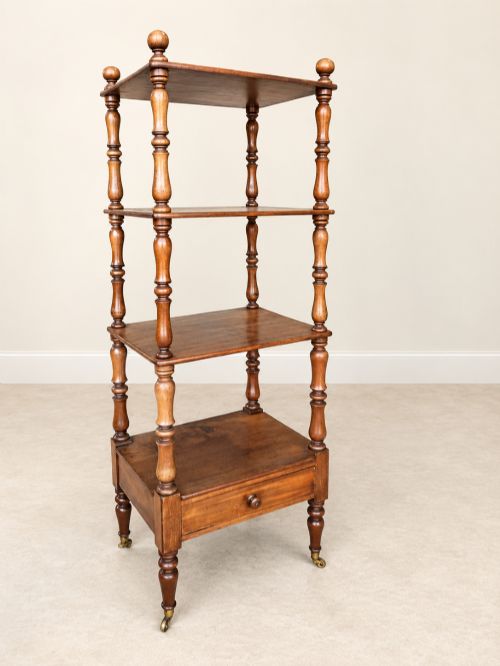
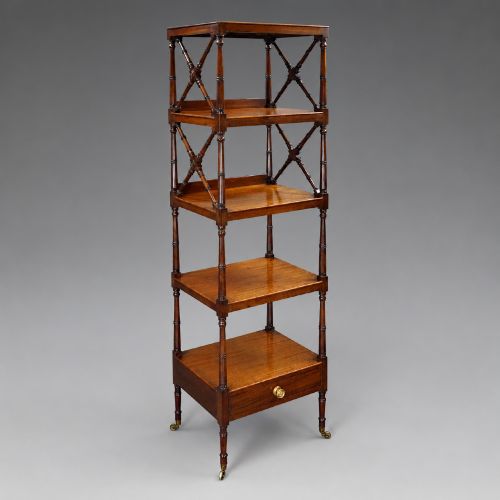
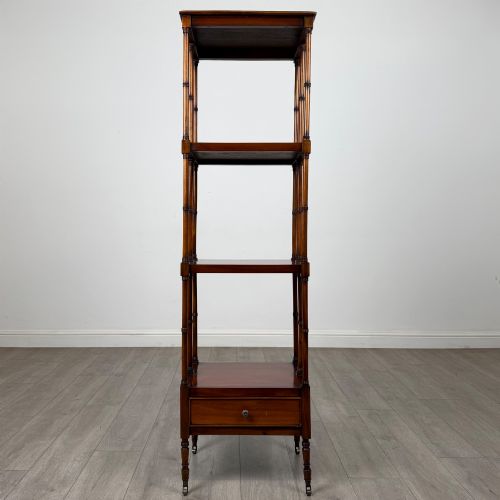
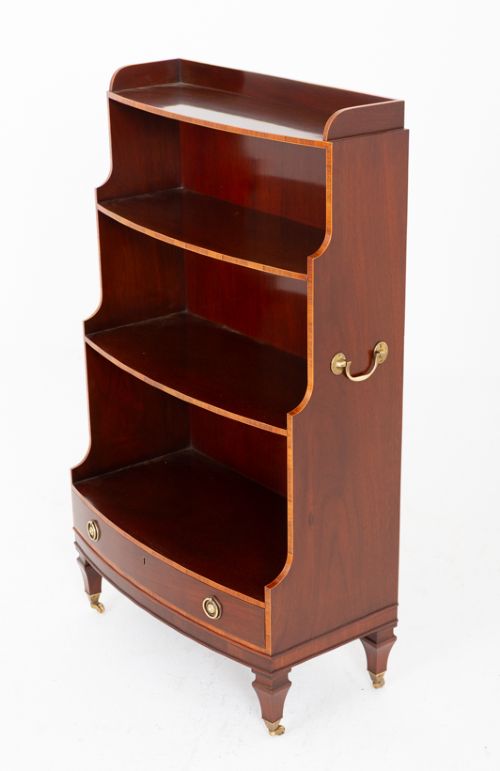
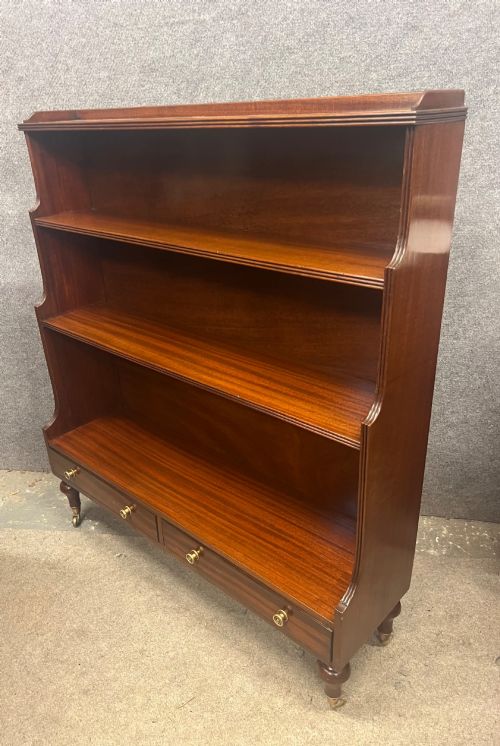
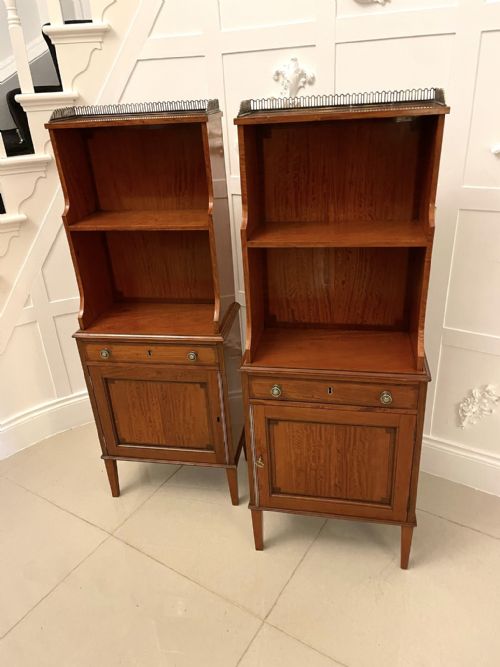
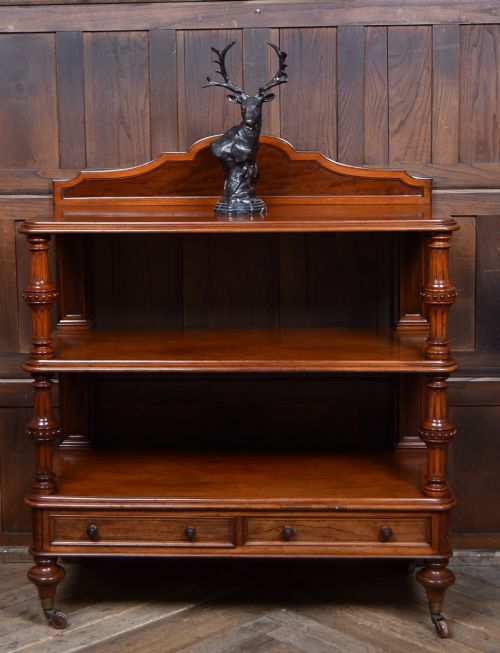
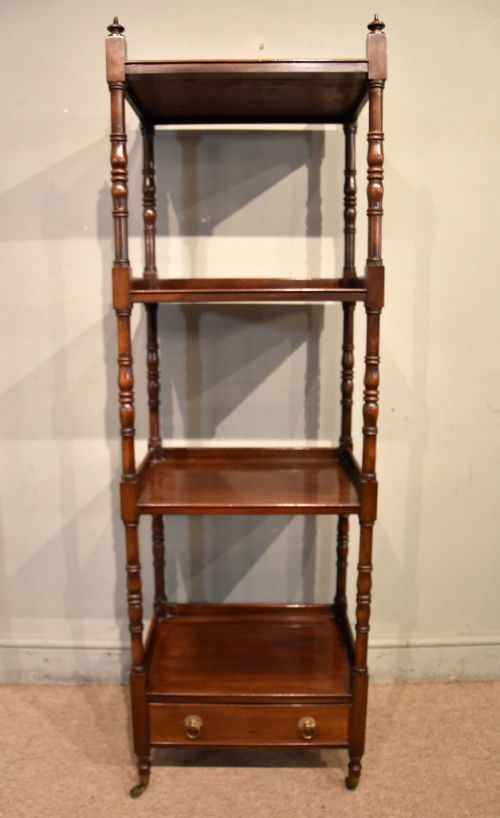
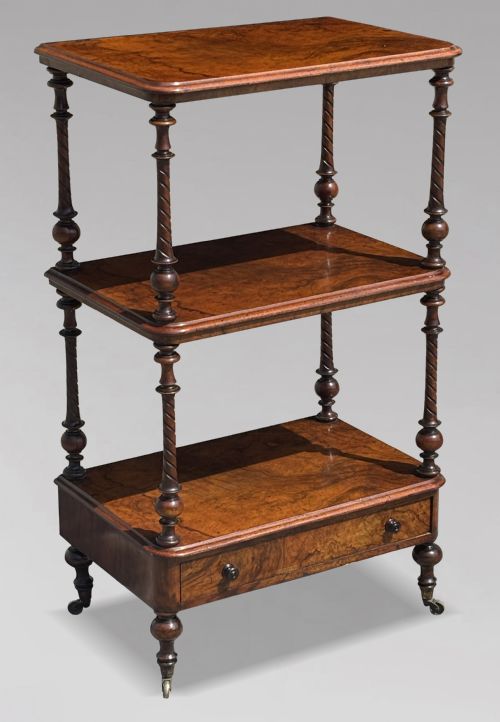
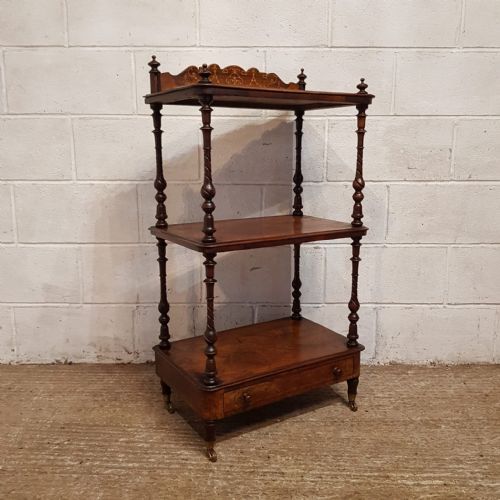
The version you are most likely to meet on this page is a mahogany or rosewood tiered stand featuring a single drawer positioned at the base or beneath a shelf. They range from compact three-tier structures to taller four-tier designs, often topped with decorative galleries or mirrors.
Makers produced these items to serve various domestic functions, from holding folios in a library to displaying ornaments in a parlour. The inclusion of a drawer provides concealed space for letters, sewing equipment or loose accessories.
Materials and construction methods
Cabinet makers relied heavily on dense hardwoods such as mahogany, rosewood and walnut to provide the structural strength needed for slender vertical supports and stacked shelves. They often incorporated satinwood, boxwood and ebony for contrasting stringing and inlay work.
Joinery techniques focused on stability, utilising precise joints to secure multiple tiers to turned or reeded upright columns. Drawers were constructed with hand-cut dovetails and fitted with brass handles or pulls, sliding smoothly within tailored wooden channels.
The listings show these pieces spanning the Georgian, Regency, Victorian and Edwardian periods, constructed predominantly in mahogany, rosewood and walnut.
Distinctions in quality
The standard of timber selection largely defines the upper tier of these pieces, where cabinet makers utilised finely figured mahogany, burr walnut or richly grained rosewood. Grain continuity and careful matching across the shelves and drawer fronts indicate a higher grade of workshop production.
Refinement in the turning of upright columns, the crispness of brass or wood detailing, and the integration of secondary timbers within the drawer construction separate standard utility items from top-tier examples produced by recognised makers.
Gillows·Samson & Son London
The Standing Shelf with Drawer Glossary
- Whatnot
- A piece of furniture consisting of a series of open shelves supported by pillars, used for displaying ornaments or books. They frequently include a single drawer at the base.
- Etagere
- A French term for a piece of furniture with a set of small open shelves for displaying small objects. These often share the tiered structure of the whatnot.
- Waterfall bookcase
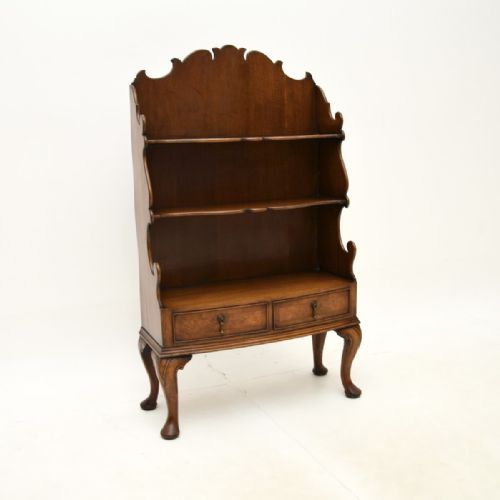
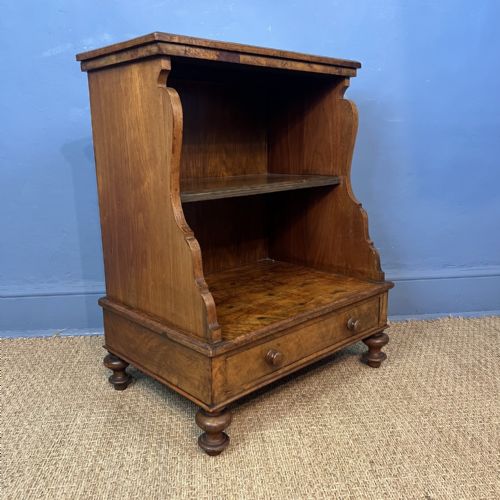
- A set of open shelves where each successive shelf is deeper than the one above it, creating a stepped profile. They often feature an enclosed section or drawer at the bottom.
- Canterbury
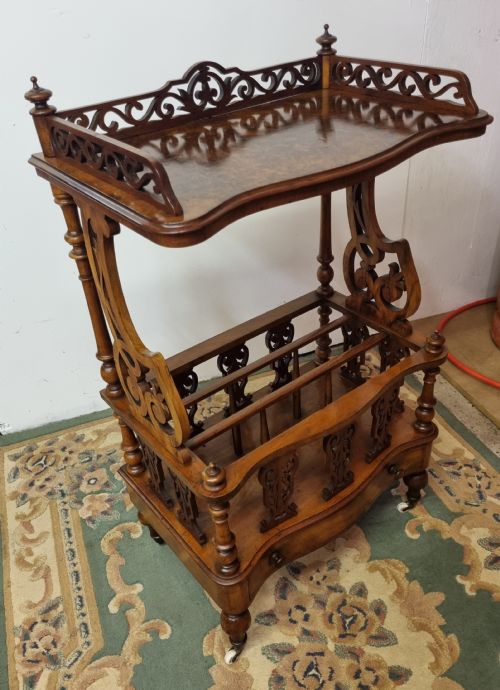
- A low stand with partitioned vertical divisions for holding sheet music or books, typically incorporating a drawer underneath. They date predominantly from the Georgian and Victorian eras.
- Cellarette
- A compartment or drawer designed originally to hold bottles of wine, occasionally integrated into the lower section of tiered display stands.
Standing Shelf with Drawer: Frequently Asked Questions
What is a whatnot shelf?
A whatnot is a multi-tiered open shelving unit designed for displaying decorative objects, books or curiosities in a drawing room or parlour. They typically feature three or four graduated shelves supported by slender turned columns.
Many examples incorporate a single drawer at the base or beneath one of the middle tiers to provide concealed storage for small household items.
Where should I place a tiered stand?
These versatile stands work well against a living room wall, beside a reading chair or within a hallway to display ceramics and small collections. Their open construction allows light to pass through, making them suitable for tighter spaces where a heavy bookcase might overwhelm the room.
The lower drawer provides a convenient spot to keep coasters, reading glasses or stationery out of sight.
What is the difference between an etagere and a whatnot?
While both terms describe multi-tiered shelving units, etagere originates from French furniture terminology and often emphasises decorative display. Whatnot is a traditional English term for similar tiered stands used for miscellaneous items.
In practice, makers and dealers used both names interchangeably for open-shelved furniture featuring vertical supports and optional drawers.