
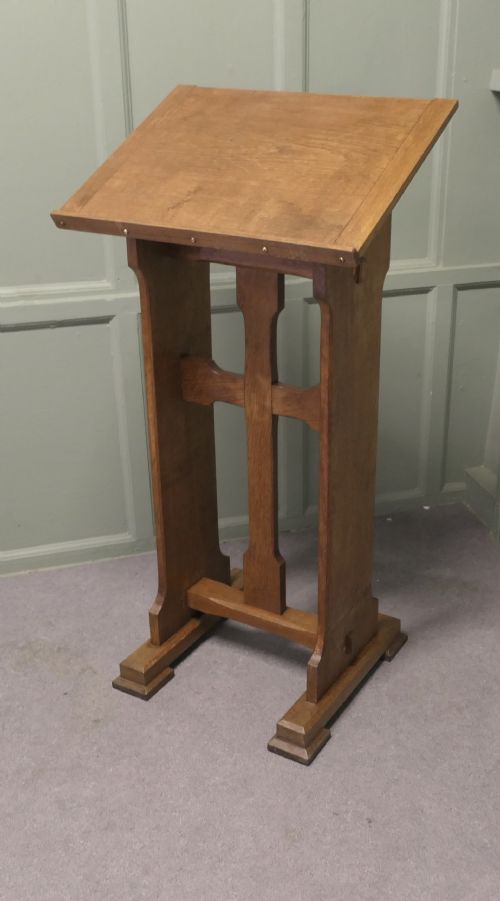

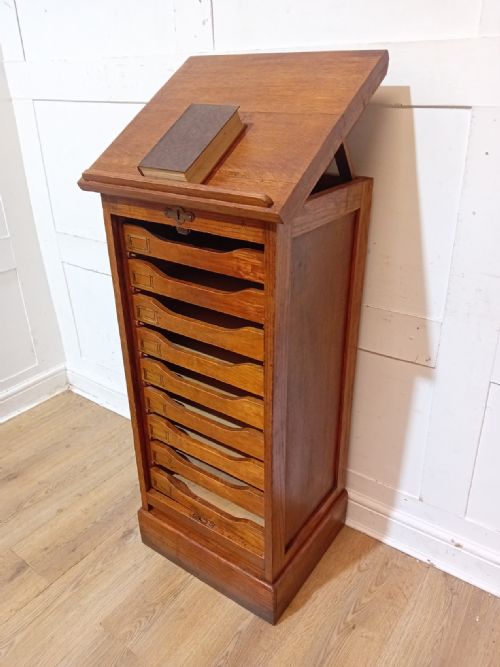
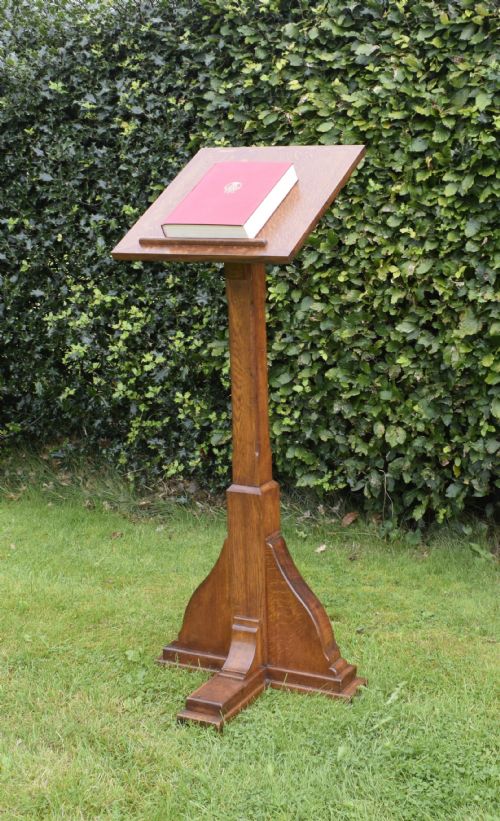


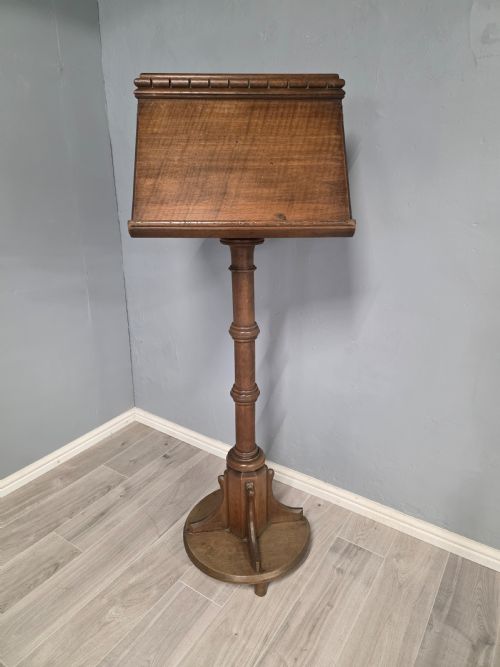

Standing Oak Lectern
A standing oak lectern brings architectural dignity to a room, offering a commanding perch for books, music, or reception duties.
Standing Oak Lectern
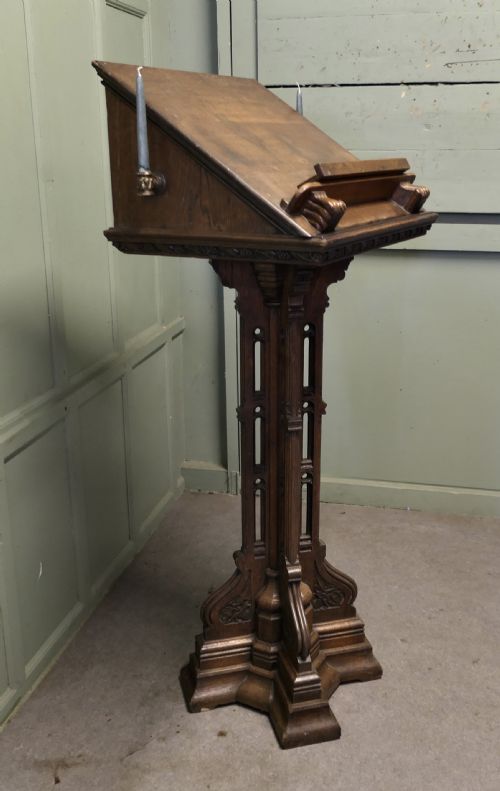
A standing oak lectern is primarily built for reading, displaying texts, or greeting guests in domestic, ecclesiastical, and commercial spaces. You will encounter forms spanning the eighteenth, nineteenth, and early twentieth centuries, reflecting changing decorative tastes from George III austerity to elaborate Gothic Revivalism.
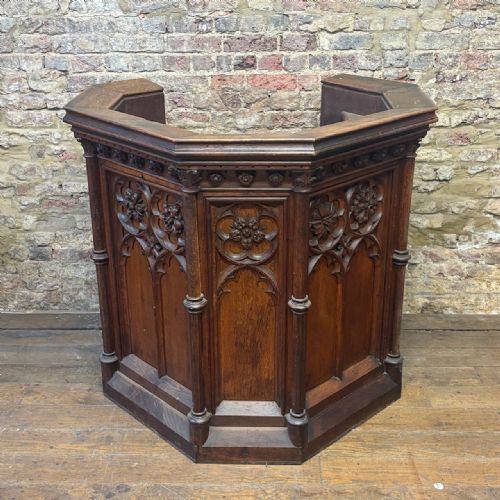
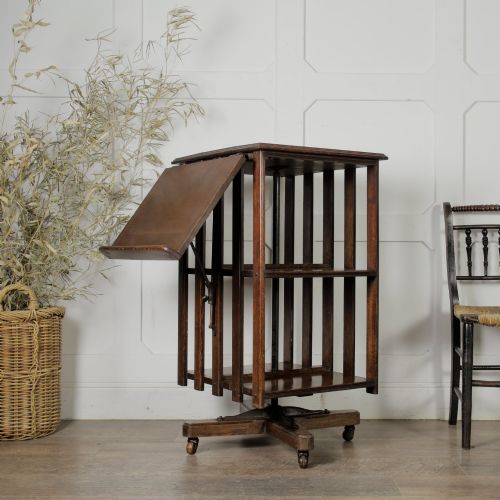
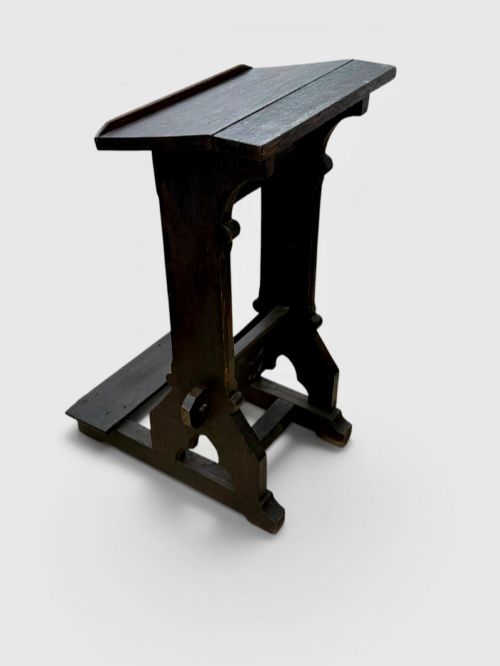
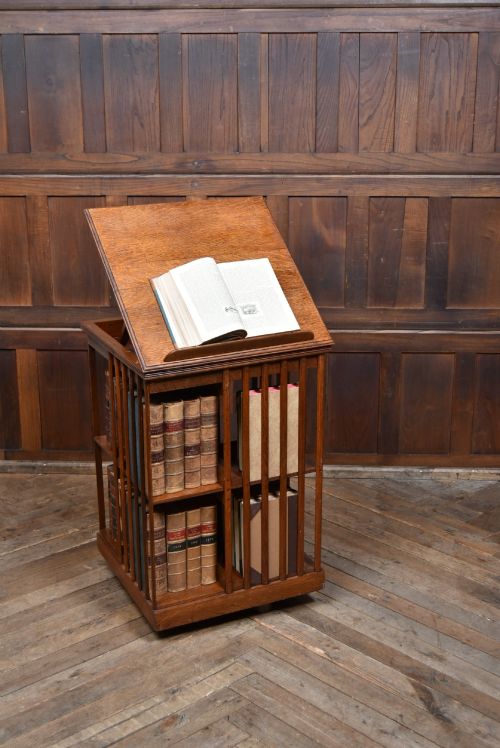
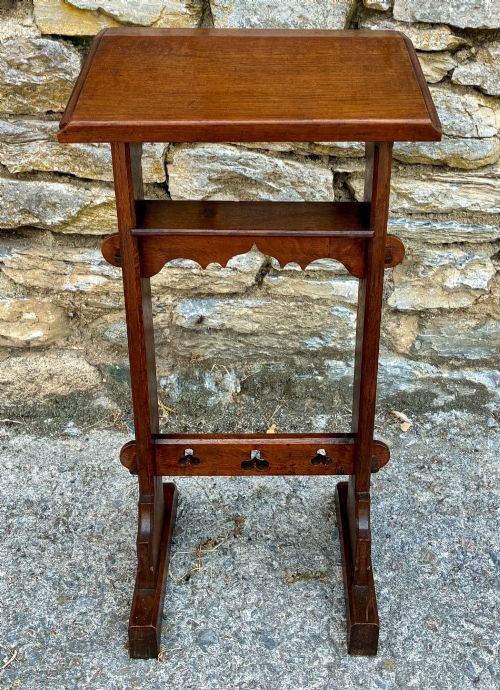
The selection ranges from ecclesiastical pulpits and church furniture to Arts and Crafts reading stands, revolving bookcases, and restaurant reception stations. The most frequently met examples date from the Victorian and Edwardian eras, utilising solid or golden oak with varying degrees of carved ornamentation.
Beyond traditional church furniture, these pieces serve practical modern functions as restaurant greeter stations, menu stands, and adjustable music stands. Their robust timber construction ensures they remain stable when supporting heavy volumes or ledgers.
How they were made
Makers relied principally on solid oak, frequently paired with secondary timbers like pine and structural elements in cast iron or brass. Metal brackets, hinges, and adjustable mechanisms allow reading surfaces to tilt and rotate according to use.
Carving is the dominant decorative technique, particularly on Gothic Revival and Victorian pieces featuring foliate patterns or figurative elements such as outstretched eagles. Surface finishes range from natural waxed golden oak to darker church polishes.
The documented pieces span the eighteenth, nineteenth, and early twentieth centuries, encompassing George III, Victorian, and Edwardian periods.
What varies in quality
Quality rests heavily on the crispness of the hand-carved detail and the architectural proportion of the stand. Pieces displaying deeply undercut carvings, particularly on figural eagle lecterns or ecclesiastical pulpits, represent a higher order of craftsmanship than simpler turned supports.
The integration of mechanical elements also dictates the standard of a piece. Smoothly functioning brass adjustments, solid brass work, and robust revolving actions distinguish superior library steps, music stands, and adjustable reading tables from utilitarian examples.
Carters Of London
The Standing Oak Lectern Glossary
- Gothic Revival
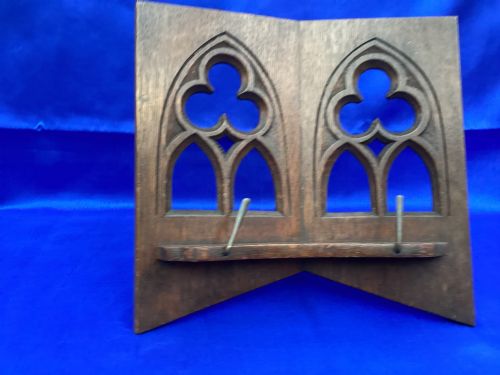
- A nineteenth-century stylistic movement drawing inspiration from medieval architecture, characterised by pointed arches, trefoils, and heavy carved tracery. This aesthetic dominates many ecclesiastical oak lecterns and pulpits.
- Arts and Crafts
- A design movement emphasising handcraftsmanship, simple forms, and natural materials without excessive ornamentation. Pieces from this tradition often showcase the grain of golden oak and honest joinery.
- George III
- The period spanning the late eighteenth century, known for architectural proportion and restrained classical lines in furniture design. Clerks desks and reading stands from this era prioritize utility and structural harmony.
- Revolving bookcase
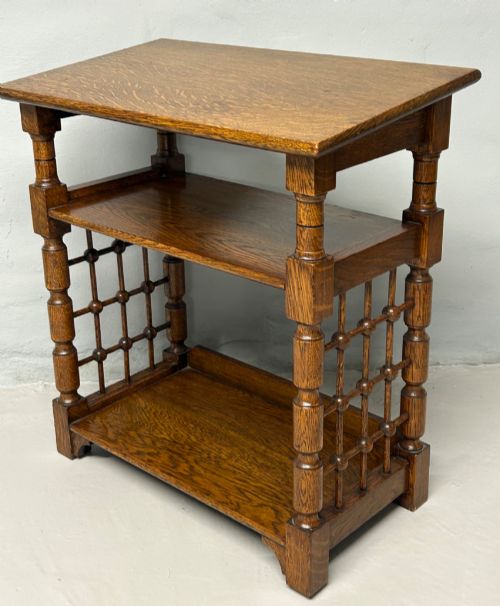
- A freestanding tiered bookcase mounted on a central rotating pivot for easy access to volumes. Edwardian iterations in solid oak are frequently encountered alongside standard reading stands.
- Duet stand
- A music stand or lectern designed to accommodate two performers or readers simultaneously. These adjustable stands often feature dual reading ledges.
Standing Oak Lectern: Frequently Asked Questions
What were standing oak lecterns originally used for?
These pieces served primarily in churches, libraries, and administrative offices to hold large religious texts, ledgers, or reference books for standing readers. Ecclesiastical examples held bibles or served as pulpits for sermon delivery.
Over time, commercial establishments adopted similar designs as reception desks, greeter stations, and menu boards due to their imposing height and durable timber construction.
How do I date a Victorian standing oak lectern?
Victorian pieces often display characteristic Gothic Revival motifs, heavy dark polishes, and dense hand-carving reflecting nineteenth-century historical revivals. Examining the construction methods, such as the use of cast iron or brass hardware alongside oak, helps narrow the timeframe.
Labels or stamps from makers like Carters of London also provide precise attribution, typically pointing towards the later decades of the nineteenth century or the Edwardian transition.
Where should I place a standing oak lectern at home?
A standing lectern functions well in a home library, study, or hallway as a striking focal point for displaying an open art book or family bible. Their compact footprint allows them to occupy awkward corners without dominating the floor space.
Keep solid oak furniture away from direct heat sources and strong sunlight to prevent the timber from drying out or the finish from fading.