


Standing Dinner Chime
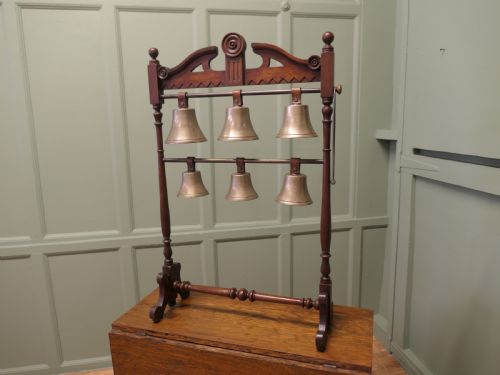
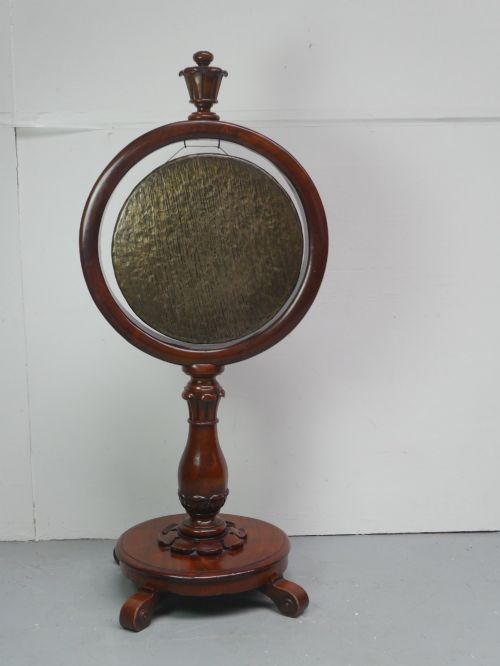
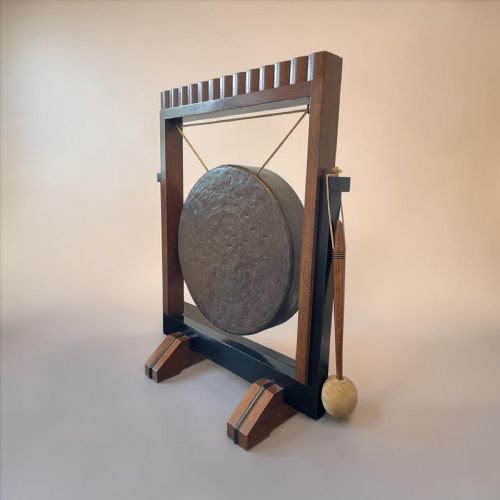
These standing dinner chime examples are striking call-to-table instruments, combining resonant brass or bronze bells with robust oak, walnut, and wrought iron frames.
Standing Dinner Chime
A standing dinner chime is a domestic summoning instrument designed to gather household members for meals through a resonant percussive strike. You will most frequently encounter nineteenth century and Victorian versions featuring substantial oak or walnut frames suspending polished metal bells or gongs.
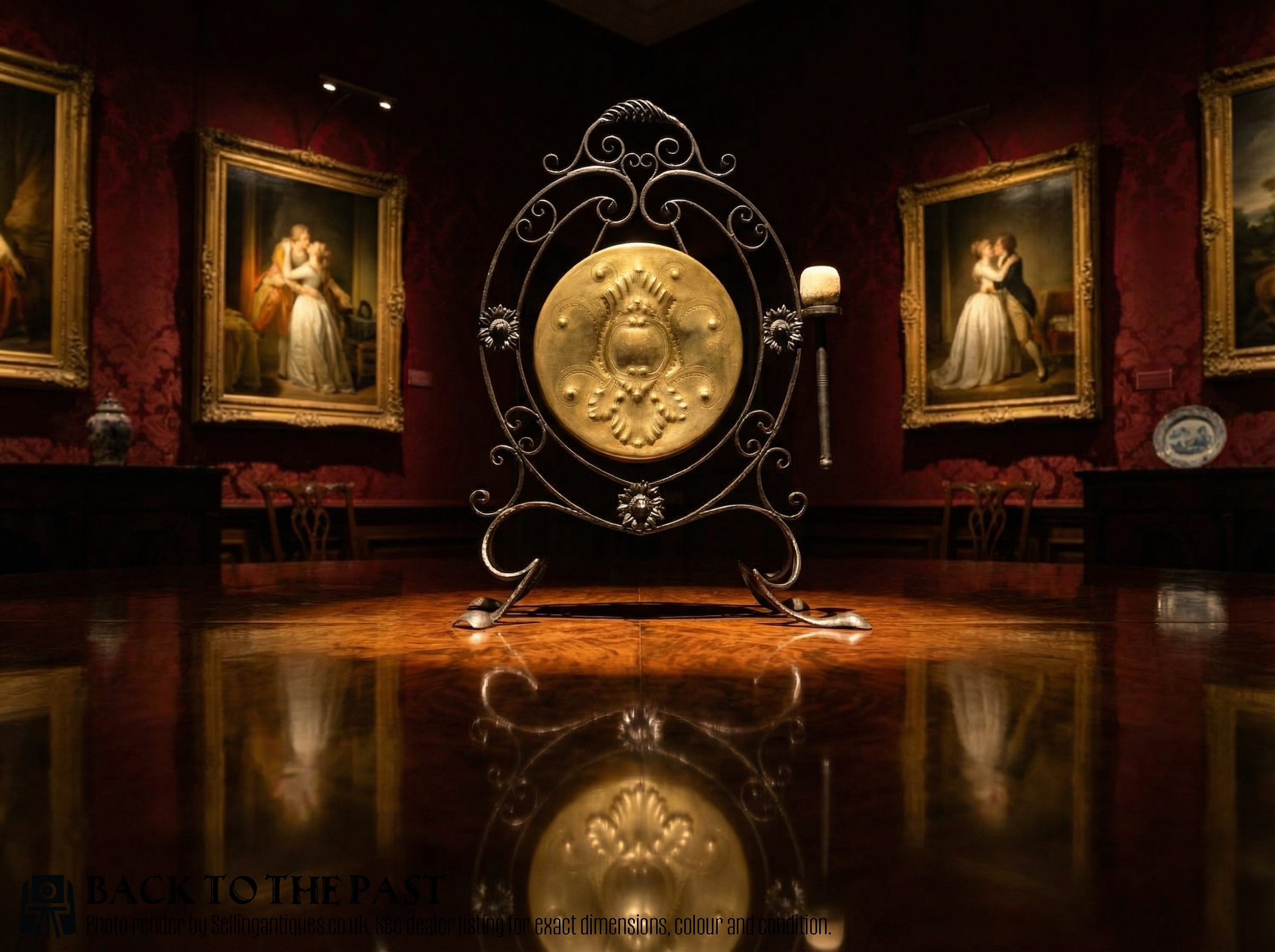
The selection ranges from compact table top gongs to monumental floor standing pieces and multi-bell musical racks. Many examples draw on Gothic Revival or Art Nouveau decorative vocabularies, while others incorporate carved Oriental stands or wrought iron supports.
Materials and construction
Makers constructed the supporting frames predominantly from hardwoods such as oak and walnut, alongside occasional wrought iron or carved hardwood imports. These structures house suspended brass or bronze bells, gongs, and metal tubes, frequently accompanied by original hanging cords and strikers.
Joinery techniques reflect the prevailing period aesthetics, from heavy Gothic Revival mouldings to fluid Art Nouveau curves and clean Arts and Crafts lines. Stands often feature integrated racks or carved details that complement the acoustic properties of the metal hanging within.
Assessing quality and craftsmanship
Quality in a standing dinner chime rests primarily on the depth and clarity of the metal tone produced when struck. Superior pieces combine robust, finely figured timber frames with heavy, well-cast bell metal that sustains a rich resonance.
The sophistication of the supporting woodwork and metalwork distinguishes finer examples from simpler utilitarian items. Carved details, integrated musical bell arrangements, and substantial frames indicate higher workshop ambition.
The Standing Dinner Chime Glossary
- Dinner Gong
- A percussive metal disc or bowl suspended in a frame and struck with a mallet to summon people. These instruments became household staples in large homes during the nineteenth and early twentieth centuries.
- Gothic Revival
- An architectural and decorative style drawing inspiration from medieval forms. Pieces in this manner feature pointed arches, heavy mouldings, and structural trefoils.
- Art Nouveau
- A decorative movement characterised by organic, fluid lines and stylised plant motifs. This aesthetic appears on metalwork and frames from around nineteen hundred.
- Arts and Crafts
- A design movement prioritising traditional craftsmanship and visible construction methods over mass production. Objects from this tradition display honest joinery and simple materials.
Standing Dinner Chime: Frequently Asked Questions
How do you play a dinner chime?
You strike the suspended bell or gong firmly using a dedicated wooden or padded mallet to produce a clear, resonant tone.
The resulting sound carries easily across a large house, fulfilling its original purpose as a household summons.
Where were these gongs placed?
They typically stood in hallways, entrance passages, or dining room doorways where the sound could project into adjacent living spaces.
Floor standing versions occupied corners or gallery spaces, while smaller table versions rested on sideboards or furniture.
How do you date a dinner gong?
Dating relies on identifying the stylistic markers of the wooden frame, such as Victorian Gothic mouldings or Art Nouveau curves.
The choice of timber, construction methods, and hardware also provide clear indicators of the period of manufacture.
Are all the bells made of brass?
While brass is the most common metal used for these gongs, some examples utilise bronze or tuned steel musical bells.
The metal alloy directly influences the acoustic quality and the pitch of the tone produced.