

Standing Coat Hat Rack
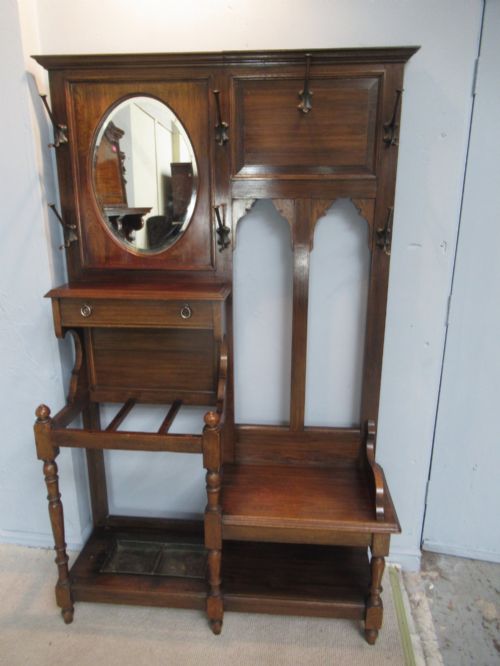
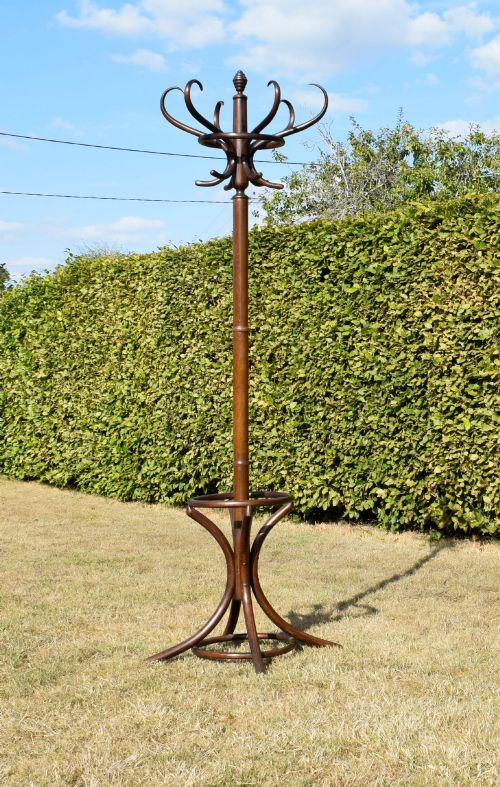
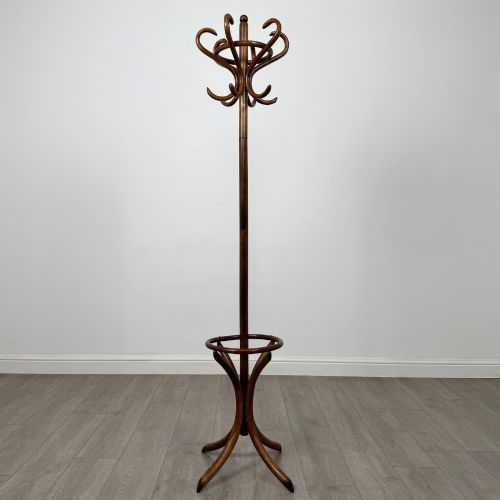
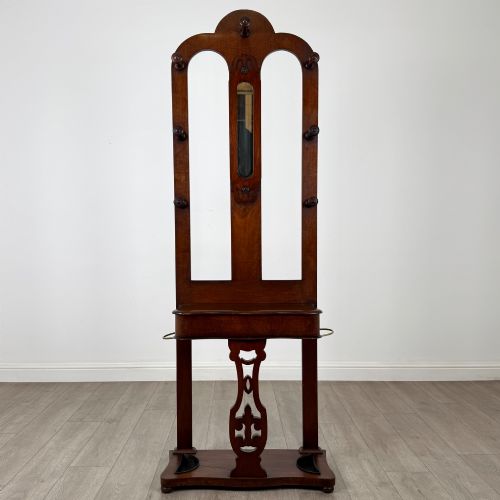
A standing coat hat rack organises entrance halls with vertical timber, bentwood, or metal frames designed to hold outerwear.
Standing Coat Hat Rack
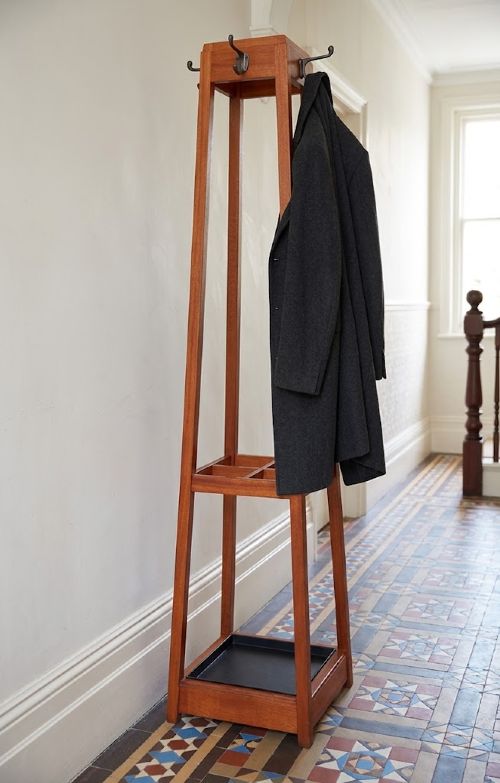
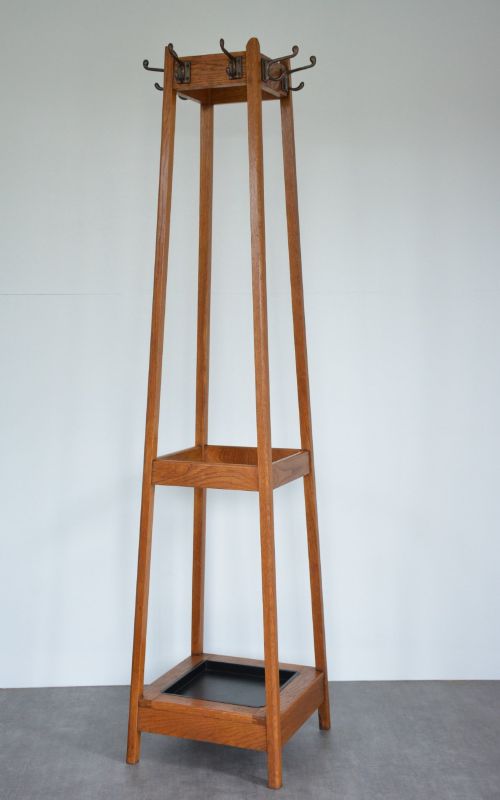
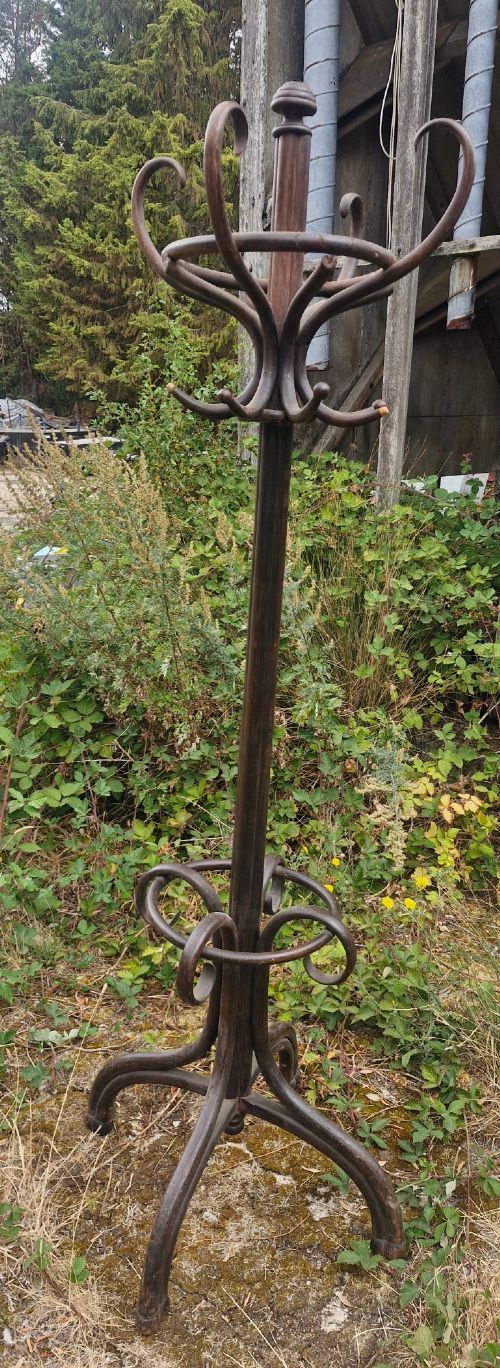
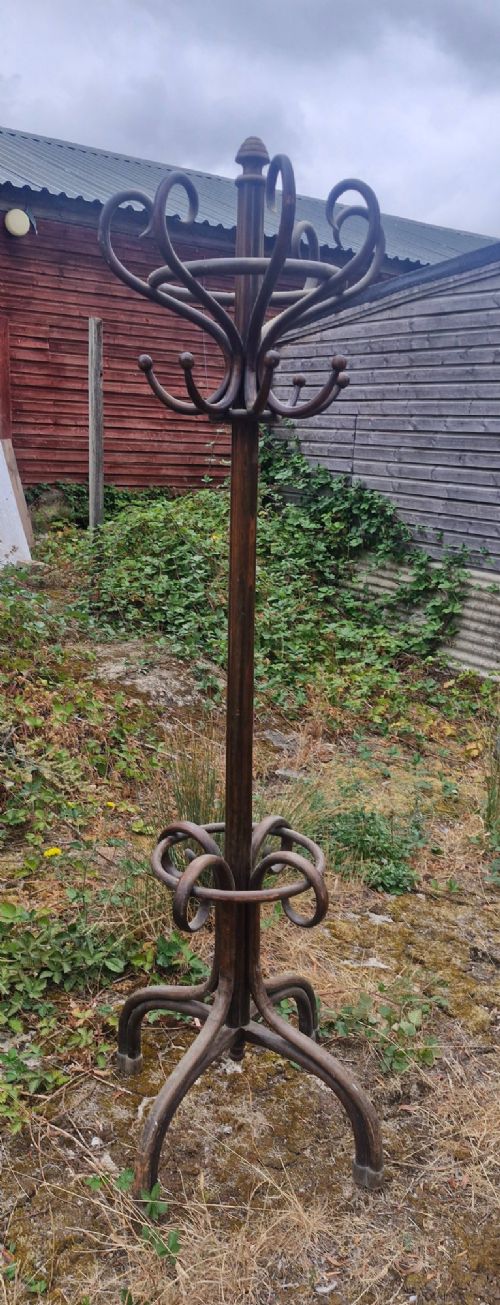
A standing coat hat rack, frequently designated in listings as a hall stand, coat stand, or hall tree, serves to hold hats, coats, and umbrellas in domestic entryways. These pieces emerge predominantly from the Victorian and Edwardian eras, extending into the early twentieth century.
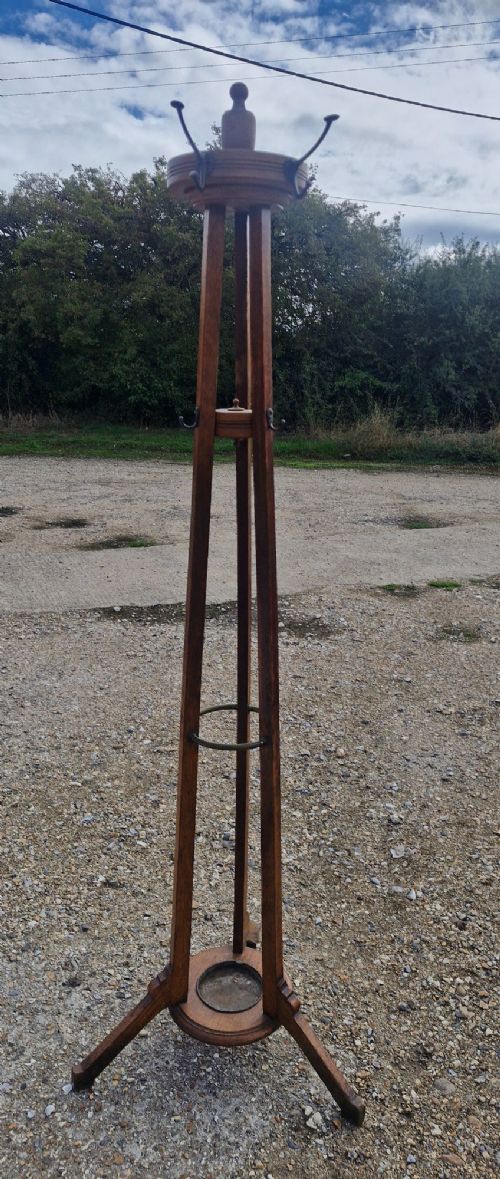
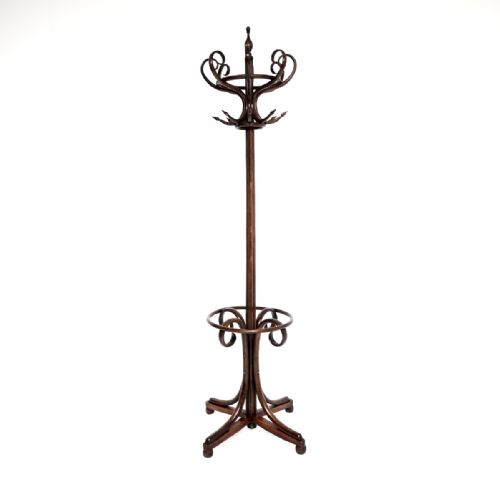
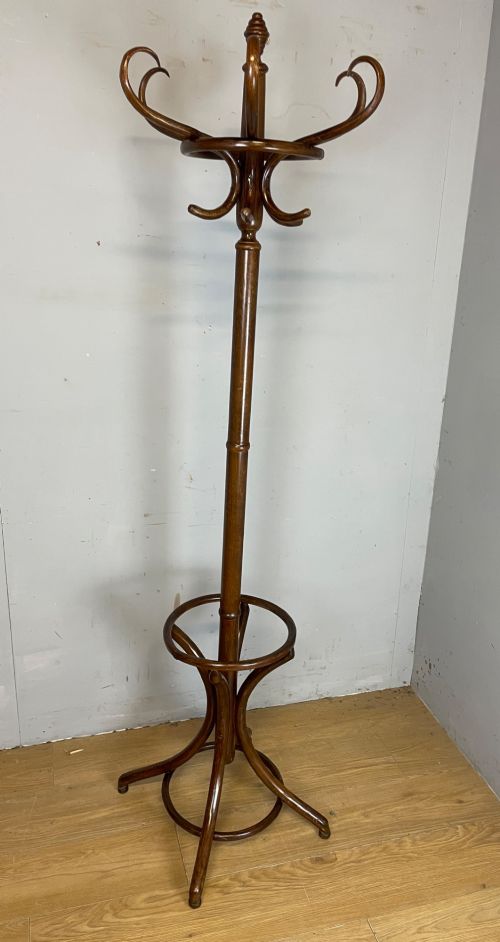
The most common versions encountered on this page utilise bentwood construction or solid timber forms such as oak and mahogany. Examples range from simple revolving hat stands to elaborate hallstands equipped with umbrella holders and drip trays.
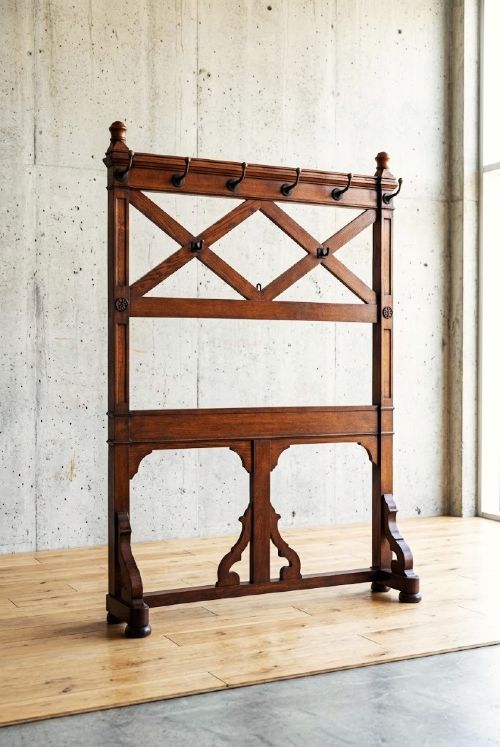
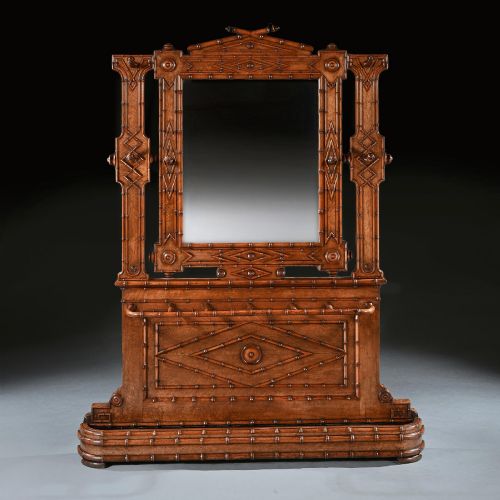
Regional and stylistic variations include French faux bamboo designs, Gothic Revival oak pieces, and rustic antler or horn constructions. Each form reflects the domestic requirements of nineteenth and early twentieth-century hallways.
Materials and construction
Maker techniques rely heavily on steam-bent beech in the manner of Thonet, allowing timber to form curves for coat hooks and umbrella rings. Solid hardwoods like oak and mahogany provide stable frameworks for larger hallstands featuring mirrors and panelled backs.
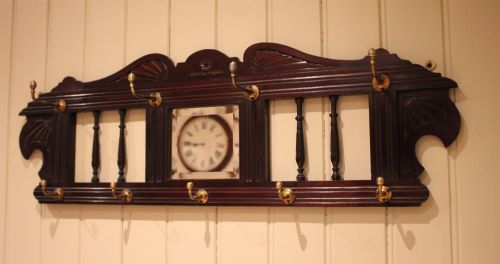
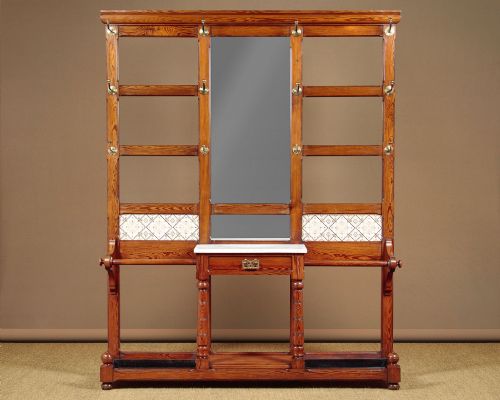
Metal elements such as cast iron and brass appear frequently, utilised either for structural stability or decorative umbrella trays and coat hooks. Combinations of glass, pine, and exotic woods like birdseye maple also occur across specific aesthetic periods.
Black Forest bear hall stands happily guard your wet umbrellas with carved wooden paws.
Distinctions in construction and design
Construction methods define the structural integrity of a standing coat hat rack, distinguishing robust solid timber joinery from lighter bentwood frames. The presence of original hardware, including brass hooks and cast iron drip trays, elevates the integrity of an antique piece.
Stylistic ambition separates standard hall furniture from notable examples associated with specific design movements like Arts and Crafts, Art Nouveau, or Aesthetic Period Japonisme. Carved ornamentation, applied mouldings, and integrated mirror frames indicate greater workshop attention during production.
Thonet·J. Parker of Woodstock
The Standing Coat Hat Rack Glossary
- Bentwood
- Wood shaped by steaming and bending under pressure, characteristic of Thonet coat stands. This technique creates continuous curved components without traditional joinery.
- Hallstand
- A hall furniture piece combining coat hooks, a hat rack, and frequently an umbrella stand with a drip tray. Many incorporate a central mirror and small glove drawer.
- Faux bamboo
- Wood carved or painted to resemble natural bamboo stalks, popular during the Aesthetic Movement and late nineteenth century. French makers utilised this finish on cast iron and maple frames.
- Drip tray
- A metal base insert designed to catch moisture from wet umbrellas stored in the stand. These trays are often removable for cleaning.
Standing Coat Hat Rack: Frequently Asked Questions
What periods do these coat racks date from?
The pieces span the Victorian and Edwardian periods, stretching from the mid-nineteenth century through to the 1930s. Construction dates align with prevailing stylistic movements such as Arts and Crafts, Aesthetic Period, and Art Nouveau.
Listing details often specify exact decades or broader eras, allowing buyers to identify the period of manufacture through timber choice, hardware, and structural design.
How were bentwood coat stands constructed?
Bentwood stands rely on solid beech rods subjected to steam until pliable, allowing craftsmen to bend the timber into graceful curves for hooks and frames. This method produces lightweight yet remarkably resilient structures.
Makers such as Thonet perfected this technique, creating modular components that could be assembled securely with minimal hardware.
Did hall stands always include umbrella holders?
Many hall stands incorporate integrated umbrella rings and metal drip trays at the base, though simpler coat and hat stands omit this feature entirely. The inclusion depends on the specific form, whether a revolving coat tree or a larger panelled hallstand.
Victorian and Edwardian entrance furniture was tailored to the specific storage needs of the household, accommodating both wet weather gear and everyday outerwear.
How do I identify an Aesthetic Movement hall stand?
Aesthetic Movement and Japonisme pieces often feature bamboo or faux bamboo frames, sometimes constructed from exotic woods like birdseye maple. These designs prioritise slender, elegant silhouettes influenced by Japanese art.
Surviving examples from this movement frequently date to the late nineteenth century and display distinctive decorative restraint compared to heavier Gothic Revival or high Victorian pieces.