


Staithes Group Landscape Art
Staithes group landscape art captures northern coastal life and sweeping Yorkshire dales through the fluent brushwork of early twentieth-century painters.
Staithes Group Landscape Art
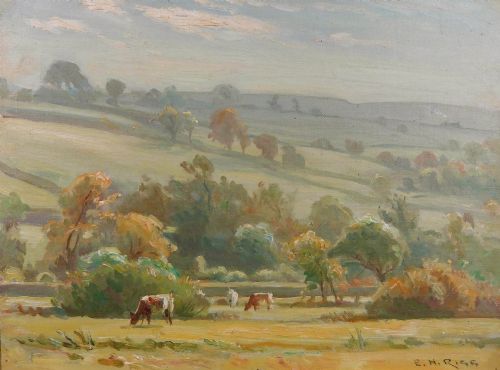
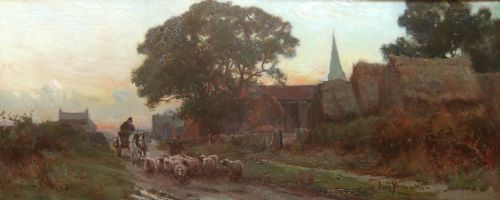
Staithes group landscape art focuses primarily on rural scenes, coastal villages, and domestic gardens painted during the Edwardian era and the early decades of the twentieth century. These works document agricultural labour, moorland streams, and quiet Yorkshire market places through the lens of British Impressionism and realism.
The version most commonly met on this page is an oil painting on canvas or panel, though accomplished watercolours also appear frequently. Subjects stretch from local cottages and farmyards to broader valley views recorded by artists working closely with the Yorkshire landscape.
Materials and methods
Artists relied on oil paint applied to canvas or wooden panels, as well as watercolour pigment on paper, to capture changing light conditions in the open air. Brushwork ranges from tight, descriptive realism to looser, impressionistic strokes that suggest movement and atmosphere.
Pigments were worked directly to build texture, particularly in oil studies where impasto marks describe foliage, harvested fields, and stone walls.
Several paintings record humble ducks, domestic hens, and farmyard horses participating unbothered in Edwardian daily routines.
Distinctions in quality
Quality rests upon the confidence of the brushwork and the artist's ability to balance atmospheric light with structural composition. Stronger pieces demonstrate purposeful handling of colour, particularly in depicting shadows, evening light, and seasonal shifts in the northern landscape.
Less compelling examples can lapse into static transcription, whereas accomplished works reveal a deft integration of figures, architecture, and surrounding terrain.
Ernest Higgins Rigg·Owen Bowen·Arthur Tucker·James William Booth·Rowland Henry Hill·James Watson·Frederick W Jackson·Florence Hess·Frederick Mayor
The Staithes Group Landscape Art Glossary
- British Impressionism
- A style of painting that emerged in Britain around the late nineteenth and early twentieth centuries, focusing on natural light, loose brushwork, and plein-air observation.
- Oil Paint
- A slow-drying paint made by mixing pigments with a drying oil, typically linseed, allowing artists to blend colours smoothly and build thick textured passages.
- Watercolour
- A painting method in which the pigments are suspended in a water-based solution, traditionally applied to absorbent paper to create luminous transparent washes.
- Plein Air
- The practice of painting outdoors to capture the direct effects of natural light and weather on a landscape.
Staithes Group Landscape Art: Frequently Asked Questions
What is staithes group landscape art?
Staithes group landscape art comprises paintings and watercolours produced by members and associates of the northern art colony active around the Yorkshire coast.
These artists focused on local rural life, coastal scenes, and agricultural valleys using impressionistic techniques.
How should I frame an antique watercolour?
Antique watercolours require archival framing with acid-free mounts to prevent paper degradation and discolouration over time.
Keeping the paper separated from the glass by a window mount protects the pigment layers from humidity and physical damage.
Where were these paintings created?
Most works originate from outdoor sketching sessions across Yorkshire locations including Staithes, Hinderwell, Swaledale, and Wharfedale.
Artists frequently set up their easels directly in fields, farmyards, and coastal paths to record rural subjects from life.
How do I identify a period frame?
Period frames from the early twentieth century often feature moulded composition ornament, subdued gilt finishes, or simple wood profiles suited to impressionist canvases.
Checking the construction backing and rebate helps determine whether a frame is contemporary to the artwork.