




Stained Glass Hanging Light
A stained glass hanging light brings rich colour and enduring character to an interior through panels held in lead and metal frames.
Stained Glass Hanging Light
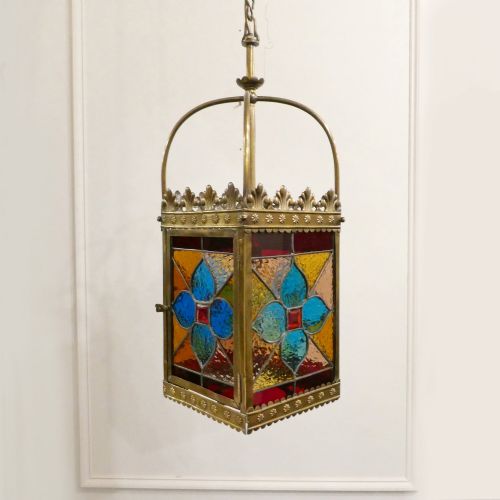
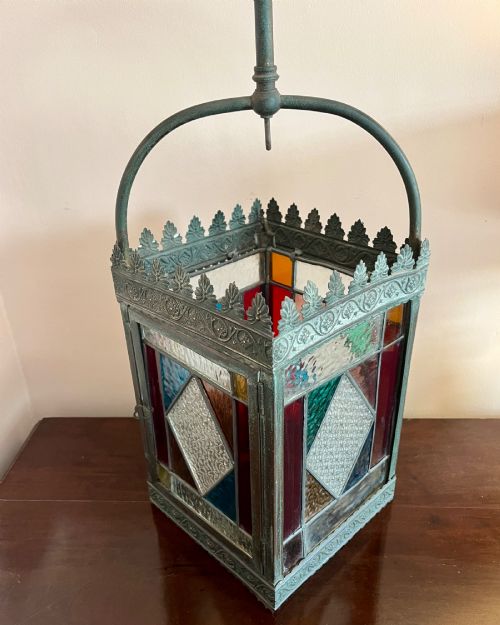
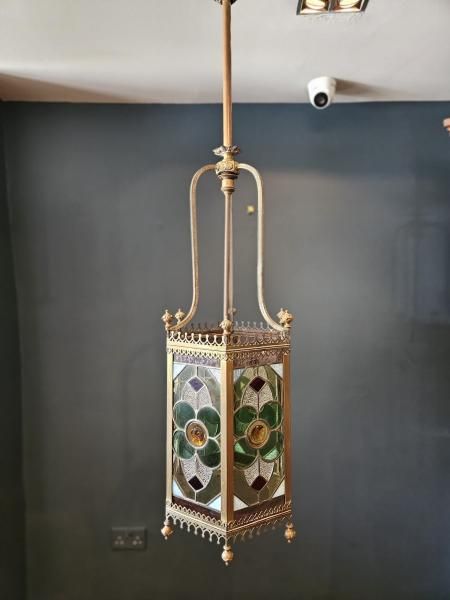
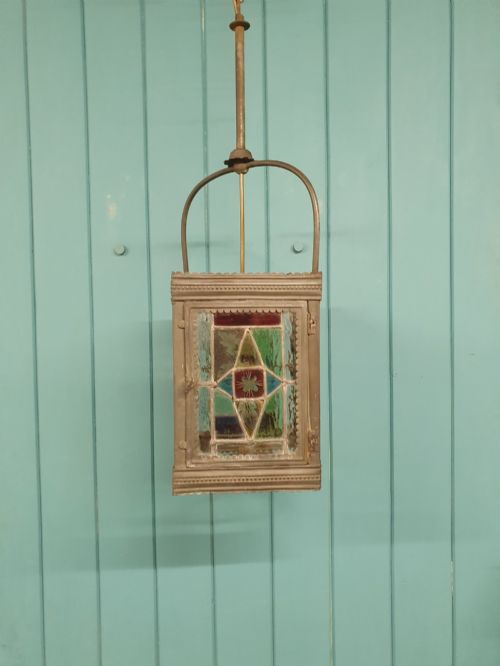
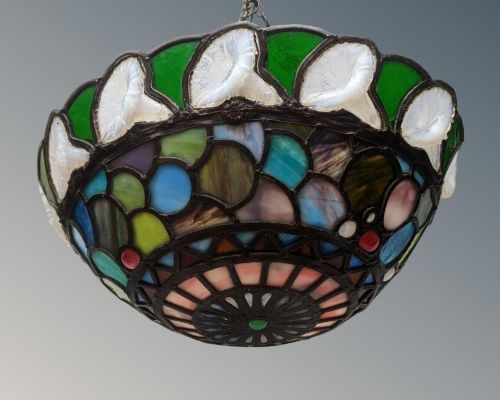
Buyers searching for a stained glass hanging light encounter an array of ceiling fixtures, pendant lights, and hall lanterns dating from the Victorian era through to the early twentieth century. The selection ranges from domestic hall lights and ceiling pendants to larger architectural salvage and church windows.
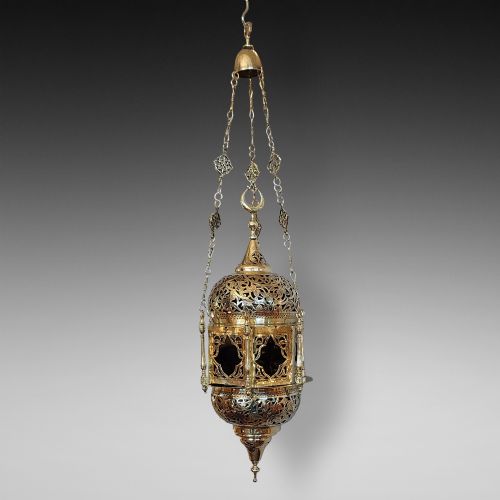
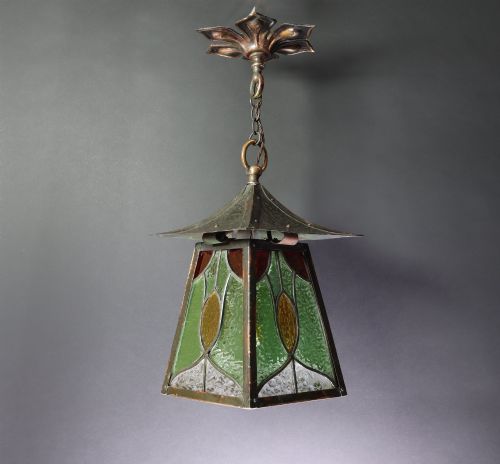
The most common versions met on this page are Victorian and Edwardian lanterns combining brass, copper, or wrought iron frameworks with leaded coloured glass panels. These pieces span stylistic influences including Gothic Revival, Arts and Crafts, and Moroccan Revival designs.
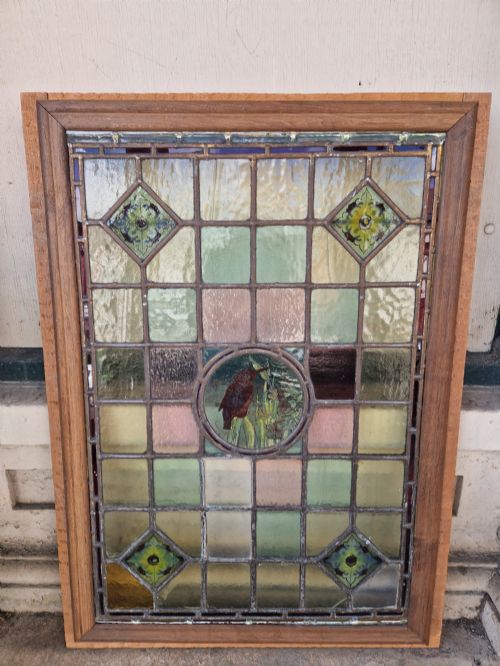
Beyond traditional hanging lamps, the inventory also encompasses architectural panels and windows repurposed for interior display. Each piece reflects the decorative priorities of its period, prioritising rich hues and structural metalwork.
Materials and construction methods
These fixtures are constructed using individual pieces of coloured or textured glass joined together by lead cording, a technique that allows for intricate geometric and pictorial designs. The resulting glass shades and panels are then secured within structural frames formed from brass, copper, or wrought iron.
Metal components often show specific surface treatments such as planishing on copper surfaces or traditional casting methods for brass and iron mounts. Suspension is achieved through matched chains, ceiling roses, and decorative brackets designed to support the combined weight of glass and metal.
Stained Glass Hanging Light Retail Price Guide 2026
Typical asking prices for stained glass hanging light among the pieces listed under this phrase on Sellingantiques today, from the lower quarter to the upper quarter. They describe what is for sale here now, not the wider market.
Listings feature periods spanning the Victorian era, Edwardian period, and the 1920s, constructed from lead, brass, copper, and wrought iron.
Assessing quality in period lighting
Quality in these pieces is dictated by the precision of the leadwork and the depth and variation within the glass itself. Superior examples feature mouth-blown or specialty glass containing bubbles, striations, and rich tonal shifts that catch light dynamically.
The structural integrity of the metal frame and the complexity of its assembly also separate standard items from finer works. Hand-beaten metalwork, robust solder joints, and harmonious proportions between the metal armature and the glass panels indicate superior craftsmanship.
The Stained Glass Hanging Light Glossary
- Lead cording
- Flexible strips of lead shaped into an H-profile used to hold individual pieces of glass together in a window or shade. The joints are soldered at intersections to create a rigid panel.
- Planished copper
- A metal surface finished by hammering with a small-headed tool to create a textured, light-diffusing pattern. This technique is frequently seen in Arts and Crafts lighting fixtures.
- Hall lantern
- An enclosed ceiling-hung light designed specifically for entryways and corridors. These fixtures typically feature glazed sides to protect the internal burner or bulb while casting patterned light.
- Bullseye
- A small, circular piece of glass featuring a central raised knob or concentric ripples, formed during the glassblowing process. They add texture and visual interest when incorporated into leaded panels.
- Gothic Revival
- An architectural and decorative style drawing on medieval forms, characterised by pointed arches and heavy geometric tracery. This aesthetic strongly influences many Victorian hanging lights.
Stained Glass Hanging Light: Frequently Asked Questions
What periods do these lights come from?
The pieces span the Victorian and Edwardian eras, with dates reaching from the late nineteenth century into the 1920s.
Designs reflect the shifting aesthetics of these decades, moving from ornate Victorian brass work to geometric Arts and Crafts copper and atmospheric Moroccan Revival styles.
Can I hang these lights safely today?
Most period hanging lights can be adapted for modern electrical wiring by a qualified professional. The original frames and chains are generally robust enough to support modern internal fittings.
Care should be taken to ensure the weight of the metal and glass is properly supported from the ceiling structure.
How do I distinguish Arts and Crafts designs?
Arts and Crafts pieces often feature hand-worked copper frames with visible planishing marks and straightforward, honest construction. The emphasis is on material quality and utility rather than excessive ornamentation.
Lead lines tend to form bold, clean geometric patterns rather than elaborate floral Victorian arrangements.