

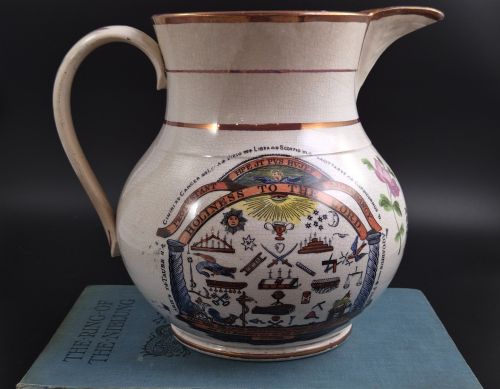
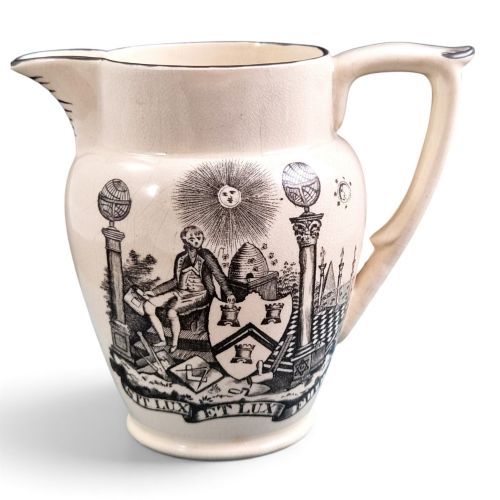
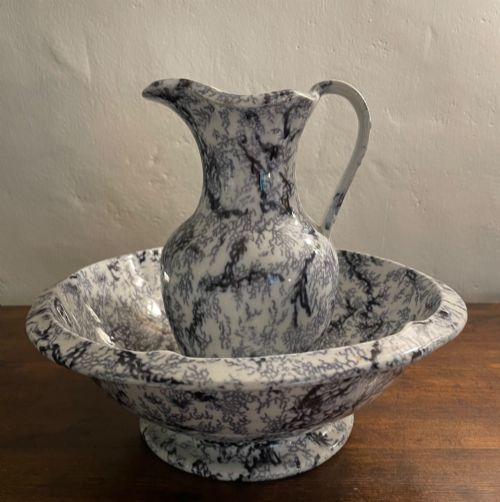
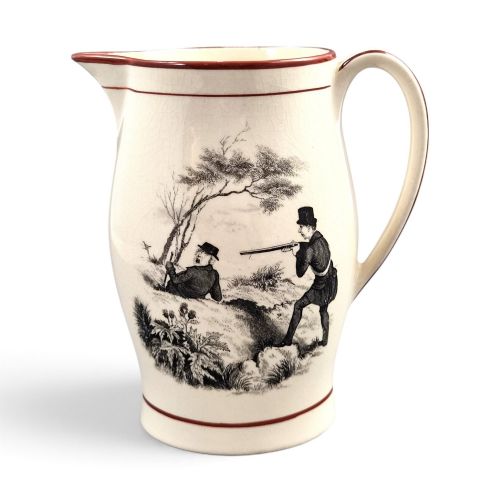
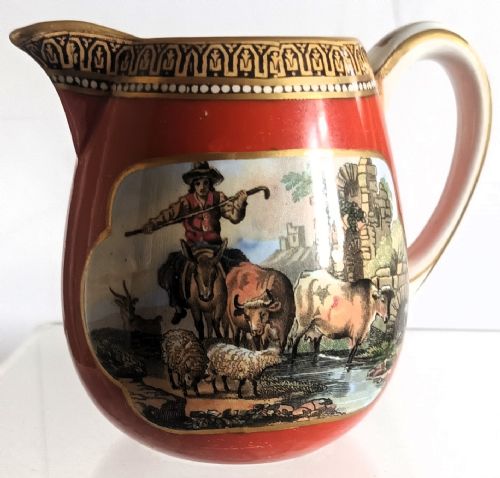
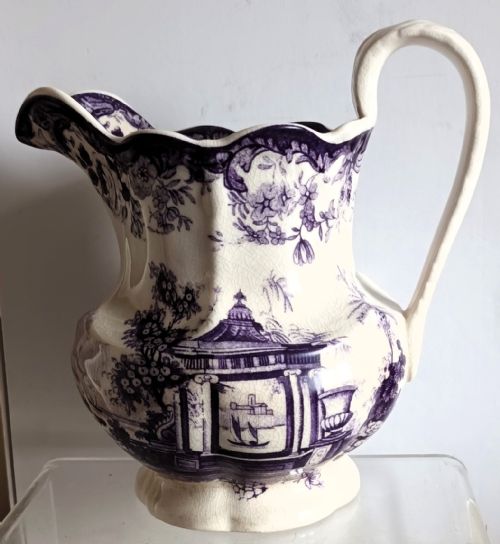


Staffordshire Transferware Jug
These staffordshire transferware jugs bring bold printed narratives and rich earthenware glazes straight from British history into your home.
Staffordshire Transferware Jug
A staffordshire transferware jug is an earthenware vessel decorated with mechanically printed scenes, ranging from historical commemorations to pastoral subjects. You are most likely to meet pieces spanning the Georgian and Victorian eras, often rendered in deep blue and white or polychrome palettes.
The forms vary from modest cream jugs to large one-gallon pitchers and footbath jugs. These utilitarian containers served domestic purposes before becoming prized display items for their graphic storytelling.
Makers utilised earthenware bodies including creamware and pearlware, applying copperplate transfer prints under or over the glaze. Surviving examples reflect the shifting tastes of the nineteenth century through specific commemorative themes and topographical views.
How they were made
Potters shaped the ceramic bodies from local earthenware, creamware, or pearlware, forming jugs and pitchers by hand or in moulds. Once dried and fired to a biscuit state, the vessels received their decorative treatment.
Engraved copper plates transferred ink designs onto tissue paper, which workers then applied to the absorbent ceramic surface before glazing and firing again. Artisans occasionally added hand-painted polychrome highlights, metallic lustre glazes, or gilt details over the finished glaze.
Staffordshire Transferware Jug Retail Price Guide 2026
Typical asking prices for staffordshire transferware jug among the pieces listed under this phrase on Sellingantiques today, from the lower quarter to the upper quarter. They describe what is for sale here now, not the wider market.
Some early nineteenth-century jugs immortalise unexpected local spectacles like bull baiting alongside solemn Masonic emblems.
What varies in quality
Quality rests in the crispness of the transfer print and the clarity of the underlying ceramic body. Sharp lines and well-registered ink indicate careful plate pressing, while blurred prints suggest worn copper plates.
The sophistication of the secondary decoration distinguishes finer examples. Application of metallic lustre glazes, cobalt glaze, or skilful polychrome painting elevates standard utilitarian earthenware into accomplished decorative art.
Mountford
The Staffordshire Transferware Jug Glossary
- Transferware
- Earthenware decorated by printing a design from an engraved copper plate onto paper and transferring it to the ceramic body before firing. This technique allowed for intricate, repeatable patterns across large production runs.
- Pearlware
- A refined earthenware developed in the late eighteenth century featuring a bluish-white glaze that pooled in recesses. It sat between creamware and later white earthenwares in British ceramic production.
- Creamware
- A light-coloured refined earthenware with a warm, pale yellow tone produced by a lead glaze. Josiah Wedgwood refined this body into Queen's Ware during the Georgian period.
- Metallic Lustre Glaze
- A metallic film applied to pottery to create a shimmering, reflective surface finish. Potters achieved copper, silver, and purple effects using metallic oxides.
- Polychrome
- A multi-coloured decorative scheme utilising various enamel colours painted over or under the glaze. This method added vibrant hues to standard printed earthenware.
Staffordshire Transferware Jug: Frequently Asked Questions
How do I date a staffordshire transferware jug?
Dating relies on stylistic markers, ceramic bodies like pearlware or creamware, and specific historical events commemorated on the surface. Georgian pieces often display lighter potting and distinct blue and white transfer subjects.
Victorian examples tend to show heavier earthenware bodies and alternative glazing techniques such as Pratt-ware colouring or flow blue. Comparing the printed motifs with known historical dates provides a reliable window of origin.
Were these jugs used daily?
Most of these vessels served practical roles in domestic settings for holding liquids, water, or milk. Large one-gallon pitchers and footbath jugs fulfilled heavy household duties.
Over time, their decorative transfer prints turned them into display pieces rather than working kitchenware. Surviving specimens show varying degrees of handling from their active domestic service.
What is flow blue?
Flow blue refers to a style where cobalt glaze intentionally bled during the kiln firing process, creating a soft, hazy outline to the transfer print. This aesthetic originated in Staffordshire potteries during the nineteenth century.
Collectors prize the blurred, atmospheric effect for giving the printed scenes depth and painterly character. It appears frequently on jugs and basins from the mid-nineteenth century.
How should I display my jug?
These ceramic pieces suit prominent placement on sturdy surfaces away from high-traffic edges due to their earthenware construction. Natural light highlights the transfer details and glaze variations effectively.
Keep them away from direct sunlight and damp environments to protect the glaze and any added lustre or gilt work. Grouping different forms, such as cream jugs alongside larger pitchers, creates a balanced historical display.