



Staffordshire Spill Vase Pair
These staffordshire spill vase pair items bring character and colour to a mantelpiece, combining pottery figures with a practical holder for wax matches.
Staffordshire Spill Vase Pair
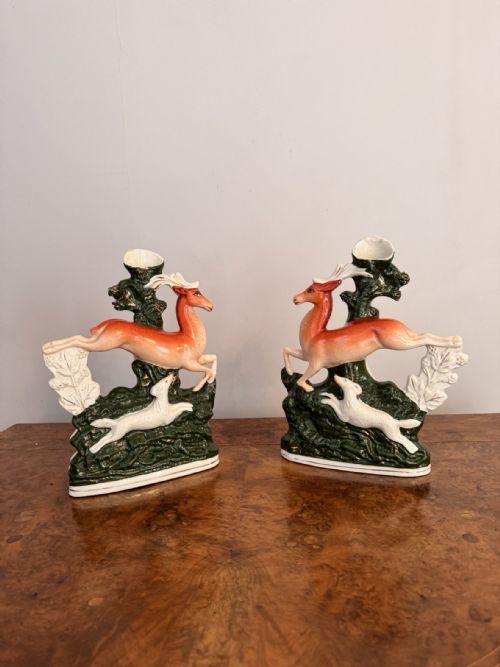
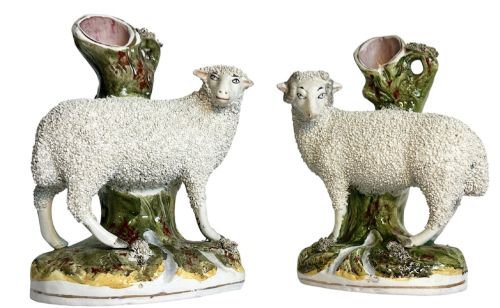
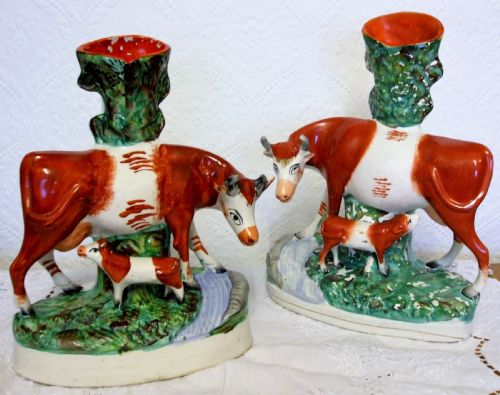
A staffordshire spill vase pair consists of matched ceramic figures modelled with an integrated hollow tube designed to hold thin tapers for lighting candles and fires. These decorative mantelpiece ornaments depict animals and human subjects in distinct pairs.
The subjects seen on this page range from domestic animals like sheep, cows, dogs, and horses to wildlife such as foxes and swans, alongside figural groups like Scots harvesters and milkmaids. Most examples date from the nineteenth century during the Victorian period.
Moulded earthenware forms provide the base for these ornamental spill holders, which sit flat at the back for placement against a wall. The pairs balance compositionally, often facing one another across a hearth.
What varies in quality
Hand-painted enamel work accounts for much of the visual distinction across these pottery pairs, as careful brushwork creates more lifelike markings on coats and clothing. Simpler or heavier application produces a less nuanced appearance.
The depth and coverage of the lead glaze affect how light plays across the ceramic surface, with smoother applications enhancing the underlying colours and earthenware texture.
Staffordshire Spill Vase Pair Retail Price Guide 2026
Typical asking prices for staffordshire spill vase pair among the pieces listed under this phrase on Sellingantiques today, from the lower quarter to the upper quarter. They describe what is for sale here now, not the wider market.
Nineteenth century potters ensured dogs and spaniels kept a watchful eye over the hearth long before electric lighting arrived.
Thomas Parr·Kent Staffordshire Pottery
The Staffordshire Spill Vase Pair Glossary
- Spill
- A thin slip of wood or paper used for transferring a flame from a fire to a candle or pipe. These tapered spills sat upright inside the ceramic holder.
- Earthenware
- A porous type of pottery fired at lower temperatures than stoneware or porcelain. It forms the structural body of nineteenth century Staffordshire figures.
- Flat back
- A moulding technique where the reverse of a figural ornament is left unmodelled and flat. This allowed figures to sit flush against a wall or mantelpiece.
- Enamel
- Vitreous coloured paints applied over the glazed ceramic surface before a low temperature firing. They provide the bright hues on coats and garments.
- Lead glaze
- A glossy coating containing lead oxide applied to pottery to create a smooth, waterproof finish. It gives Victorian earthenware its characteristic shine.
Staffordshire Spill Vase Pair: Frequently Asked Questions
What were staffordshire spill vases used for?
These ceramic holders kept wooden tapers close to the hearth for lighting candles, lamps, and coal fires before safety matches became common.
Placed on mantelpieces, they combined decorative figures of animals or people with a functional tube for storing spills.
How do I tell nineteenth century pairs apart?
Nineteenth century examples often display hand-painted enamel colours, lead glaze finishes, and distinct moulding styles characteristic of Victorian Staffordshire potteries.
Subjects ranged from domestic livestock and spaniels to human figures like Scots harvesters and milkmaids.
Are these figures glazed on the back?
Flat back spill holders typically feature an unmodelled, plain reverse designed to sit directly against a wall or fireplace mantel.
The front and sides carry the detailed moulding and painted enamel decoration.
How should I display them at home?
These matched pairs look best displayed symmetrically on a mantelpiece or shelf where their opposing poses can be appreciated together.
Keep them away from direct heat sources and handle the glazed earthenware with care.