






Staffordshire Pottery Flatback Group
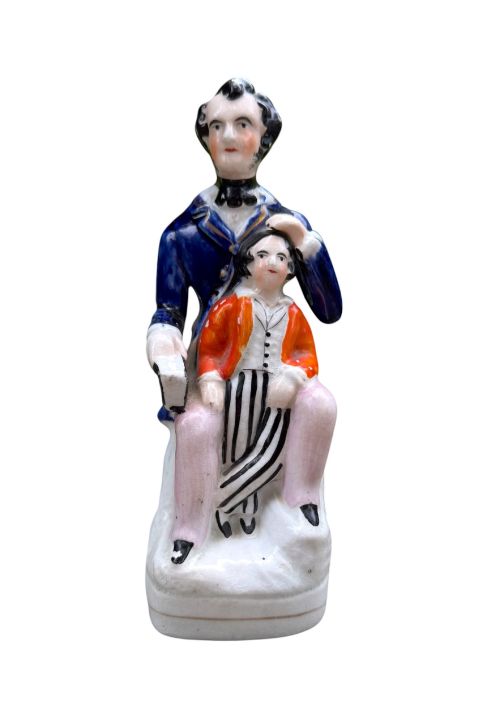
These Staffordshire pottery flatback group pieces are Victorian earthenware figures designed to sit against a wall, bringing rustic narrative charm to a mantelpiece.
Staffordshire Pottery Flatback Group
A Staffordshire pottery flatback group represents a distinct category of nineteenth-century ceramic figures designed primarily for display on shelves and mantelpieces where the back remained unseen. These pieces typically take the form of Victorian folk art, depicting literary characters, historical figures, royal portraits, and domestic scenes.
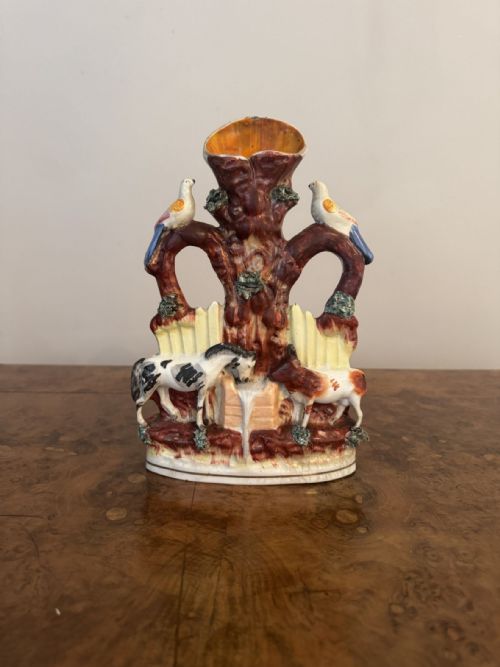
The selections available here span the nineteenth century, including specific decades such as eighteen sixty, eighteen seventy, and eighteen eighty. Common subjects range from literary figures like Tam O'Shanter to political groups, royal alliances, and spill vases featuring animals such as deers.
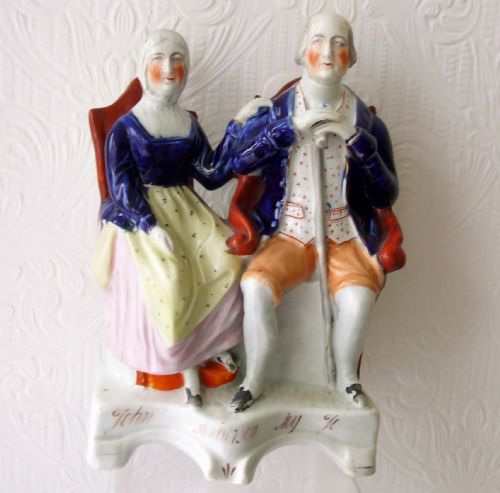
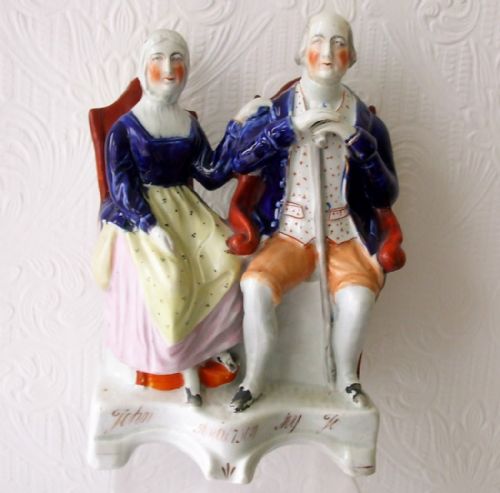
Makers produced these earthenware figures in various sizes, from single decorative figurines to expansive sets of five. Collectors encounter diverse thematic groups, including peace and plenty, the Crimean War, and traditional Scottish lairds with their wives.
Materials and production methods
Potters constructed these flatbacks using earthenware ceramic bodies shaped through moulding techniques. The pieces received a lead glaze finish to seal the porous clay and provide a smooth surface.
Staffordshire Pottery Flatback Group Retail Price Guide 2026
Typical asking prices for staffordshire pottery flatback group among the pieces listed under this phrase on Sellingantiques today, from the lower quarter to the upper quarter. They describe what is for sale here now, not the wider market.
Listings feature Victorian earthenware pieces utilising lead glaze and enamel paint, spanning periods from eighteen forty to eighteen eighty.
Assessing quality in flatback figures
The ambition of the subject also distinguishes the range, moving from simple single figurines to complex multi-figure portrait groups or functional spill vases. Superior pieces maintain vibrant enamel colours and careful application across intricate details.
The Staffordshire Pottery Flatback Group Glossary
- Flatback
- A ceramic figure moulded with a finished front and sides while the reverse is left flat and largely unadorned. This design allowed the piece to sit flush against a wall on a mantelpiece.
- Spill vase
- A hollow ceramic figure incorporating an attached upright cylinder designed to hold wooden spills for lighting fires. These practical vessels often featured animal or human groupings.
- Earthenware
- A porous pottery body fired at lower temperatures than stoneware or porcelain. It formed the standard foundational material for Victorian Staffordshire figures.
- Enamel paint
- Vitreous pigments applied to the glazed ceramic surface before a final low-temperature firing. This technique provided the bright surface colours characteristic of these figures.
- Lead glaze
- A shiny liquid coating containing lead oxide applied to pottery before firing to create a glossy protective finish. It gives nineteenth-century earthenware its characteristic sheen.
Staffordshire Pottery Flatback Group: Frequently Asked Questions
What is a flatback figure?
A flatback figure is a ceramic ornament moulded with a detailed front and a flat, unpainted reverse. This economical construction method allowed the piece to sit flat against a wall.
Potters designed these figures specifically for nineteenth-century mantelpieces and high shelves where the back would not be seen.
How old are these Staffordshire pieces?
The pieces shown here date from the nineteenth century, primarily spanning the Victorian era between eighteen forty and eighteen eighty. Specific production dates often align with contemporary historical events or popular literature.
Makers recorded subjects ranging from the Crimean War to royal portraits and traditional folklore during this active period.
What were spill vases used for?
Spill vases served a practical household purpose alongside their decorative function by holding thin wooden spills. These dry wood slips were used to transfer flames from a fireplace to candles or lamps.
Potters cleverly integrated the hollow spill tube into figural groups depicting animals like deer or narrative scenes.
How do I clean antique earthenware?
Antique Staffordshire earthenware requires gentle care due to the delicate nature of the surface enamel paints. Dusting with a soft, dry brush remains the safest method for regular maintenance.
Moisture can damage old enamels and underlying clay, so owners should avoid liquid cleaners and harsh immersion.