





Staffordshire Mantle Figures
Staffordshire mantle figures bring nineteenth-century earthenware character to your hearth, offering pottery subjects from royal portraits to spaniel dogs.
Staffordshire Mantle Figures
Staffordshire mantle figures comprise nineteenth-century earthenware subjects designed for display upon fireplace mantles and sideboards. These decorative figurines and spill vases capture domestic animals, literary characters, and royal portraits in Victorian ceramic form.
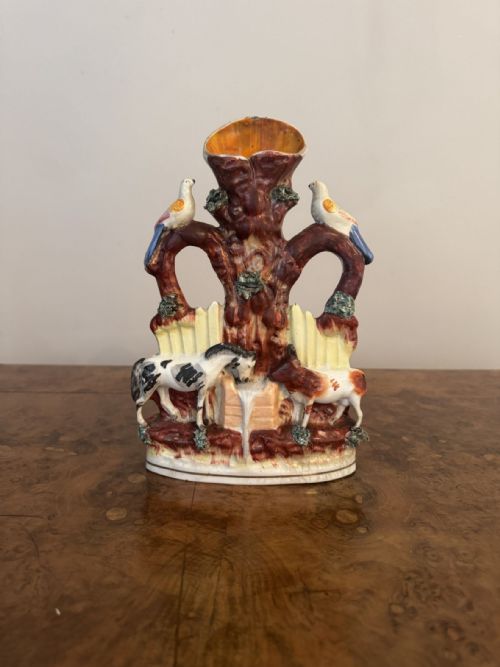
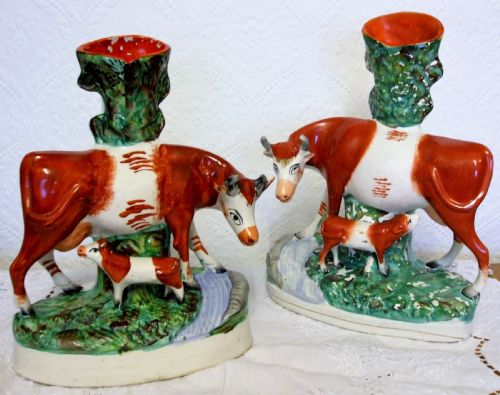
The versions most frequently met on this page include flatback figures meant to be viewed from the front, along with pairs of spaniel dogs and greyhounds. Spill vases and spill holders also appear, combining sculptural ceramic figures with functional receptacles for matches.
How they were made
Makers formed these ceramic pieces using earthenware clays, shaping them into decorative figures and animals. The production relied upon moulding techniques suited to repetitive nineteenth-century pottery manufacture.
Surfaces received lead glaze and enamel paint applications to provide colour and shine. Certain examples incorporated glass additions, such as the glass eyes found on spaniel dogs.
Staffordshire Mantle Figures Retail Price Guide 2026
Typical asking prices for staffordshire mantle figures among the pieces listed under this phrase on Sellingantiques today, from the lower quarter to the upper quarter. They describe what is for sale here now, not the wider market.
Materials recorded across the entries include earthenware, lead glaze, enamel, and glass eyes used on select canine figures.
What varies in quality
Pairs and matching groups generally command greater interest than single pieces. The presence of specific historical subjects, such as royal portrait figures, also influences distinction within the range.
The Staffordshire Mantle Figures Glossary
- Flatback
- A figure moulded with a finished front and a largely unadorned or flat rear side, designed specifically to stand against a wall or mantle.
- Spill vase
- A hollow ceramic figure incorporating an attached cylindrical holder intended to contain wooden spills for lighting fires or pipes.
- Earthenware
- A porous type of pottery fired at lower temperatures, serving as the foundational ceramic body for these Victorian figures.
Staffordshire Mantle Figures: Frequently Asked Questions
What are Staffordshire mantle figures?
They are nineteenth-century ceramic figures and spill vases made in earthenware. Potters designed them to sit upon mantlepieces as decorative ornaments.
Subjects range from domestic animals like spaniels and cows to royal portrait figures and characters from literature or history.
How were these figures displayed?
Victorian households placed them prominently upon mantelpieces, often arranged as pairs facing one another or flanking a central clock.
Flatback versions were specifically created to stand flush against a wall, whilst spill vases combined ornament with the practical duty of holding tapers.
How do I identify a flatback figure?
A flatback figure has a front moulded in relief with careful enamel painting, whilst the reverse side is flattened and left mostly plain.
This construction allowed the pottery to sit securely against a chimney breast or shelf without protruding too far forward.
What subjects are most common?
Spaniel dogs and greyhounds appear frequently among the animal subjects, often modelled in pairs. Sheep, cows, poodles, and Scottish figures also recur in the nineteenth-century pottery.
Royal portraits, including Napoleon III and the Empress of France, represent the human subjects found in this selection.