




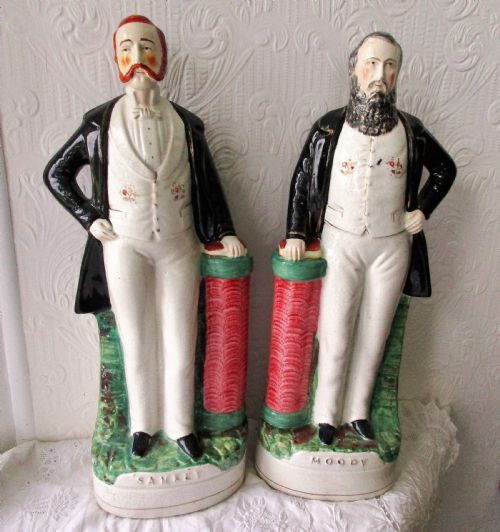
Staffordshire Flatback
Staffordshire flatback figures bring Victorian mantelpieces to life with colourful portraits, animals and theatrical scenes made for display.
Staffordshire Flatback
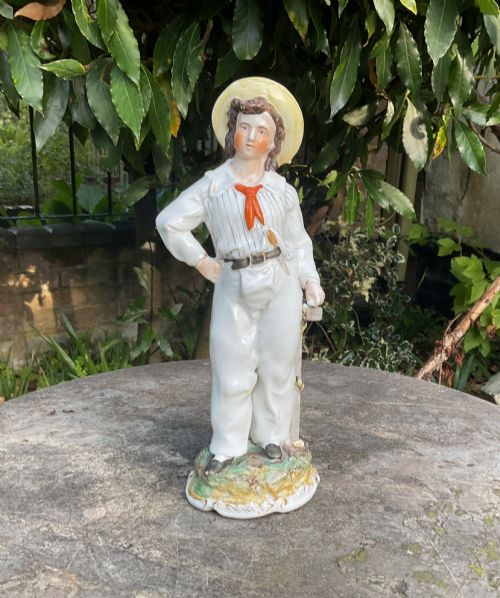
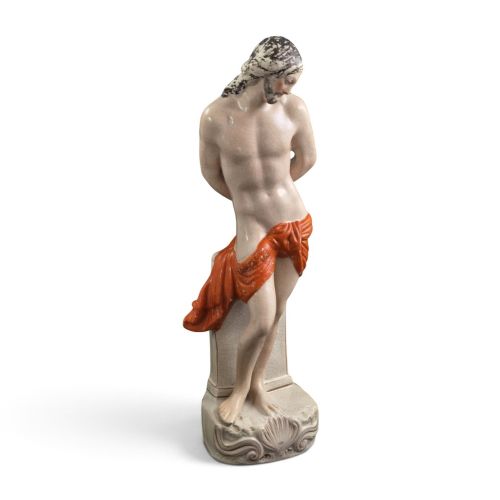
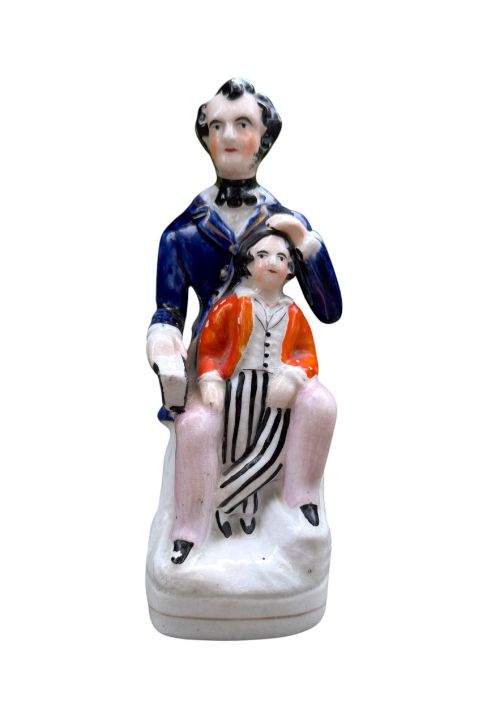
A Staffordshire flatback is a moulded ceramic ornament designed to stand against a wall, leaving the unglazed or simply finished back flat. These pieces date across the nineteenth century, taking the form of human figures, animals, castles and cottages.
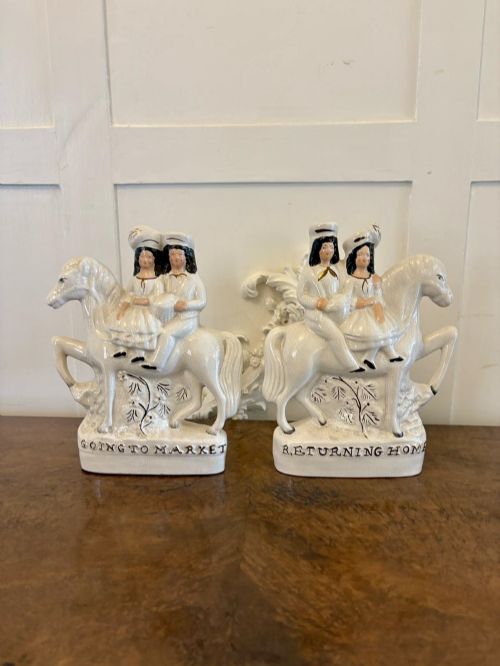
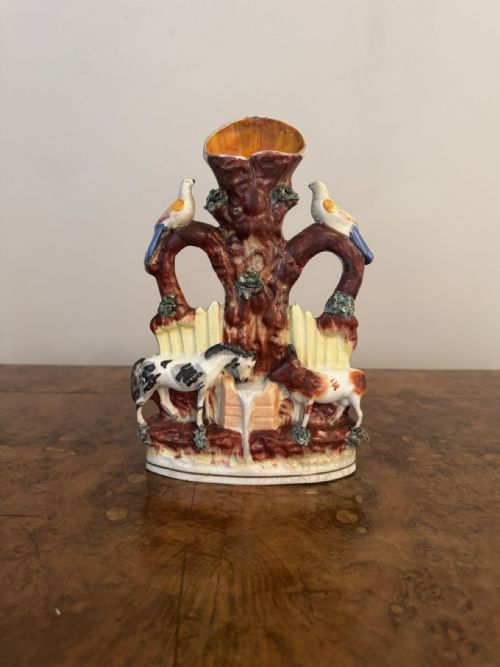
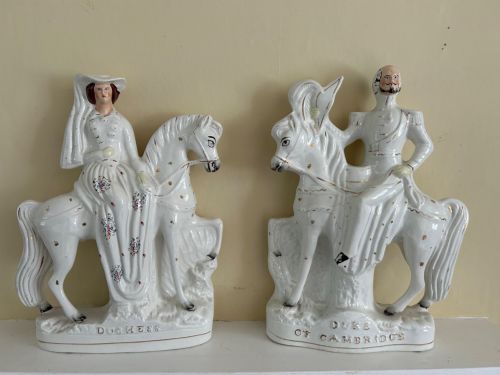
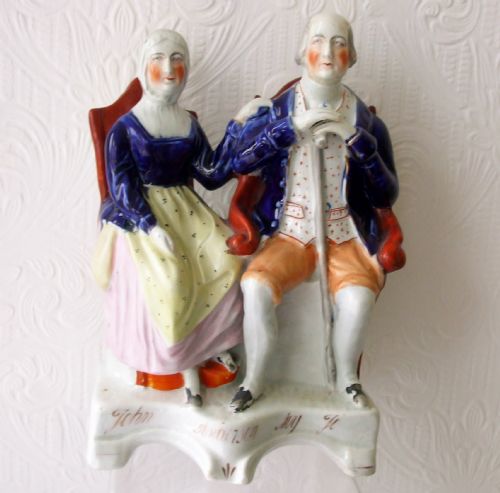
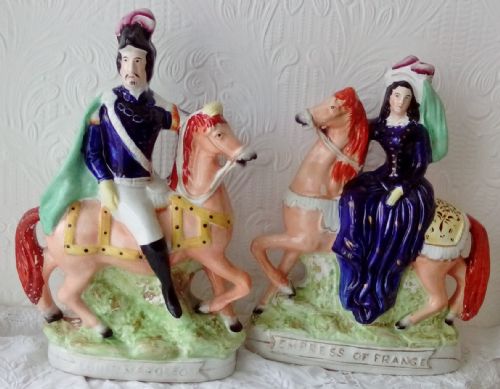
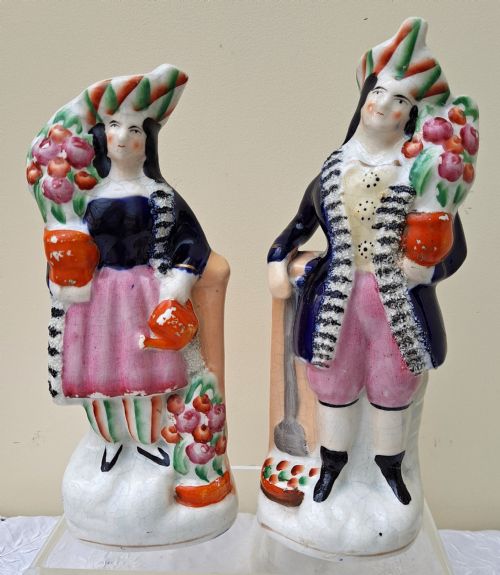
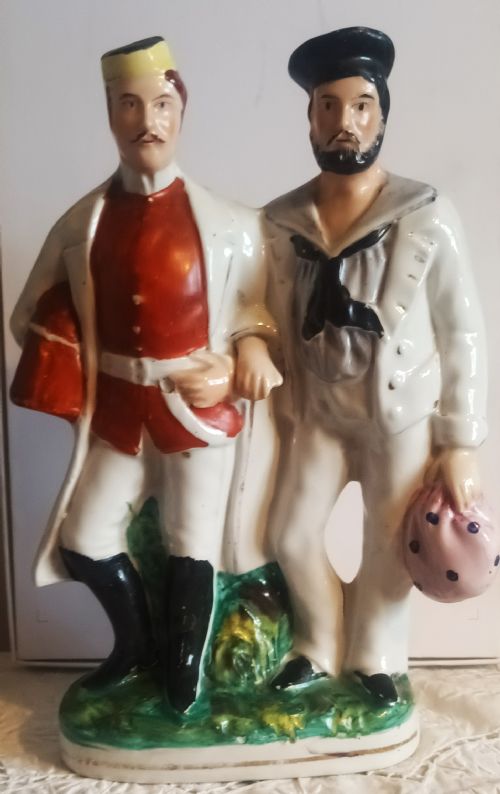
Buyers encounter royal portraits, military heroes from the Crimean War, literary characters and pastoral scenes. Many examples depict pairs of figures, theatrical subjects or spill vases incorporating functional holders alongside the modelled subjects.
How they were made
Potters shaped these earthenware objects using press moulds, joining front and back sections before applying lead glazes and enamel paints. Gilt highlights and bright surface colours complete the decoration of the ceramic body.
The firing process and hand-painted details create distinct individual traits across pieces, even when moulded from the same original cast. Glazes range from clear lead finishes to rich cobalt blues on specific decorative elements.
Staffordshire Flatback Retail Price Guide 2026
Typical asking prices for staffordshire flatback among the pieces listed under this phrase on Sellingantiques today, from the lower quarter to the upper quarter. They describe what is for sale here now, not the wider market.
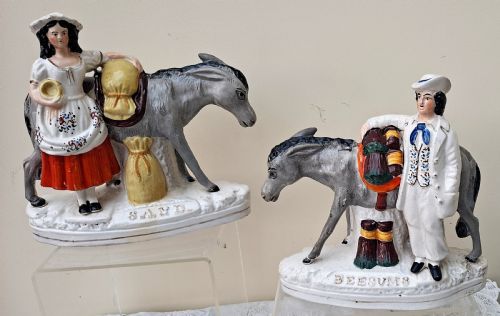
Among the military and royal personages stand cows, deer and a solitary watch holder ready for pocket watches.
What varies in quality
Larger models and complex groups, such as equestrian figures or multi-person portrait subjects, require greater skill in construction and firing than standard single figurines.
The Staffordshire Flatback Glossary
- Flatback
- A ceramic figure modelled fully on the front and sides while the reverse remains flat, intended to stand on a shelf or mantelpiece against a wall.
- Spill vase
- A hollow cylindrical container incorporated into a ceramic figure, designed to hold wooden spills used for lighting fires or pipes.
- Earthenware
- A porous pottery body fired at lower temperatures than stoneware or porcelain, standard for nineteenth-century Staffordshire figures.
- Enamel paint
- Coloured vitreous or metallic pigments applied over the glazed ceramic surface and fired at a low temperature to fix the hues.
Staffordshire Flatback: Frequently Asked Questions
Where were Staffordshire flatbacks displayed?
These decorative ceramics sat primarily on parlour mantelpieces in nineteenth-century homes, catching the light and displaying the owner's interests in royalty, current events or literature.
Because they were designed to be viewed from the front only, placing them against a cottage wall or on a high shelf suited their flat-backed construction.
What subjects do these figures show?
The subjects range widely from royal figures like Queen Victoria and Prince Albert to military commanders and soldiers from the Crimean War. Other common themes include theatrical performers, pastoral couples, animals on horseback and architectural models such as castles and cottages.
Portrait figures often bear names or titles painted directly onto the base to identify the person or event commemorated.
How do I care for antique earthenware?
Keep these ceramic figures out of direct sunlight to protect the enamel painted surface and any gilt details from fading over time. Dust them gently with a soft, dry brush rather than using water or cleaning solutions that might harm the glaze.
Stability on a flat surface matters because nineteenth-century earthenware can be top-heavy, particularly equestrian models or spill vases.
Are pairs common in these figures?
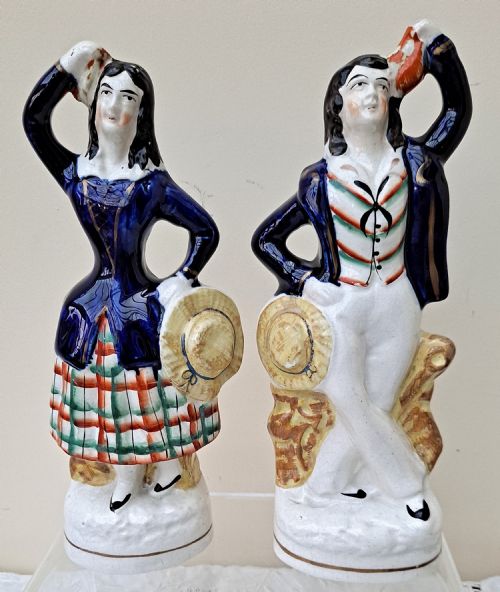
Potters frequently produced Staffordshire flatbacks in matching pairs, such as equestrian groups, gardeners or theatrical companions designed to sit at opposite ends of a mantelpiece. Portrait figures were also issued alongside allies or spouses.
Matching pairs share similar moulding and palette characteristics from the same Staffordshire workshops.