



Staffordshire Blue China
Staffordshire blue china brings together rich transfer-printed scenes and durable earthenware bodies, offering collectors robust historical utility and striking cabinet display pieces.
Staffordshire Blue China
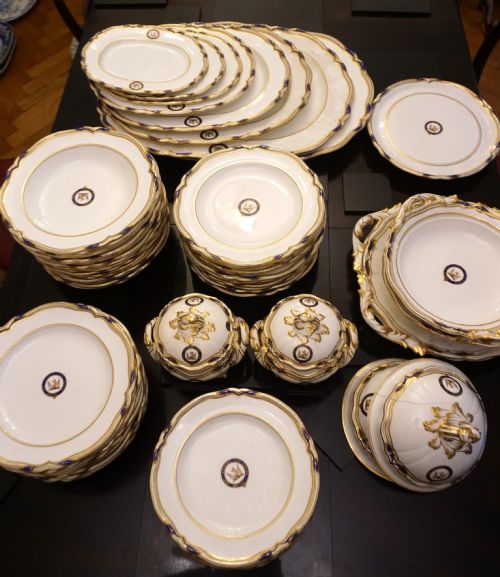
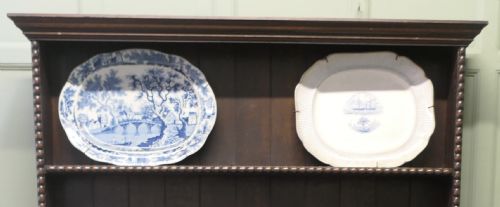
Staffordshire blue china encompasses a broad array of domestic wares produced across the nineteenth century, ranging from large meat platters and extensive dinner services to delicate child sets and tureens. When exploring this selection, buyers frequently encounter heavy earthenware transfer-printed chargers alongside robust ironstone vessels and refined pearlware dishes.
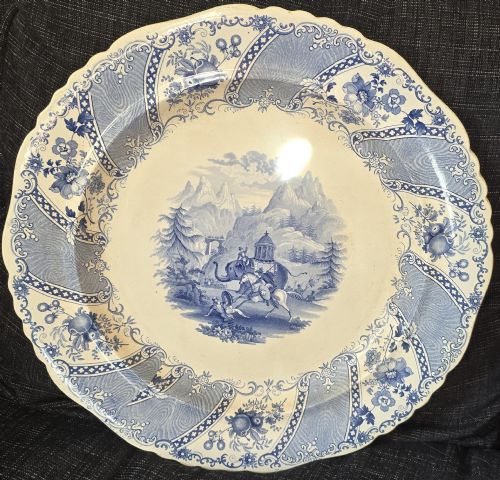
The objects span multiple periods, including the Georgian, Regency, and Victorian eras, reflecting shifting domestic tastes and evolving industrial potteries. Pieces commonly exhibit pictorial scenes such as castles, architectural landmarks, pastoral landscapes, and exotic motifs like the London Bridge or Hannibal Passing the Alps patterns.
Functional serving pieces dominate the inventory alongside decorative plates and specialised items like custard sets and draining inserts. These earthenware and ironstone items demonstrate the versatility of regional kilns in supplying both everyday dining rooms and formal display cabinets.
Materials and manufacturing methods
Potters relied primarily on earthenware, pearlware, and ironstone bodies, applying a clear glaze over cobalt blue transfer prints derived from engraved copper plates. This transfer-printing technique allowed Staffordshire potteries to produce intricate, consistent pictorial designs across large production runs of plates, platters, and tureens.
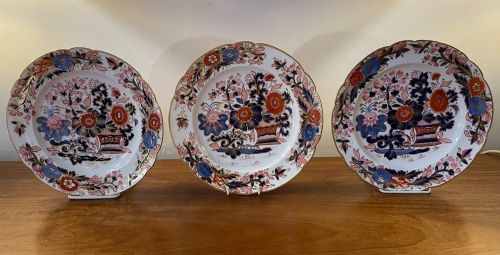
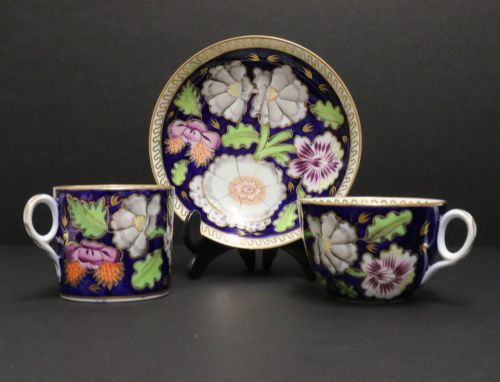
Selected items incorporated additional embellishments such as enamel highlights and gold leaf over the fired glaze to elevate simpler ceramic bodies. Specialised ironstone formulations provided enhanced durability for heavy-use items like soup bowls and serving platters.
Staffordshire Blue China Retail Price Guide 2026
Typical asking prices for staffordshire blue china among the pieces listed under this phrase on Sellingantiques today, from the lower quarter to the upper quarter. They describe what is for sale here now, not the wider market.
Miniature child sets allowed Victorian children to practice formal dining etiquette using tiny transfer-printed teacups and plates.
Distinctions in quality
Quality in these ceramics rests upon the clarity and crispness of the transfer print, where deep, even cobalt application without smudging or fading distinguishes superior execution. The precision of the underlying ceramic body, particularly the smoothness of pearlware and ironstone surfaces, further separates standard utilitarian items from finer productions.
The complexity and storytelling ambition of the pattern, such as detailed architectural renderings or multi-figure narrative scenes by established makers, elevate an object's visual impact. Additionally, the preservation of the original glaze integrity and the absence of heavy wear across high-use serving surfaces dictate overall desirability.
William Smith and Co·Mason·Newhall·Spode·Elkin and Newbon·William Adams·J and R Clews·Brameld and Co·John Davenport·James Wallace and Co·John Rogers and Son
The Staffordshire Blue China Glossary
- Transferware
- Earthenware or ironstone pottery decorated by applying a printed design from a copper plate onto the ceramic body prior to glazing. This method enabled detailed pictorial scenes to be produced efficiently.
- Pearlware
- A refined type of earthenware developed in the late eighteenth century featuring a subtle bluish glaze that pooled in recesses to mimic Chinese porcelain. It forms the body of many early nineteenth-century plates and platters.
- Ironstone
- A dense, heavy ceramic paste patented in the early nineteenth century for its exceptional durability and resistance to chipping. It provides a robust alternative to standard earthenware.
- Flow blue
- A style of Staffordshire pottery where the cobalt blue pigment intentionally bled into the surrounding white glaze during firing. This technique created a soft, hazy appearance popular on mid-nineteenth-century wares.
- Tureen
- A deep covered vessel designed for serving soups, vegetables, or sauces at the dining table. These pieces often survived alongside matching stands and ladles.
Staffordshire Blue China: Frequently Asked Questions
How were these platters used?
Large serving platters and meat dishes were utilised at the centre of the nineteenth-century dining table to present joints of meat or large portions of food to guests. Many featured built-in wells or reservoirs to catch juices during carving.
Tureens and vegetable dishes accompanied these platters, keeping side dishes warm with fitted covers. Their durable earthenware construction ensured they withstood daily household service.
How do I identify a period?
Identifying the period of these ceramics involves examining the ceramic body, glaze colour, and bottom markings. Early nineteenth-century pieces often employ pearlware bodies with a characteristic bluish glaze tint.
Later Victorian examples typically feature denser ironstone or whiter earthenware fabrics alongside registration marks or specific maker stamps that narrow down the exact decade of manufacture.
Can I use them for dining?
While these ceramics were originally created for functional dining and food service, antique ironstone and earthenware require careful handling today. Modern dishwashers and microwaves can damage historic glazes and old ceramic bodies.
Gentle hand washing in warm water preserves the transfer-printed surfaces and prevents the crazing lines in the glaze from absorbing stains over time.
What is flow blue?
Flow blue refers to a distinctive aesthetic where the cobalt blue transfer print blurred into the surrounding white glaze during the kiln firing process. Potters achieved this effect by introducing volatile chlorides into the kiln atmosphere.
The resulting hazy, atmospheric outline became highly fashionable for domestic dinner services and child sets during the middle years of the nineteenth century.