

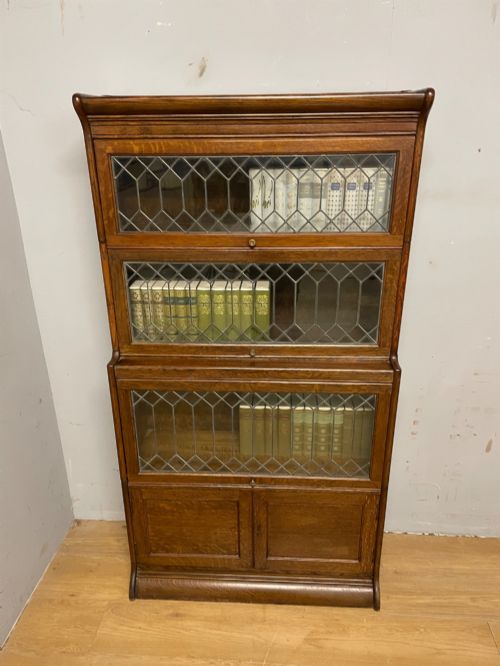
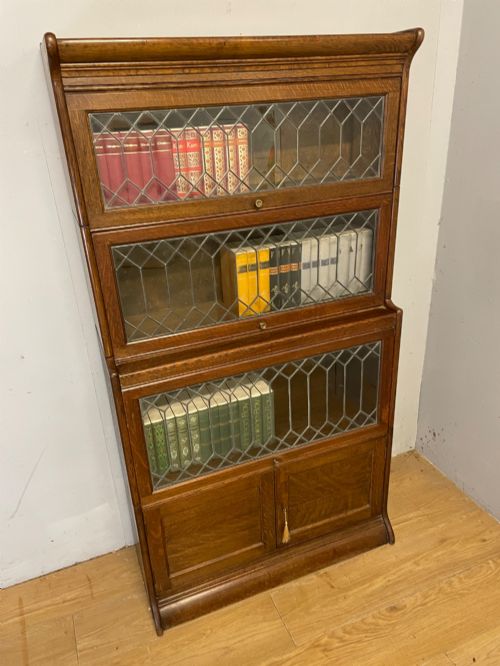
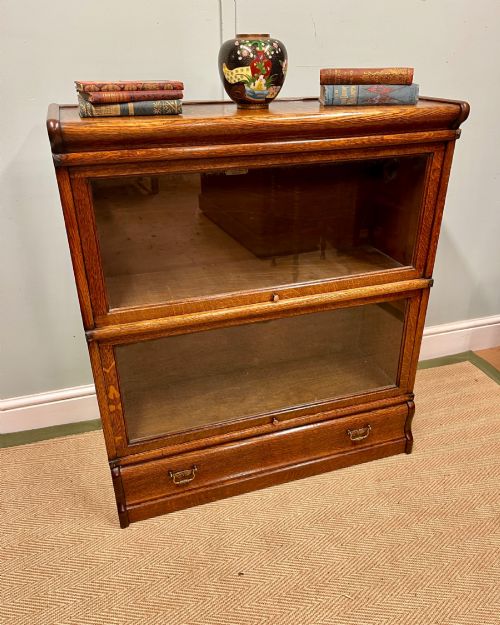
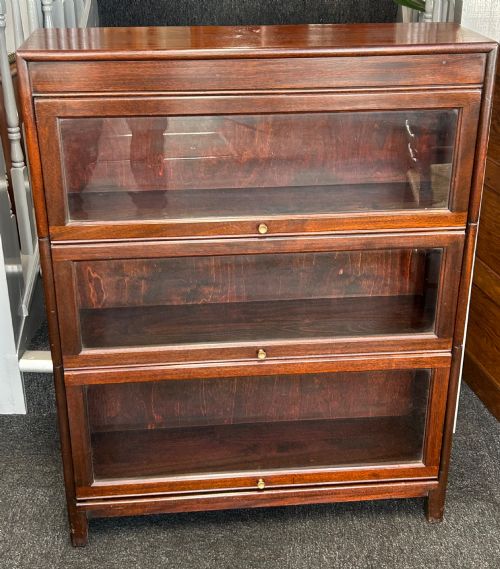
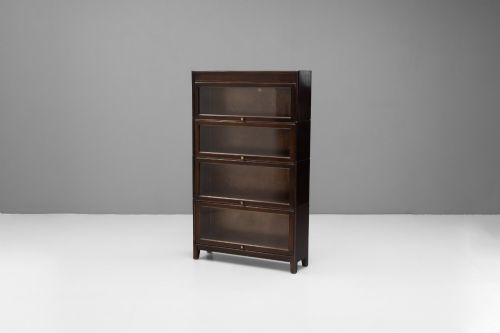
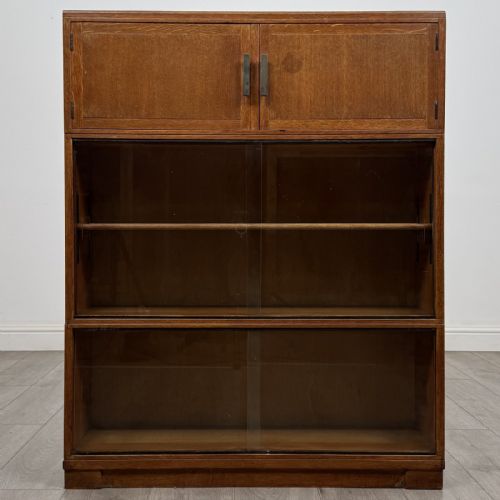
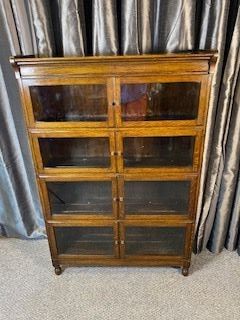
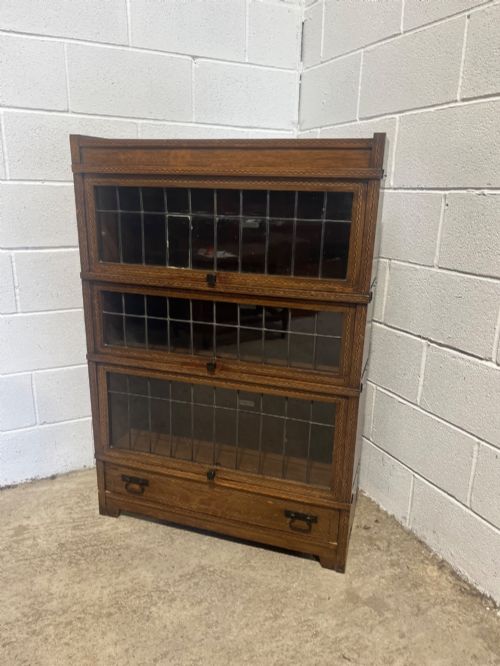
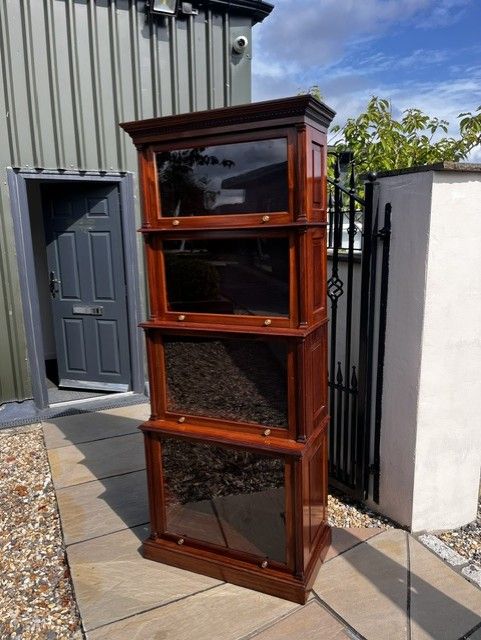
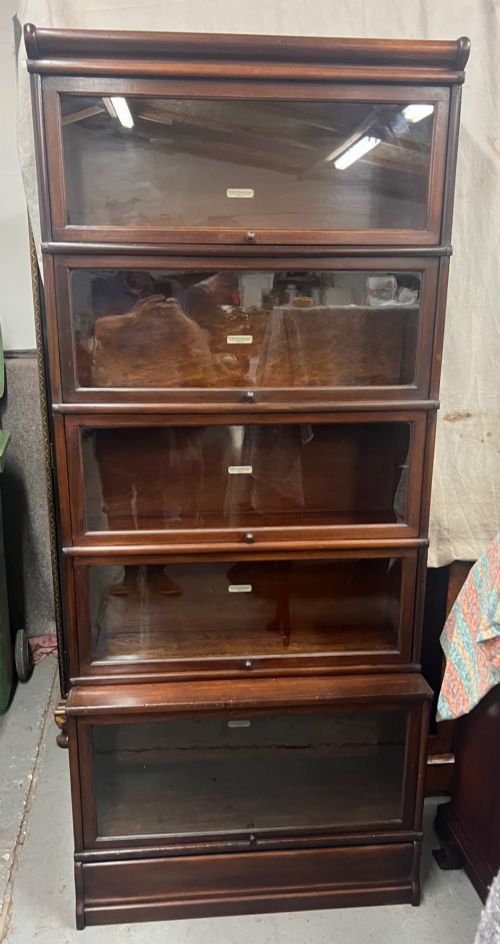


Stacked Library Cabinet
A stacked library cabinet offers modular versatility, protecting volumes behind individual glazed tiers while housing growing collections.
Stacked Library Cabinet
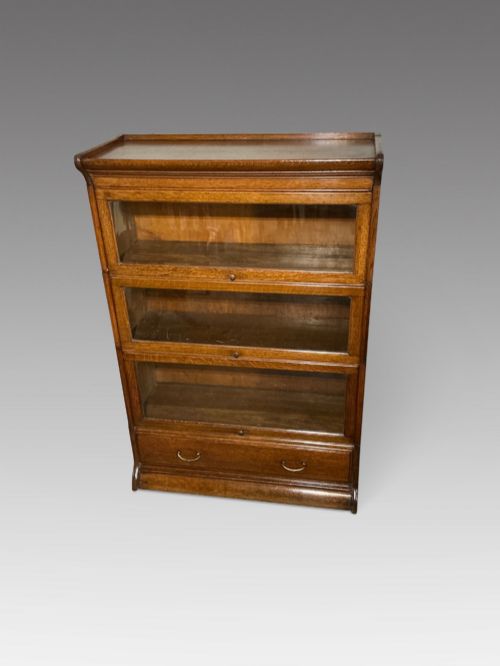
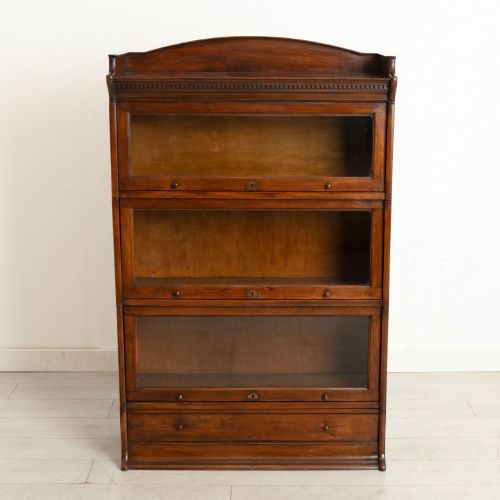
A stacked library cabinet comprises modular tiers that lift and slide to grant access to books within each distinct section. These pieces date predominantly from the early twentieth century, spanning Edwardian, Arts & Crafts, and Art Deco periods.
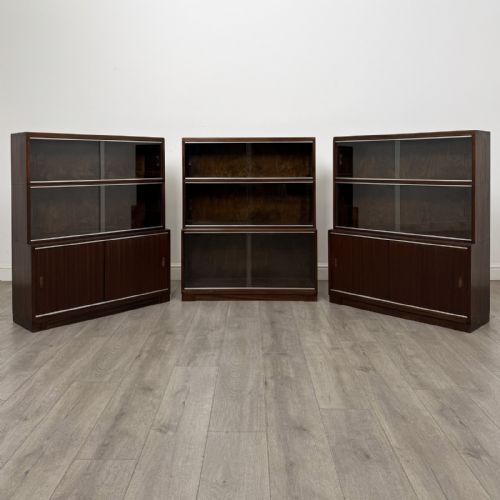
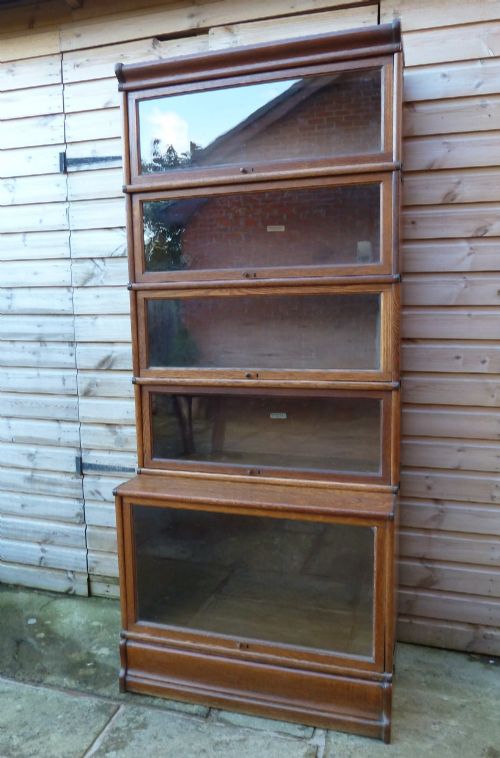
Oak and mahogany dominate the offerings, built either as single vertical columns or wider configurations featuring sliding or up-and-over glass doors. Many examples incorporate multiple tiers, ranging from compact two-section units up to tall five-tier bookcases.
Makers such as Globe Wernicke, Minty of Oxford, Gunn, and Lebus appear frequently across the inventory, establishing the standard forms for these modular office and home furnishings.
Distinguishing Quality in Modular Bookcases
The refinement of the timber selection dictates the visual appeal, with figured mahogany and golden oak representing the upper tier of production. Superior examples display careful attention to grain matching across the separate modular sections.
The smoothness of the mechanical action on the lifting glass doors separates standard utility pieces from finer productions by established makers. Robust carcase construction and intact original hardware preserve the structural integrity of the entire stack.
Stacked Library Cabinet Retail Price Guide 2026
Typical asking prices for stacked library cabinet among the pieces listed under this phrase on Sellingantiques today, from the lower quarter to the upper quarter. They describe what is for sale here now, not the wider market.
These modular towers let book collectors play Jenga with literature, provided they remember which tier holds the dictionary.
Gunn·Minty of Oxford·Globe Wernicke·Lebus·Heal's·AMYL
The Stacked Library Cabinet Glossary
- Barrister bookcase
- A modular cabinet with glass-fronted tiers designed originally for legal professionals to transport and house libraries.
- Sectional bookcase
- Alternative term for a stacking cabinet built from discrete, separable horizontal modules.
- Globe Wernicke
- The prominent manufacturer name that became synonymous with modular stacking bookcases during the twentieth century.
- Lead glazing
- Window construction where individual glass panes are held together by strips of lead, seen on specific Arts & Crafts era variants.
- Tier
- An individual horizontal modular section of a stacked cabinet containing its own shelf and door.
Stacked Library Cabinet: Frequently Asked Questions
How do stacked library cabinets work?
Each tier operates independently with a glass door that lifts and slides back into the cabinet above the books. This mechanism allows access to one shelf without disturbing the contents of the sections above or below.
Modules stack loosely or pin together without permanent fixings, enabling the entire cabinet to be disassembled into individual boxes for transport.
Can I add more tiers to my cabinet?
Matching additional tiers depends entirely on finding modules from the same maker with identical dimensions and wood finishes. Even within the same brand, variations in production eras can prevent different sections from interlocking correctly.
Most cabinets were purchased as complete units or expanded during their period of active use rather than mixed across manufacturers.
What is the difference between oak and mahogany versions?
Oak versions typically reflect Edwardian, Arts & Crafts, or golden oak aesthetics suited to domestic studies and offices. Mahogany variants often present a sleeker, darker finish aligned with formal library interiors or later Art Deco designs.
Both timbers provide the structural rigidity required to support heavy loads of books across multiple stacked sections.
How do I date an antique stacking bookcase?
Dating relies on maker marks stamped inside the wooden frames, stylistic details like brass hardware, and construction methods. Pieces bearing Arts & Crafts or Art Deco styling point toward specific decades within the early twentieth century.
Edwardian examples often feature rich golden oak finishes, while later 1930s pieces can reflect streamlined modernist preferences.