

Stacked Glass Cabinet
A stacked glass cabinet combines modular sections and glazed doors to protect volumes while keeping titles visible.
Stacked Glass Cabinet
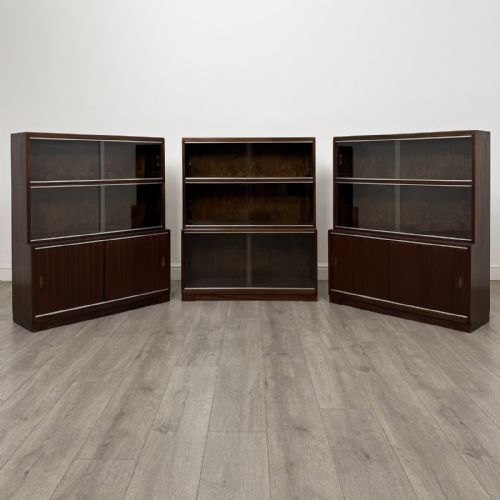
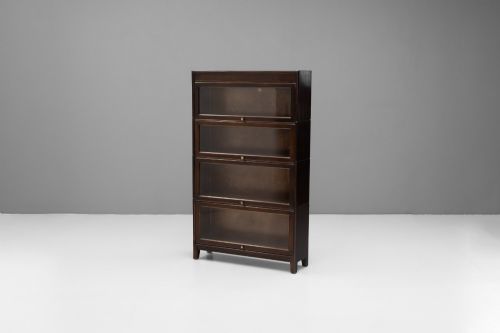
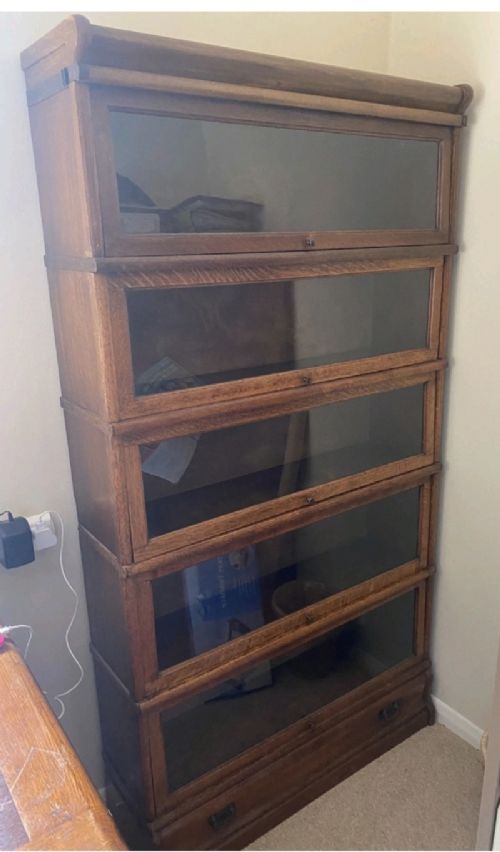
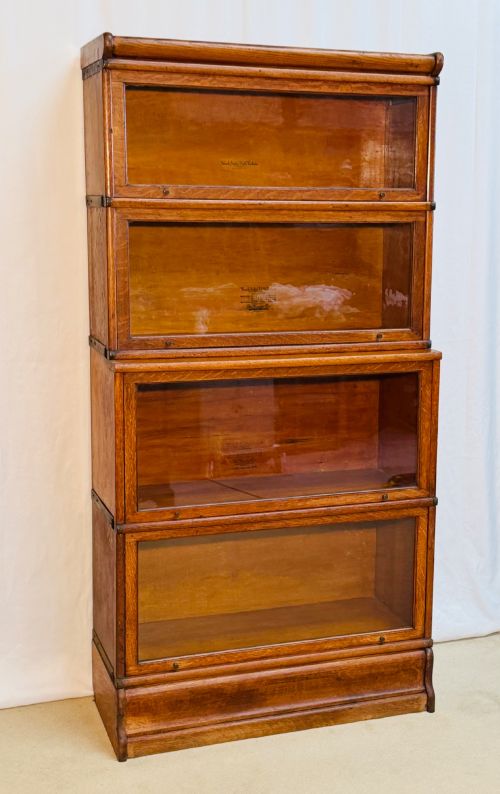
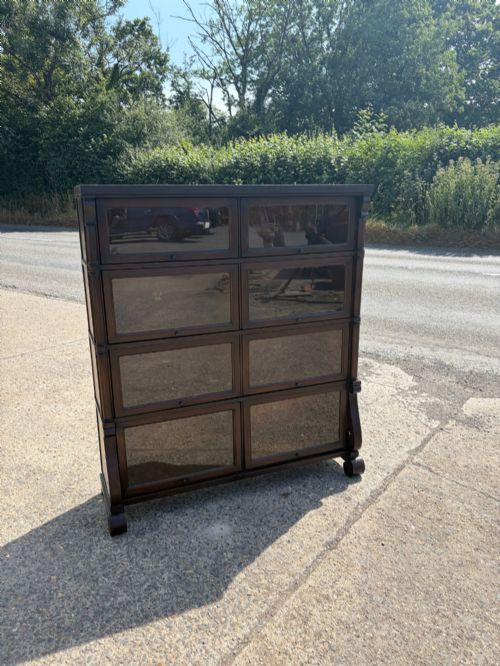
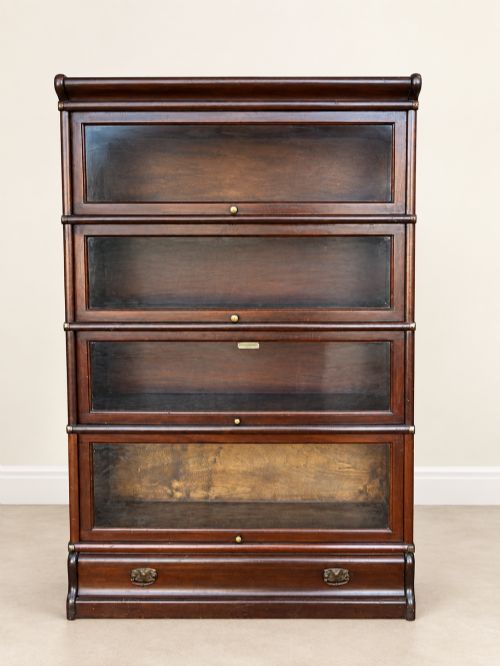
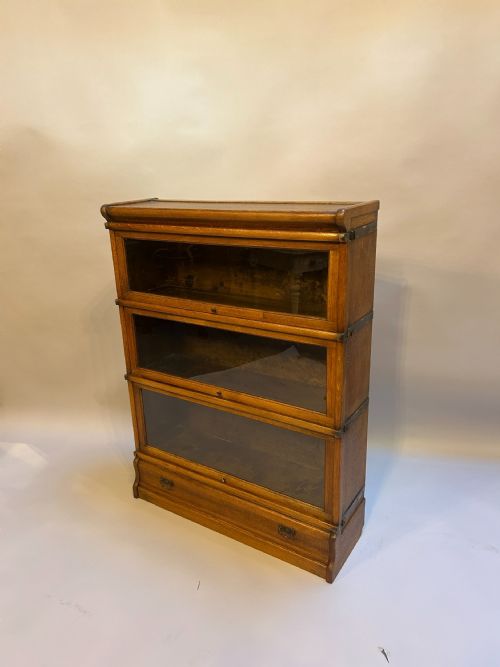
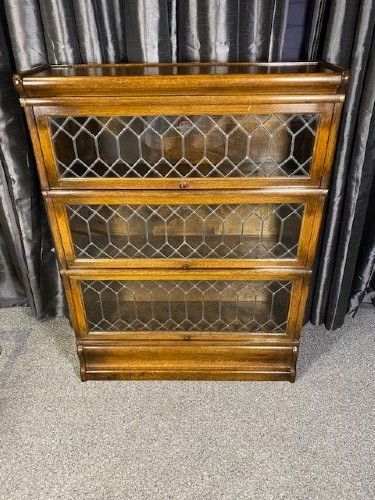
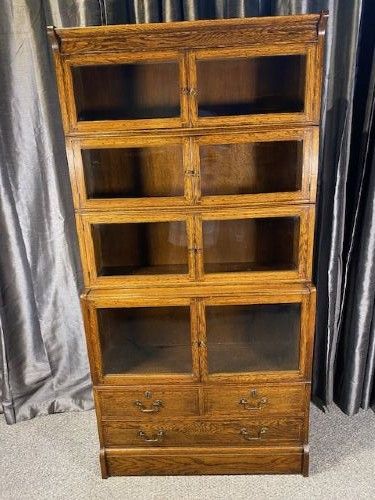
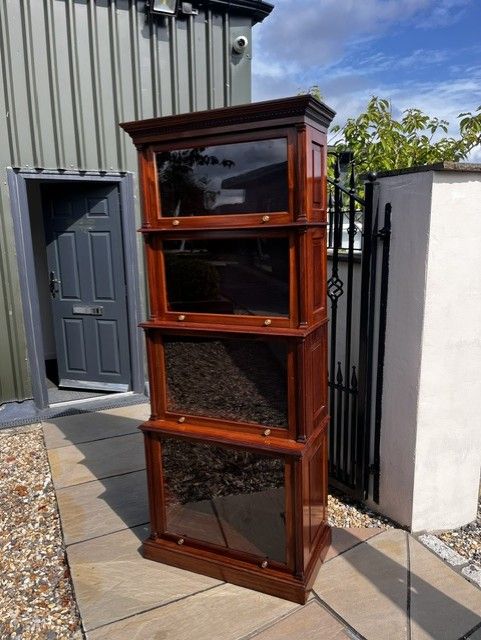
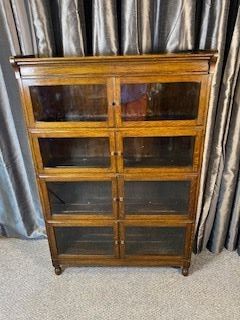
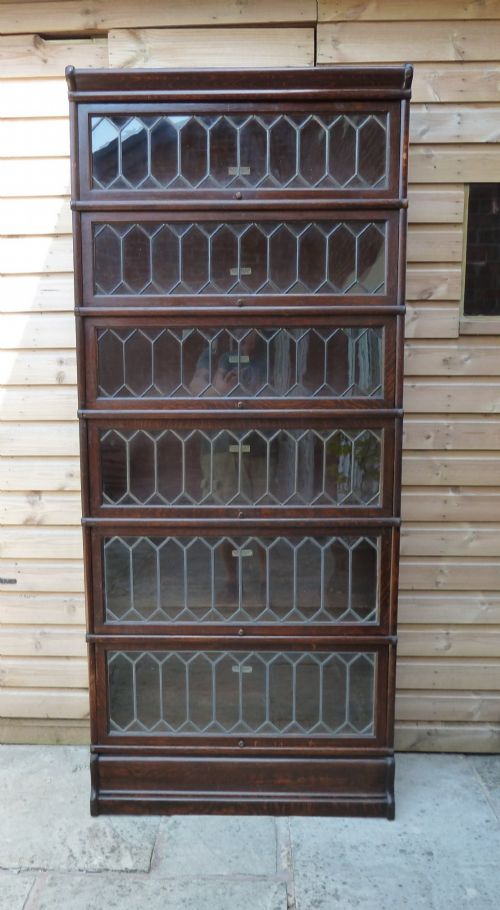
A stacked glass cabinet, commonly known as a sectional or barrister bookcase, consists of individual modular tiers placed one upon another with glass front panels. These pieces appear frequently in oak and mahogany, often featuring between three and six interlocking tiers designed to house growing libraries.
The form originates from practical office and home requirements around the Edwardian era through to the 1930s, utilising maker systems such as Globe Wernicke, Macey, Lebus, and Minty. Buyers encounter variations ranging from golden oak office variants to inlaid pieces and refined solid mahogany library editions with drawers at the base.
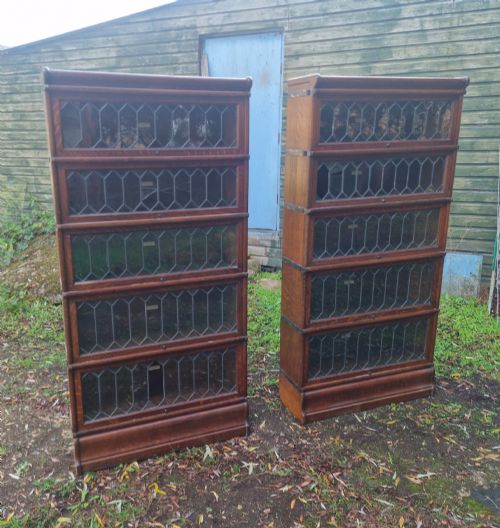
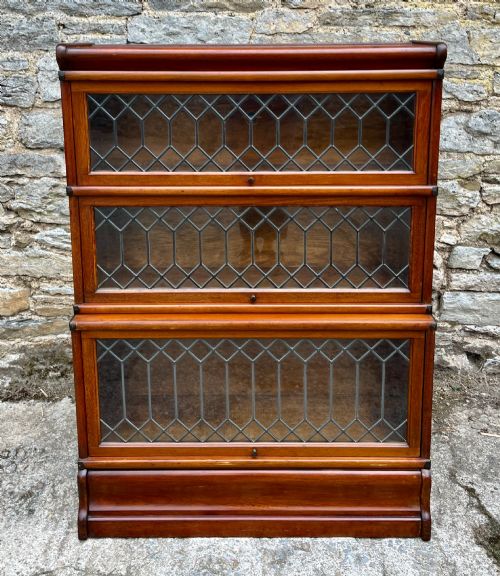
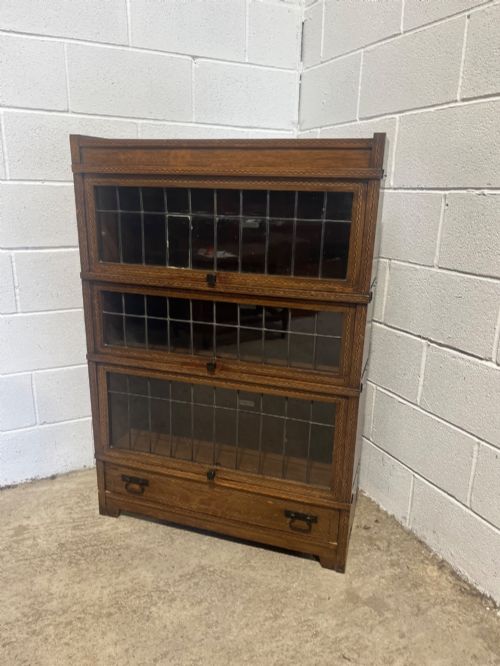
Individual sections lift and slide forward on internal mechanisms, allowing access to books without disturbing the horizontal stacking arrangement of the cabinet. Styles span from plain utilitarian 1920s commercial units to Arts and Crafts designs with leaded glass panes.
How they were made
Makers constructed these cabinets using solid or veneered hardwoods such as oak, mahogany, and walnut, paired with brass hardware for the lifting mechanisms and door brackets. Sections were built as independent boxes that interlock vertically, supported occasionally by a dedicated base drawer unit or simple plinth.
Glass panels are typically held within wooden frames or reinforced with lead came in Arts and Crafts iterations, protecting the contents from dust while maintaining transparency. Interior mechanics rely on metal guides and scissor arms that allow the glazed doors to slide smoothly upwards and recess into the top of each tier.
Barristers originally relied on these modular glass boxes so they could transport their entire library directly to the courtroom intact.
What varies in quality
The distinction between standard commercial production and finer work rests in timber selection, such as figured golden oak or solid mahogany, and the crispness of mouldings and inlay work. Early examples and pieces by established makers often display superior mechanical tolerances in the up and over door actions.
Originality of components heavily influences the integrity of a stacked glass cabinet, including matching timber grains across tiers, intact brass manufacturer badges, and unmodified leaded or plain glass panes. Base configurations with fitted drawers or simpler plain plinths also shift the architectural presence of the piece.
Globe Wernicke·Macey·Lebus·Minty·Heal's·Gunn·AMYL
The Stacked Glass Cabinet Glossary
- Sectional bookcase
- A modular bookcase built from independent stacked tiers that can be separated or rearranged. Each tier contains its own glazed door.
- Globe Wernicke
- The prominent pioneering maker and synonymous style name for elastic stacking bookcases with upward-sliding glass doors. Their patented interlocking hardware set the standard for modular office furniture.
- Leaded glass
- Glass panes held together within a network of lead cames, frequently seen in Arts and Crafts and Edwardian cabinet doors. This technique provides structural rigidity to geometric window panels.
- Up and over door
- A pivoting door mechanism where the glazed panel swings slightly outward and slides horizontally into the recess above the books. It requires precise brass hardware to operate without binding.
Stacked Glass Cabinet: Frequently Asked Questions
How do the doors open?
Each tier uses a metal mechanism attached to the sides of the cabinet that guides the glazed door upward and backward into the upper cavity of that specific section.
This design lets you retrieve books from a lower shelf without needing clearance for swinging outward cabinet doors.
Can the sections be separated?
Yes, the modular tiers lift off independently from one another, resting on simple tongue and groove or pin joints rather than permanent glue.
This construction method made transport easy for travelling barristers and allowed owners to expand their cabinet upward by purchasing additional matching sections.
What periods do they date from?
The pieces span from the Edwardian period and the early 1900s through the 1920s and 1930s, reflecting Arts and Crafts, Art Deco, and commercial office designs.
Earlier examples often feature rich golden oak or detailed leaded glass, while later iterations include limed oak and Mid-Century Modern influences.
Are all sections the same size?
Tier heights vary within a single cabinet to accommodate different book sizes, with deeper or taller sections placed at the bottom for heavy folios.
When buying or rearranging, matching the depth and width codes stamped by makers ensures the tiers stack flush.