


Stable Interior Painting
A stable interior painting brings the rich character of Victorian equine life directly to your walls, offering a charming focal point for any room.
Stable Interior Painting
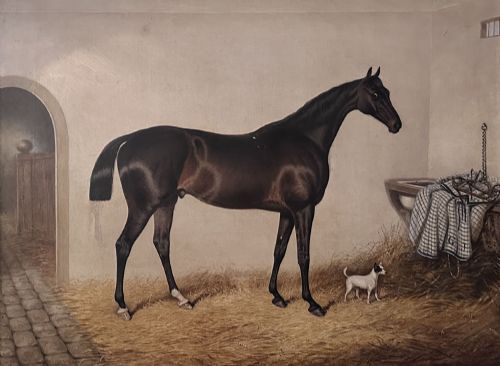
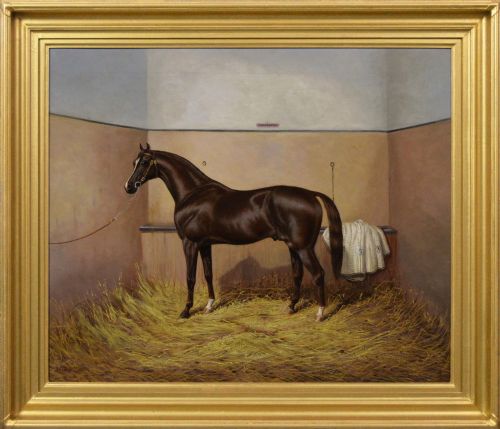
A stable interior painting captures horses, hunters, and grooms within traditional equine settings, reflecting the strong sporting culture of the nineteenth century. When you search for a stable interior painting, you encounter works spanning the Victorian era and the broader nineteenth century.
The pieces listed on this page predominantly showcase oil on canvas or oil on board, often set within gilt and oak frames. These works frequently document named horses, prized hunters, and stallions alongside canine companions such as terriers.
Originating from the 1850s through to 1900, these paintings represent both named artists and the broader manner of traditional sporting art. Buyers searching for a stable interior painting find historical portraits that celebrate the deep bond between horses and their handlers.
How these works were constructed
Artists of the period applied oil paint to stretched canvas or wooden board, building up rich textures to depict the sleek coats of horses and the rustic timber of stable walls. This technique allowed painters to capture the interplay of light filtering into the stable interior from a doorway or window.
Many of these paintings are completed with gold leaf frames, utilising traditional gilding methods to mount the canvas securely. Oak is also employed for structural support and framing, providing a sturdy housing for the oil on board or canvas works.
All listed pieces utilise oil paint as the primary medium, supported by canvas or wood panels and housed in gilt or oak frames.
What separates the finest works
Quality in a stable interior painting rests upon the precision of anatomical rendering in the horse and the atmospheric depth of the background architecture. Master painters handle light with subtlety, illuminating the horse's flank while casting the deeper recesses of the stable in shadow.
The handling of secondary subjects, such as grooms or terriers, alongside the signature or attribution to a recorded hand, further elevates the stature of the piece. Lesser examples display stiffer brushwork and a less convincing integration of the animal within its stall.
Albert Clark·Benjamin Cam Norton·Edwin Frederic Holt·Charles Bilger Spalding RA·John Nost Sartorius·John Ferneley Jnr·William Shayer Snr
The Stable Interior Painting Glossary
- Oil on Canvas
- Pigment mixed with drying oil applied to a woven fabric support. This medium permits subtle blending and rich tonal depth.
- Gilt
- A thin layer of gold applied to wood or gesso frames. It adds a traditional decorative border that enhances the painting within.
- Sporting Art
- Depictions of rural pursuits, horses, hounds, and agricultural life. This genre flourished in Britain throughout the nineteenth century.
- Hunter
- A horse bred and trained for foxhunting or general riding. These animals form the primary subject of many nineteenth-century equestrian portraits.
- Oil on Board
- Pigment applied to a rigid wooden or composition panel rather than stretched fabric. This substrate offers a firm surface for detailed brushwork.
Stable Interior Painting: Frequently Asked Questions
What is a stable interior painting?
A stable interior painting is a nineteenth-century artwork depicting horses, hunters, or stallions housed within their traditional stalls, often accompanied by grooms or dogs.
These pieces reflect the Victorian passion for equestrian pursuits and animal portraiture, serving as both historical documents and decorative art.
Who painted these stable scenes?
Many works from this period were created by specialised animal and sporting artists who recorded prized horses for their owners.
Names associated with these pieces include Albert Clark, Benjamin Cam Norton, and John Ferneley Jnr, alongside works in the manner of John Nost Sartorius.
How do I date a stable painting?
Dating relies on stylistic clues, framing materials, and the recorded active periods of the artists or the specific Victorian clothing worn by grooms.
Most examples originate from the mid to late nineteenth century, spanning from the 1850s up to 1900.
Where should I hang one?
These traditional oil paintings suit libraries, studies, or hallways where traditional wooden furniture and classic decor complement the subject matter.
Ensure the painting is kept away from direct sunlight and damp conditions to preserve the oil paint and canvas.