
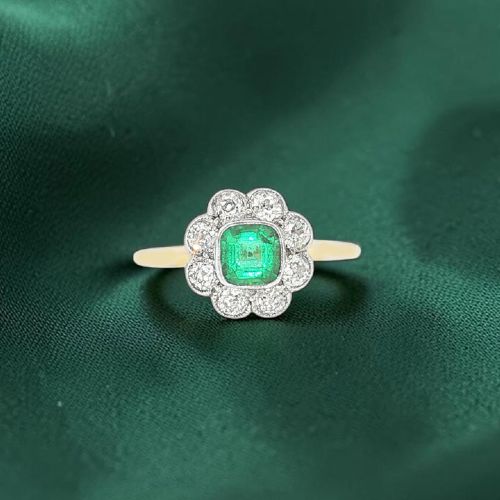
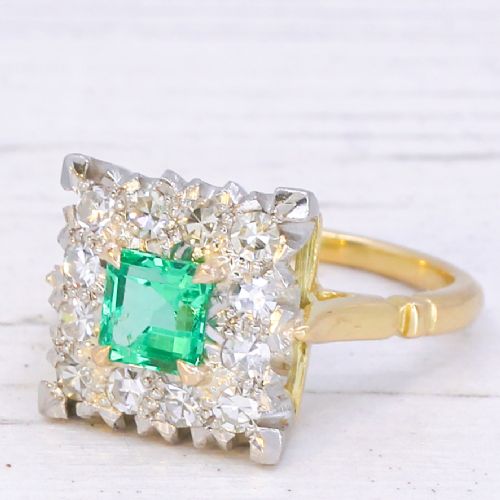


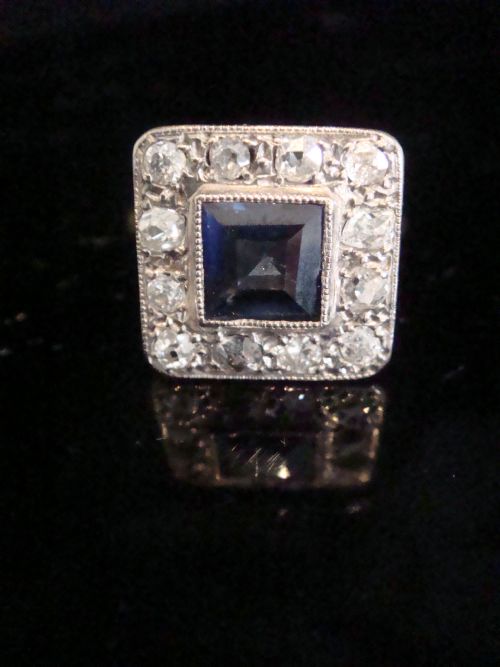


Square Halo Diamond Ring
A square halo diamond ring brings geometric brilliance to the hand, framing a central stone with a distinctive border of glittering gems.
Square Halo Diamond Ring
When you search for a square halo diamond ring, you enter a field dominated by cluster formations from the Edwardian era through the mid-twentieth century. These pieces arrange smaller stones in a crisp, geometric frame around a central gem.
The versions you are most likely to meet on this page hail from the Art Deco period, the 1950s, and Edwardian workshops. They utilise platinum, yellow gold, and white gold to hold diamonds alongside emeralds, aquamarines, and sapphires.
Engagement rings and cocktail rings form the bulk of these selections. Each piece showcases the enduring appeal of angular stone arrangements over traditional round profiles.
How they were made
Goldsmiths constructed these mounts using platinum and eighteen-carat gold, often combining yellow and white metals to highlight specific stone settings. Platinum provided the strength needed for delicate claw work and secure geometric borders.
Master cutters shaped diamonds into princess and old cuts to fit the strict linear boundaries of the halo. Stones were closely set to maximise the play of light across the face of the ring.
Listings feature pieces spanning the Edwardian period, 1920, 1930, 1950, and 1960.
What varies in quality
The distinction between ordinary and exceptional work lies in the precision of the metal geometry and the matching of the surrounding stones. Superior pieces maintain sharp, clean lines in the halo without excess metal obscuring the gems.
The integration of the central stone with its border dictates the visual harmony of the ring. Higher-quality examples balance the depth of the centre gem with the delicate scale of the surrounding frame.
The Square Halo Diamond Ring Glossary
- Halo
- A border of smaller gemstones surrounding a larger central stone. This setting style enhances the perceived size and brilliance of the main gem.
- Cluster ring
- A ring design featuring multiple stones grouped closely together around a central focal point. It remains a defining format across Edwardian and Art Deco jewellery.
- Old cut
- A diamond cutting style prevalent in antique jewellery characterised by a smaller table and larger facets. This cut creates a distinctive softer sparkle under candlelight.
- Princess cut
- A square or rectangular diamond cut featuring numerous facets to maximise brilliance. It suits the strict geometric lines found in mid-century cluster designs.
- Cocktail ring
- A large, statement ring designed to catch the eye during evening social events. These pieces often feature substantial aquamarines or emeralds paired with diamonds.
Square Halo Diamond Ring: Frequently Asked Questions
How do I clean my antique ring?
Use warm water, mild soap, and a soft brush to remove everyday debris from the metal and stone settings. Avoid harsh chemicals that might damage softer gems like emeralds.
Dry the piece thoroughly with a lint-free cloth before storing it in a lined box. Periodic checks by a specialist ensure the old settings remain secure.
Can these rings be resized easily?
Most gold and platinum mounts can be adjusted by a skilled jeweller without compromising the structural integrity of the halo. The presence of side stones or continuous shoulder work requires careful attention.
Consult a professional who understands antique construction methods before attempting any alterations to the band.
Are these pieces suitable for daily wear?
Platinum and eighteen-carat gold provide durable foundations for everyday use when paired with hard stones like diamonds. Regular inspection of the claws prevents accidental stone loss during routine activities.
Removing the jewellery during heavy manual tasks preserves the delicate metalwork and prevents unnecessary scratching of softer accent gems.
How do I date an Art Deco ring?
Examine the combination of platinum and white gold alongside sharp, geometric stone arrangements characteristic of the period. Maker marks and shank styles also offer clues to the exact decade of manufacture.
Comparing the cut of the diamonds against known historical standards confirms the timeline of the piece.