




Square Diamond Cluster Ring
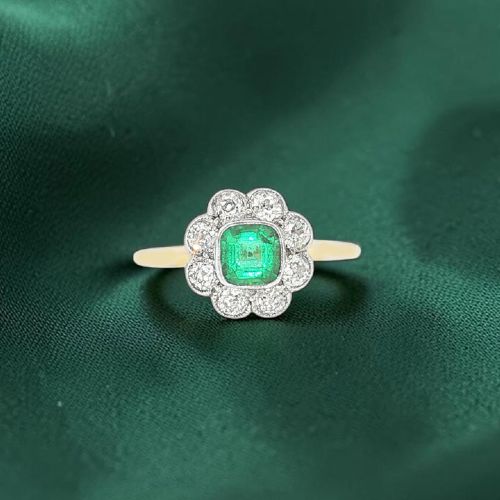
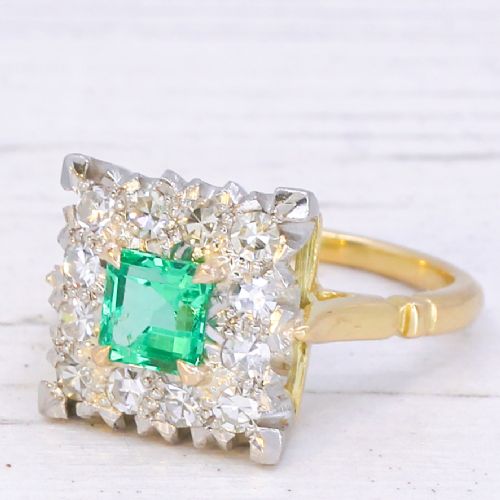
A square diamond cluster ring packs geometric presence onto the finger, offering the sharp lines of the Art Deco period alongside older Edwardian stones.
Square Diamond Cluster Ring
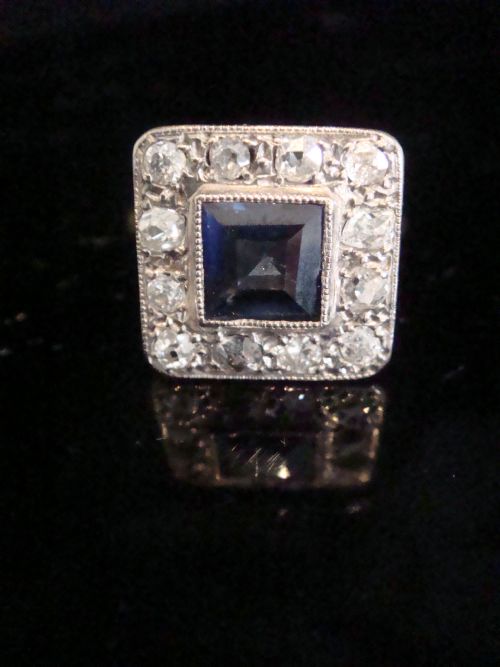
A square diamond cluster ring brings together a central stone or a tight mosaic of smaller gems, bordered by diamonds to form a distinct geometric silhouette. When you search for a square diamond cluster ring, you encounter pieces spanning from the early twentieth century through the mid-century decades, with Art Deco examples appearing frequently.
The materials paired with diamonds in these pieces include platinum, yellow gold, white gold, and eighteen-carat gold, often accented by emeralds, sapphires, rubies, or aquamarines. The forms vary from tight panel clusters to checkerboard arrangements, reflecting styles such as Edwardian, Art Deco, and Retro designs.
Most examples originate from the 1920s and 1930s, where platinum settings predominated alongside gold, creating the sharp outlines characteristic of the period. Later mid-century pieces from the 1950s and 1960s also surface, showing broader bands and alternative stone cuts.
Materials and Construction
Jewellers typically set the stones for a square diamond cluster ring in platinum or eighteen-carat gold, utilising the strength of platinum to hold intricate millegrain edges and fine geometric shapes securely. Yellow and white gold also feature prominently, sometimes combined within a single mounting to contrast the warm shank with the bright face.
Cut plays a defining role in the construction, incorporating old-cut diamonds, princess cuts, and square or carré cuts to achieve the flat-topped geometric profile. Surrounding stones such as calibré-cut rubies or emeralds are shaped precisely to fit the outer borders of the central design.
Listings feature pieces spanning from the Edwardian era through the 1960s, with Art Deco platinum and eighteen-carat gold designs appearing frequently.
Quality Variations
The standard of a square diamond cluster ring rests on the precision of the geometry and how tightly the stones sit within their settings. Superior examples display perfectly matched outer borders where square or carré cut gems meet without excessive metal showing between them.
The choice of metal and the crispness of hand-worked details like millegrain beading separate fine workshop output from standard production. Cohesion between the central diamond and the surrounding cluster stones dictates the overall visual impact of the piece.
The Square Diamond Cluster Ring Glossary
- Carré cut
- A square step-cut diamond with a flat table and straight sides. This cut appears frequently in Art Deco cluster borders.
- Millegrain
- A decorative technique involving tiny raised metal beads along the edges of a setting. It softens the transition from metal to stone.
- Old-cut diamond
- A hand-faceted diamond shape typical of the Edwardian and early twentieth-century periods. These stones possess smaller tables and higher crowns than modern brilliant cuts.
- Cluster ring
- A ring design featuring a central gemstone surrounded by a group of smaller stones. This arrangement maximises surface sparkle on the hand.
- Calibré cut
- Small gemstones cut specifically in uniform geometric shapes to fit tight channel or bezel settings. They form continuous borders around cluster faces.
Square Diamond Cluster Ring: Frequently Asked Questions
How do I style a square diamond cluster ring?
The geometric outline of these pieces pairs well with simple, plain bands that do not compete with the angular head. Wearing the ring on its own allows the cluster design to sit comfortably on the hand without crowding.
Because the settings often sit relatively flat against the finger, daily wear remains practical. Pairing them with modern straight bands requires checking the height of the gallery so the rings sit flush.
Are these rings suitable for daily wear?
Construction in platinum or eighteen-carat gold provides the durability needed for regular use, provided the settings receive routine checks. Platinum offers particular strength for securing small cluster stones over decades of movement.
Careful handling prevents accidental knocks to the outer corners of square clusters. Removing the ring during heavy manual tasks protects the delicate claw or channel settings.
How do I tell an Edwardian cluster from an Art Deco one?
Edwardian examples tend to utilise yellow gold paired with platinum-topped mounts, featuring softer floral motifs alongside softer old-cut diamonds. The overall feel leans towards lace-like lightness and organic curves.
Art Deco pieces embrace strict symmetry, sharp square profiles, and whiter metals like platinum or white gold. The geometry becomes dominant, using straight lines and contrasting calibre-cut gemstones.
What metals were used in these cluster rings?
Platinum stands out as the primary metal for the top settings of twentieth-century cluster rings, prized for its ability to hold tiny stones securely. Eighteen-carat yellow and white gold form the shanks and lower galleries of many examples.
Combinations of yellow and white gold appear frequently in pieces from the 1920s and 1930s. Mid-century rings from the 1950s and 1960s occasionally showcase heavier yellow gold bands.