
Diamond Cluster Engagement Ring
A diamond cluster engagement ring brings together a central stone framed by smaller gems, offering notable presence on the hand across Victorian, Edwardian, and Art Deco designs.
Diamond Cluster Engagement Ring
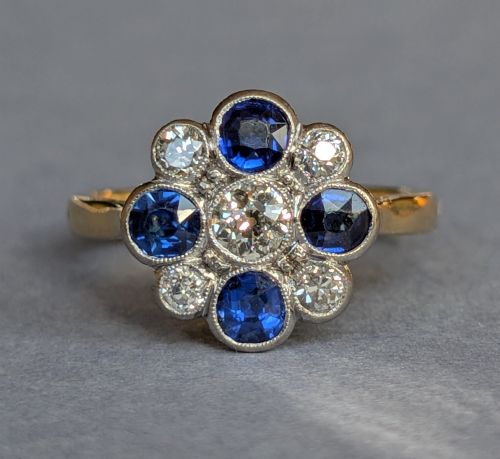
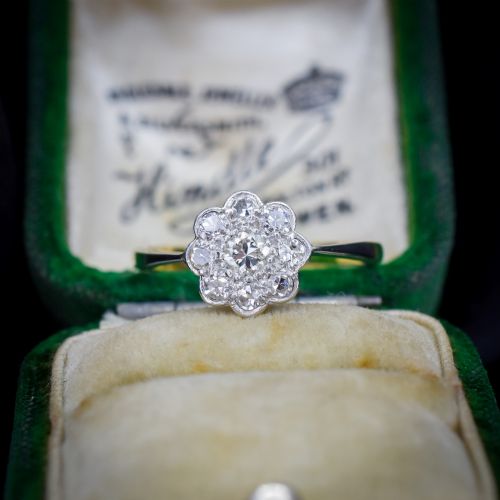
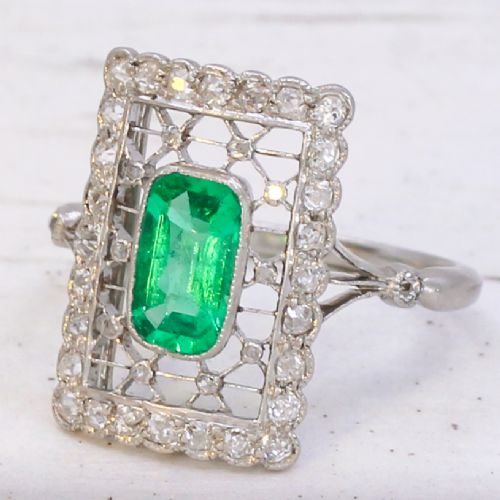
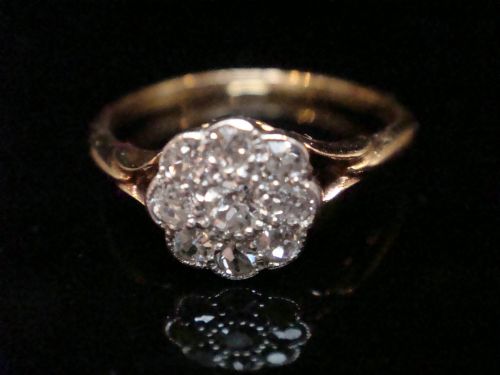
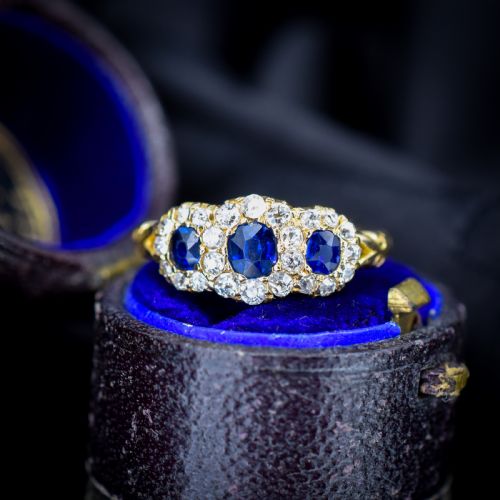
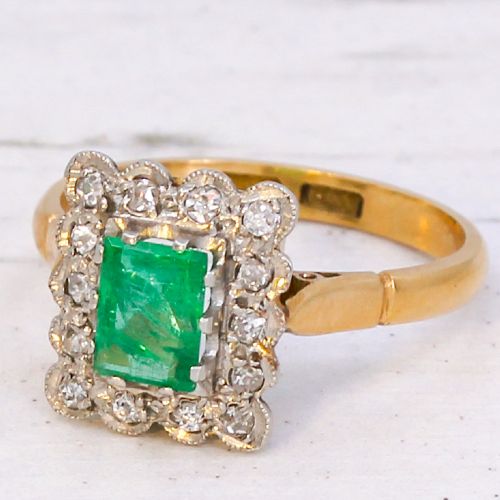
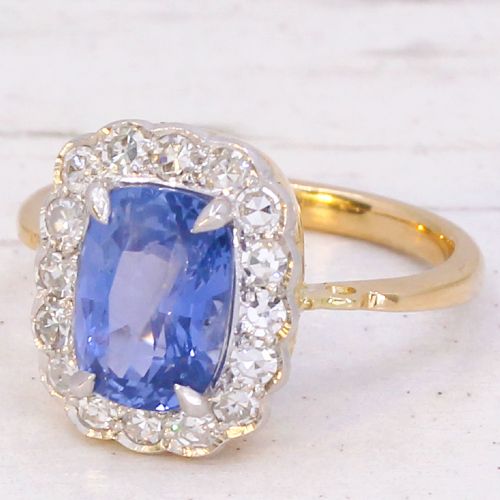
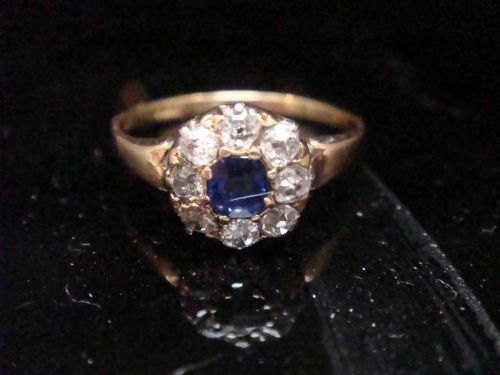
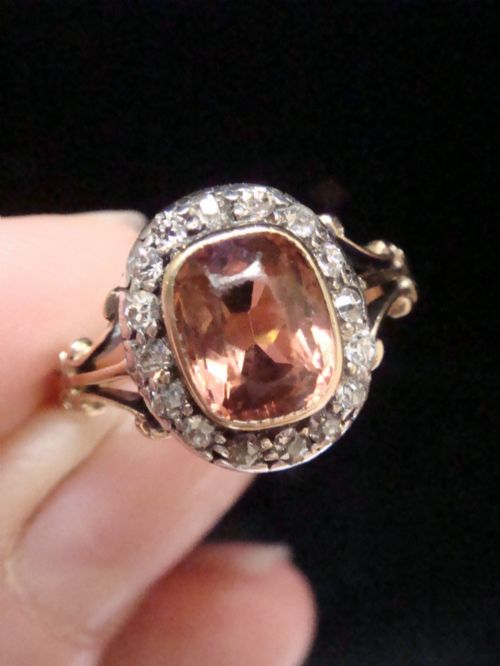
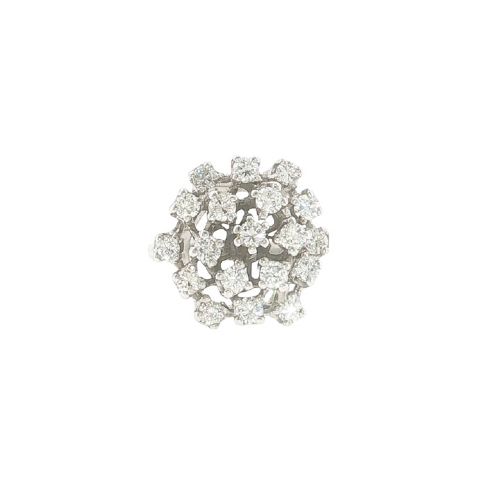
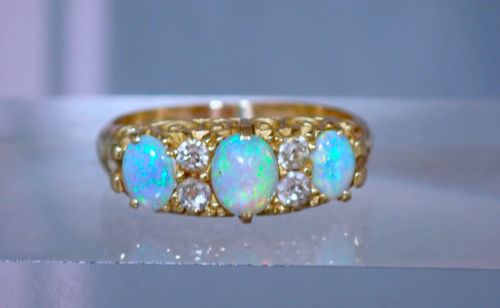
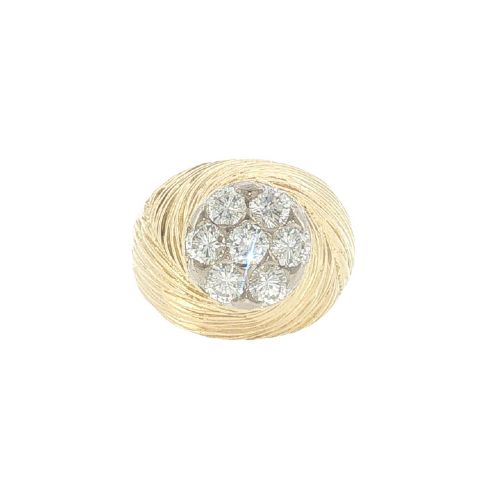
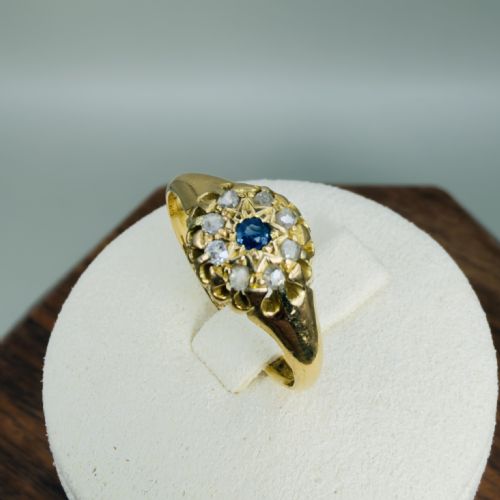
A diamond cluster engagement ring centres on a primary gemstone - frequently a diamond, sapphire, ruby, or emerald - surrounded by a halo of smaller diamonds. This layout creates a bold visual impact that maximises sparkle and colour without requiring a single massive stone.
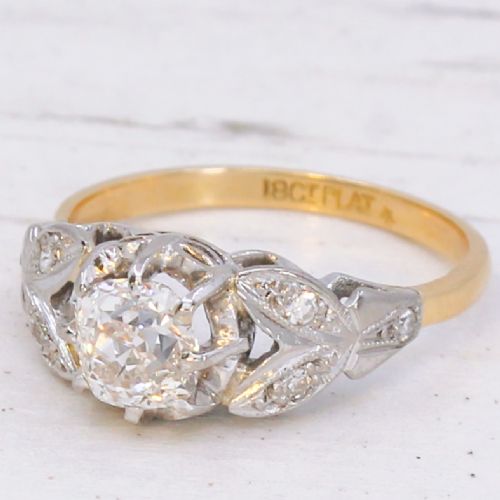
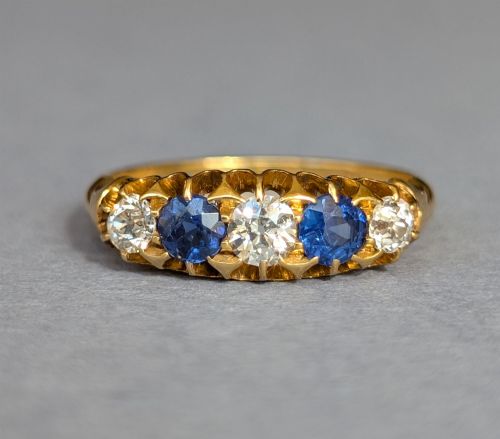
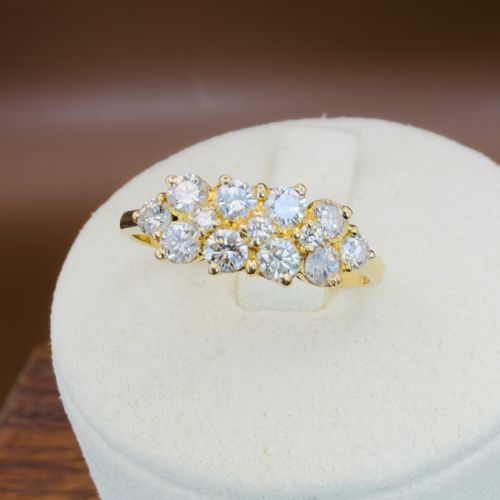
The pieces on this page span the Victorian, Edwardian, Art Deco, and mid-century periods, alongside later vintage interpretations. Buyers most frequently encounter floral or daisy configurations, traditional round clusters, and elongated navette or marquise shapes.
Originating largely from British and European workshops, these rings reflect distinct eras of design, shifting from ornate yellow gold mountings in the nineteenth century to crisp platinum and white gold geometric settings by the 1920s and 1930s.
Materials and construction
The foundational metals span 18ct yellow gold, 18ct white gold, and platinum, often combined during the Edwardian era where platinum claws secure stones above yellow gold shanks. Platinum provides the strength required for delicate millegrain edges and fine wirework without adding excessive weight.
Gemstones are predominantly set by hand using claw, bezel, or flush techniques, paired with old-cut, brilliant-cut, or transitional-cut diamonds. Central coloured stones such as sapphires, rubies, and emeralds are integrated directly into the cluster geometry, supported by meticulous hand-pierced under-settings.
Diamond Cluster Engagement Ring Retail Price Guide 2026
Typical asking prices for diamond cluster engagement ring among the pieces listed under this phrase on Sellingantiques today, from the lower quarter to the upper quarter. They describe what is for sale here now, not the wider market.
Several rings retain their original 1898 hallmarks, proving that romantic declarations have spent well over a century keeping company with afternoon tea.
Evaluating quality and execution
Quality rests on the harmony of the cluster proportions, where the central stone and surrounding gems share a balanced scale and consistent colour saturation. Superior examples display tight, even spacing between stones with minimal visible metal between the claws.
The integrity of the mount is critical, particularly the preservation of delicate millegrain decoration and knife-edge shanks that have survived decades of daily wear. Hand-cut stones such as old mine cuts exhibit unique facet arrangements that differ markedly from uniform modern brilliant cuts, influencing the play of light across the face of the ring.
The Diamond Cluster Engagement Ring Glossary
- Old Cut
- A hand-faceted diamond cut prevalent before the standardisation of the modern brilliant cut in the early twentieth century, characterised by a smaller table, higher crown, and open culet.
- Millegrain
- A decorative technique featuring a row of tiny, raised metal beads along the edge of a setting, commonly found in Edwardian and Art Deco jewellery.
- Cluster
- A ring design where a central gemstone is surrounded by a ring of smaller stones to create a unified focal point.
- Navette
- A boat-shaped gemstone setting that tapers to points at both ends, also referred to as a marquise cluster.
- Trilogy
- A ring featuring three principal stones set side by side, often representing the past, present, and future.
Diamond Cluster Engagement Ring: Frequently Asked Questions
How do I care for a vintage diamond cluster ring?
These rings require gentle cleaning with warm soapy water and a soft brush, avoiding harsh ultrasonic cleaners that can loosen older stones. Regular professional checks ensure the claw settings remain secure.
Because many historic settings utilise softer gold or delicate platinum work, removing the ring during heavy manual tasks protects the structural integrity of the mounting.
Can these engagement rings be resized?
Most gold and platinum cluster rings can be adjusted by a skilled jeweller, depending on the condition of the shank and the presence of shoulder stones or engraving. Solid metal bands are straightforward to alter.
Extensive resizing may affect hallmarks or disrupt intricate gallery work beneath the cluster, so professional assessment is advised before proceeding.
How do I distinguish an Edwardian cluster from an Art Deco one?
Edwardian clusters tend to use yellow gold paired with platinum-topped settings, featuring flowing floral motifs, open wirework, and soft millegrain details. Sapphires, emeralds, and pearls frequently accompany the diamonds.
Art Deco examples lean towards geometric symmetry, strict straight lines, and all-platinum or white gold construction, often incorporating baguette or square-cut side stones alongside vibrant rubies.