
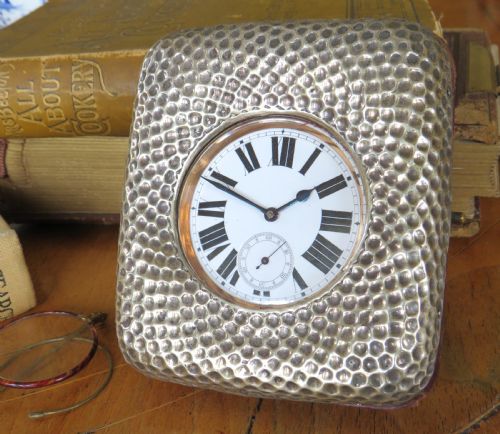


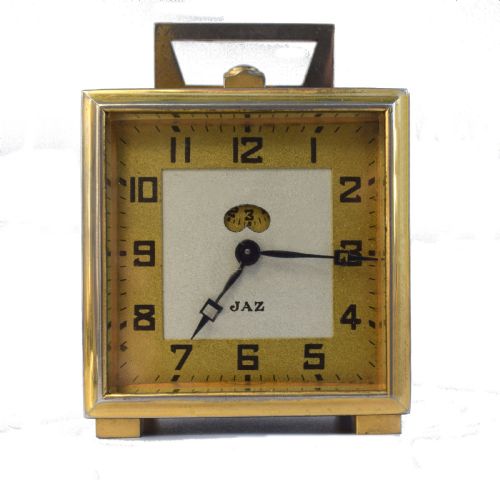

Square Desk Clock
A square desk clock is a compact timepiece designed for upright display, offering both functional utility and striking period design.
Square Desk Clock
A square desk clock sits upright on flat surfaces, combining timekeeping with decorative forms that suit tables, desks and mantelpieces. These pieces range from modest travelling accessories to larger decorative objects meant for prominent placement in a room.
The selections available here draw heavily from the Art Deco era, alongside examples from the nineteenth century up to the mid-twentieth century. Buyers will frequently encounter compact designs styled for travel, alongside striking geometric shapes suited for display on a desktop.
Materials span traditional hardwoods such as mahogany and burr walnut, alongside industrial metals and innovative early synthetics like bakelite. Many pieces incorporate glass or marble, reflecting the varied design priorities of their respective periods.
How they were made
Construction relies upon a combination of cabinetmaking and metalworking, depending on the primary material chosen by the maker. Wooden housings utilise mahogany and burr walnut, shaped and polished to highlight natural grain patterns.
Metal components, including brass, chrome, copper and gilt ormolu, undergo casting, stamping and plating to achieve durable finishes. Glass and early plastics such as bakelite and uranium glass are integrated into dials and housings, often reflecting modernist industrial techniques of the nineteen-thirties.
Some period clocks glow an eerie green under ultraviolet light due to the uranium glass used in their construction.
What varies in quality
Quality reveals itself in the choice of materials and the precision of the housing assembly, distinguishing standard production items from finer specimens. Heavier metals, solid timber veneers and clean joins demonstrate superior manufacturing standards.
The integration of specialised movements, such as fusee mechanisms or branded electric and mechanical escapements, elevates a piece. Signatures from recognised makers and detailed finishing on dials and bezels further separate ordinary timepieces from exceptional examples.
Smiths Clockmakers·Blangy Clockmakers·Elliott of London·P.M. Favre·French Clockmakers Jaz
The Square Desk Clock Glossary
- Fusee
- A conical pulley used in mechanical clocks to equalize the driving force of the mainspring as it unwinds. This mechanism helps maintain consistent timekeeping accuracy.
- Ormolu
- Gilded bronze or brass applied to decorative objects and clock mounts. The technique creates a rich, gold-coloured finish characteristic of finer decorative pieces.
- Bakelite
- An early synthetic plastic utilised for moulded clock cases during the twentieth century. It allowed for bold geometric shapes and durable coloured finishes.
- Strut clock
- A timepiece supported by a hinged prop or stand at the back, allowing it to rest securely on a desk or table.
- Uranium glass
- Glass containing trace amounts of uranium oxide, which glows vividly under ultraviolet light. It appears frequently in modernist decorative pieces from the nineteen-thirties.
Square Desk Clock: Frequently Asked Questions
How do I wind a mechanical desk clock?
Most mechanical desk clocks utilise a dedicated key inserted into the dial or backplate to tension the mainspring.
Care should be taken not to overwind the spring, stopping as soon as resistance is felt.
Where should I place a desk clock?
These clocks suit flat surfaces such as office desks, bookshelves, sideboards and mantelpieces where they remain stable.
Positioning them away from direct sunlight and damp environments helps preserve delicate wood veneers and metal finishes.
What is the difference between a desk clock and a mantel clock?
Desk clocks are generally smaller and designed for close viewing on work surfaces or travelling, often featuring easel backs or compact stands.
Mantel clocks tend to be larger, heavier structures built to sit permanently upon a fireplace mantel or large shelf.
How do I identify an Art Deco desk clock?
Art Deco pieces typically display geometric symmetry, stepped forms and streamlined combinations of chrome, bakelite and coloured glass.
Dial numerals often feature stylised sans-serif typography characteristic of design from the nineteen-thirties.