

Sports Artwork
Sports artwork captures the energy of horses, hounds, and field sports through centuries of oil paintings, watercolours, and prints.
Sports Artwork
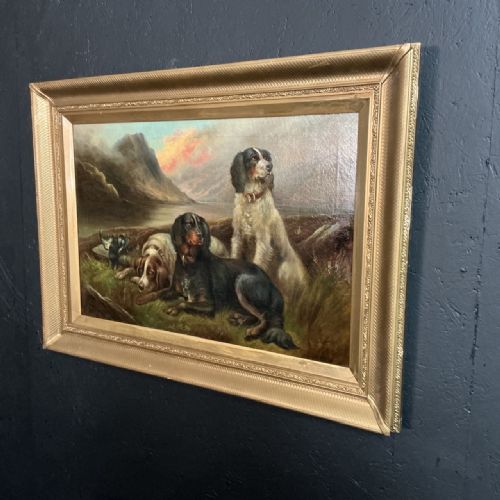
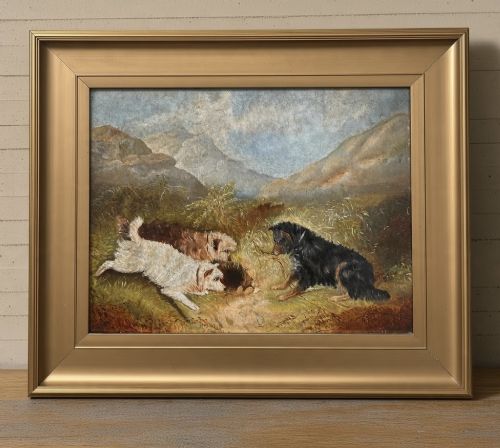
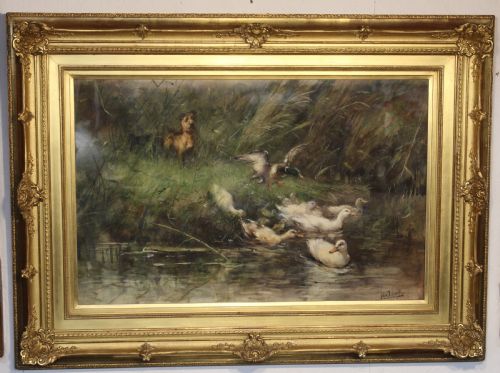
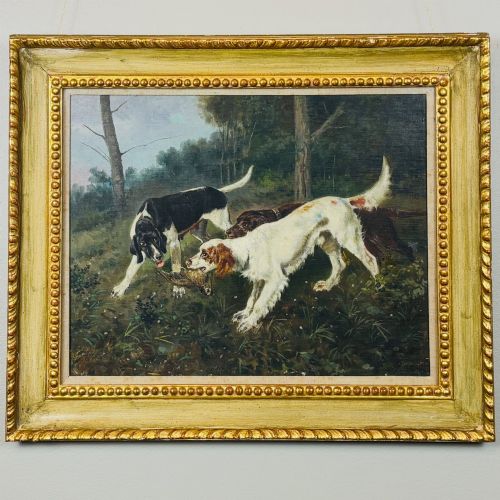
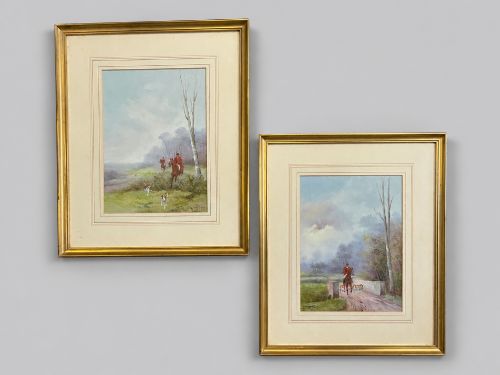
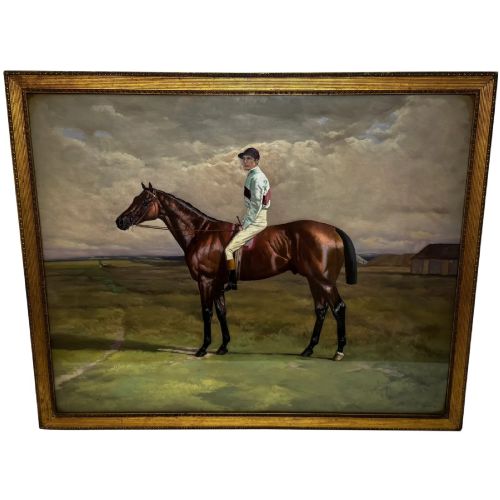
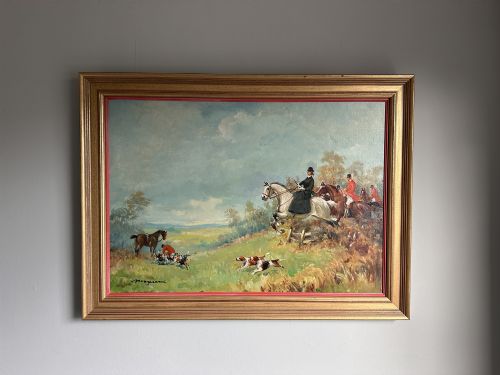
When searching for sports artwork, buyers encounter visual records of equestrian life, hunting, racing, and field pastimes spanning the Georgian era to the mid-twentieth century. Oil paintings dominate this selection, frequently rendered on canvas and framed in wood or giltwood.
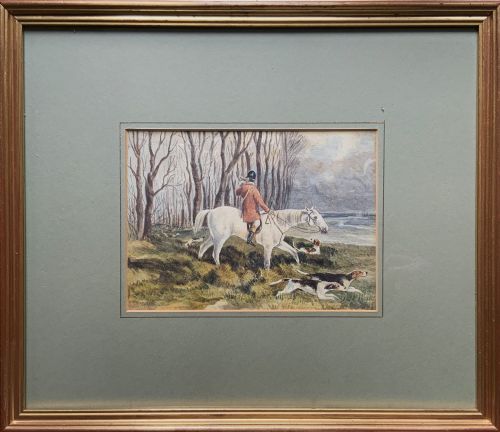
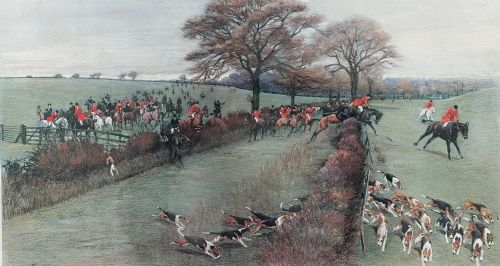
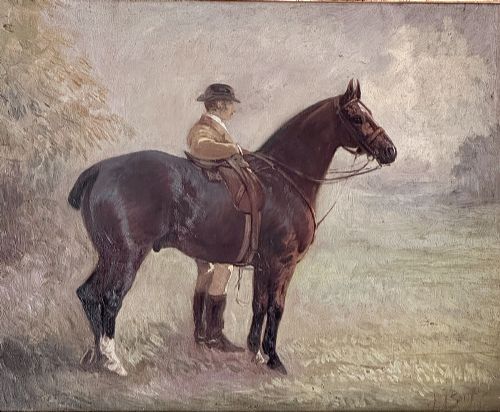
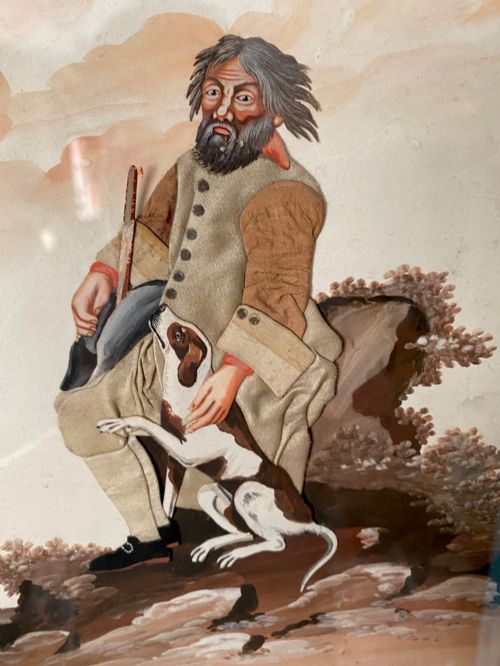
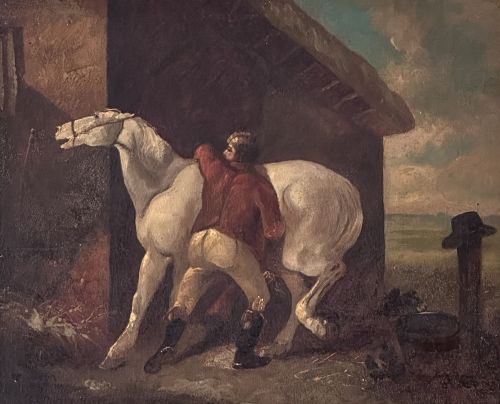
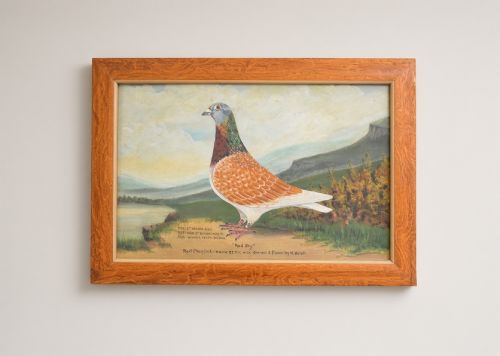
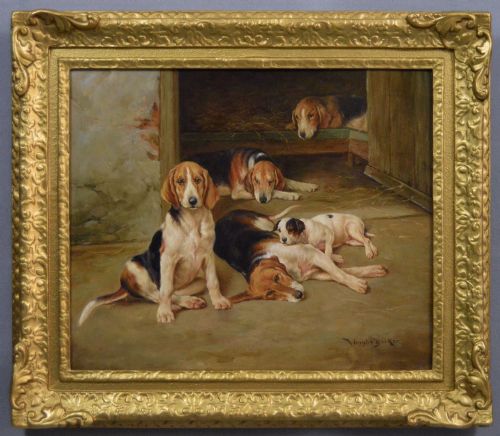
The most common subjects on this page are horses and dogs, depicted either in formal portraiture or active scenes like fox hunting and carriage driving. These pieces range from naive folk art collages to detailed Victorian and Edwardian canvases.
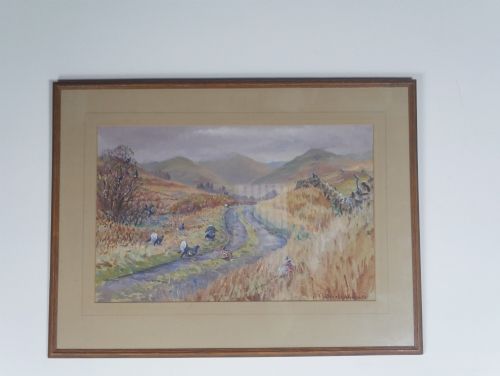
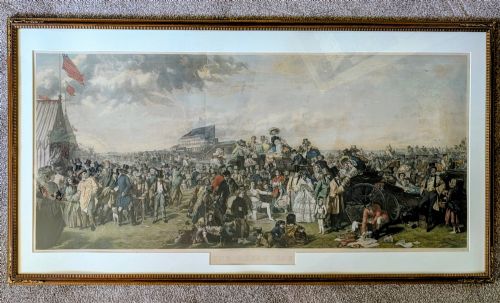
Beyond equines and hounds, the category embraces diverse athletic pursuits, including tennis, fishing, polo, and the Olympic games. Works appear across various formats, encompassing framed prints, lithographs, watercolours, and substantial oil paintings.
Materials and construction
Artists working within this genre relied primarily on oil paint applied to canvas or wood panels, utilising the medium to build depth in coats of animals and landscape backgrounds. Watercolours and bodycolour on paper appear alongside gouache and lithography for graphic printed series.
Frames play a crucial role in presentation, utilising moulded wood, glass protection, and giltwood finishes to preserve the paper and canvas components. Many works retain period framing that complements the era of the painting or print.
Sports Artwork Retail Price Guide 2026
Typical asking prices for sports artwork among the pieces listed under this phrase on Sellingantiques today, from the lower quarter to the upper quarter. They describe what is for sale here now, not the wider market.
Materials documented across the inventory include oil paint, canvas, paper, wood, glass, and giltwood.
Evaluating quality in sports artwork
Quality rests on the anatomical accuracy of animals and the handling of light within the composition. Master painters capture the tension in a horse's muscles or the alertness of a terrier with precise brushwork, whereas lesser works rely on stiff, formulaic outlines.
Condition and provenance elevate individual pieces, particularly when historical records link a canvas to specific estates, known breeders, or named sporting events. Original framing and the stability of the canvas surface further distinguish superior examples from ordinary decorative items.
Wright Barker RBA·Cecil Charles Windsor Aldin RBA·Charles Bilger Spalding·Henry Barraud·Philip H Rideout·Edmund Bristow·Edward Armfield·William Woollett·George Stubbs·George Sydney Shepherd·Thomas Smythe·B A Howe·James Stroudley·Samuel Rabin·John Sargent Noble·Fred Fitzpatrick·C H Weigall·Ernest Payne·George Wright·William Albert Clarke
The Sports Artwork Glossary
- Gouache
- An opaque water-based medium that dries to a matte finish. It allows artists to apply bright highlights over darker washes.
- Lithograph
- A print produced from a flat stone or metal plate treated to retain ink in image areas. This technique enabled the mass reproduction of popular sporting scenes in the nineteenth century.
- Bodycolour
- Watercolour mixed with white pigment to make it opaque. This adds weight and solidity to painted details like hair and sky.
- Giltwood
- Timber carved and coated with gold leaf or a gold-coloured metallic finish. It provides a reflective border common on Victorian frames.
- Provenance
- The documented history of ownership surrounding an artwork. This paper trail establishes authenticity and traces the piece back through past collections.
Sports Artwork: Frequently Asked Questions
How do I date a sporting oil painting?
Dating relies on stylistic clues, artist signatures, clothing fashions, and the construction of the canvas stretcher and frame. Victorian and Edwardian works often display distinct brushwork and framing materials characteristic of their decade.
Inscribed dates on the reverse or within the composition provide precise markers, though many pieces date from the broader Georgian or mid-century periods.
Are these pieces original paintings or prints?
The selection includes both unique hand-painted works and mass-produced or limited-edition prints. Original works use oil paint, watercolour, or gouache directly on canvas, panel, or paper.
Printed works encompass engravings and lithographs from the eighteenth and nineteenth centuries, often preserved behind glass in period wooden frames.
How should I care for antique canvas paintings?
Antique canvases require stable environmental conditions away from direct sunlight and excessive humidity. Keep them out of rooms with rapid temperature shifts to prevent the oil paint from cracking.
Dust surfaces gently with a soft, dry brush and avoid chemical cleaners. Professional conservators should handle any deep cleaning or canvas repairs.